
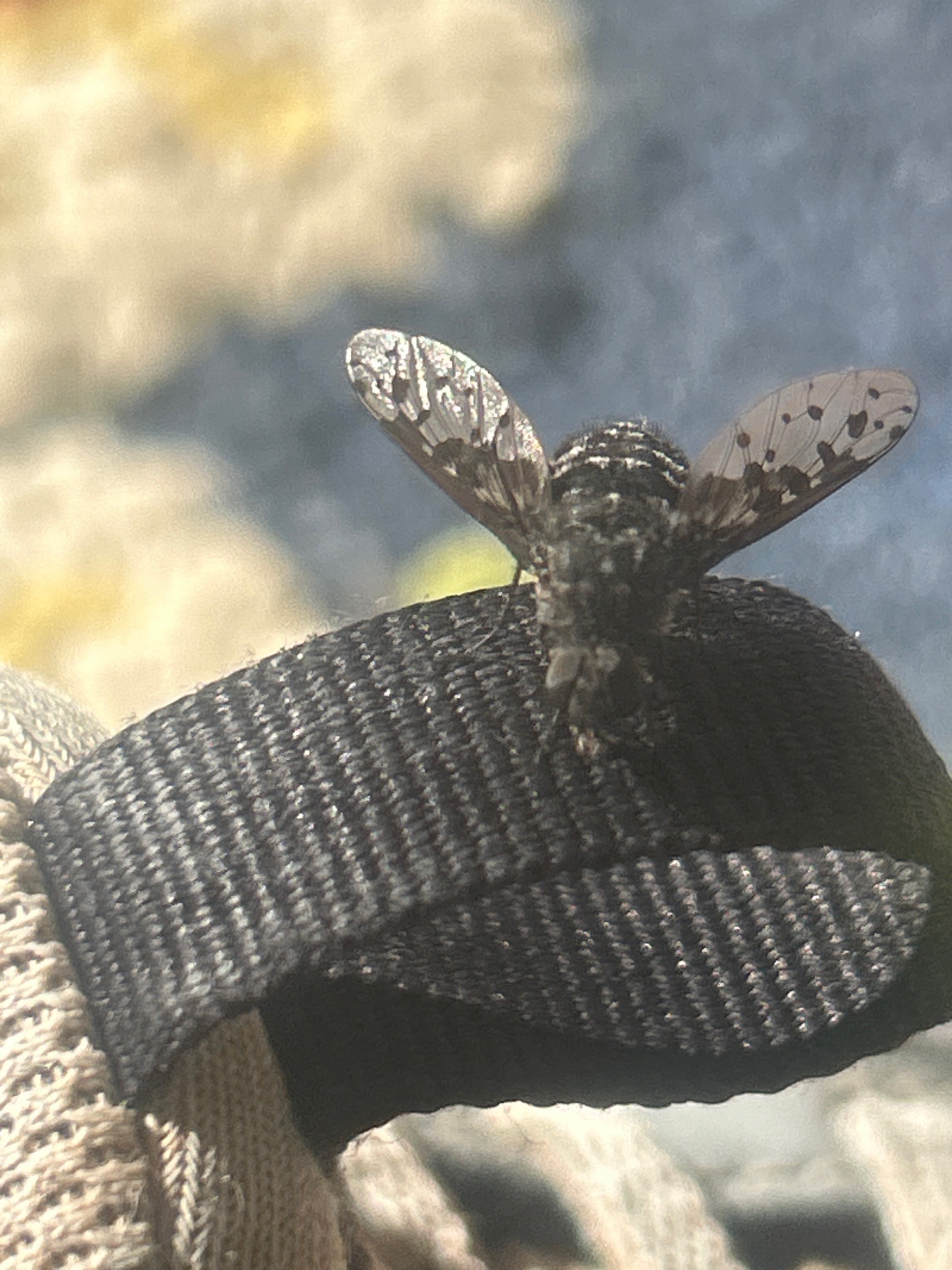
Community identification
Tiger Bee Fly
Xanthagrion bimaculata (commonly Xenox tigrinus or similar large bee fly)
- Order & Family
- Order: Diptera, Family: Bombyliidae
- Size
- 15 mm to 25 mm (0.6 to 1.0 inch)
Natural Habitat
Fields, meadows, gardens, and forest edges, often near the nests of carpenter bees or other solitary bees.
Diet & Feeding
Adults feed on nectar and pollen from flowers. Larva are parasitoids of carpenter bee larvae.
Behavior Patterns
Adults are strong, agile fliers often seen hovering near wooden structures or flowers. Females flick eggs near the nesting holes of carpenter bees so the larvae can parasitize them.
Risks & Benefits
Completely harmless to humans as they do not bite or sting. They provide ecological benefits by acting as pollinators as adults and natural control agents for wood-boring carpenter bees.