
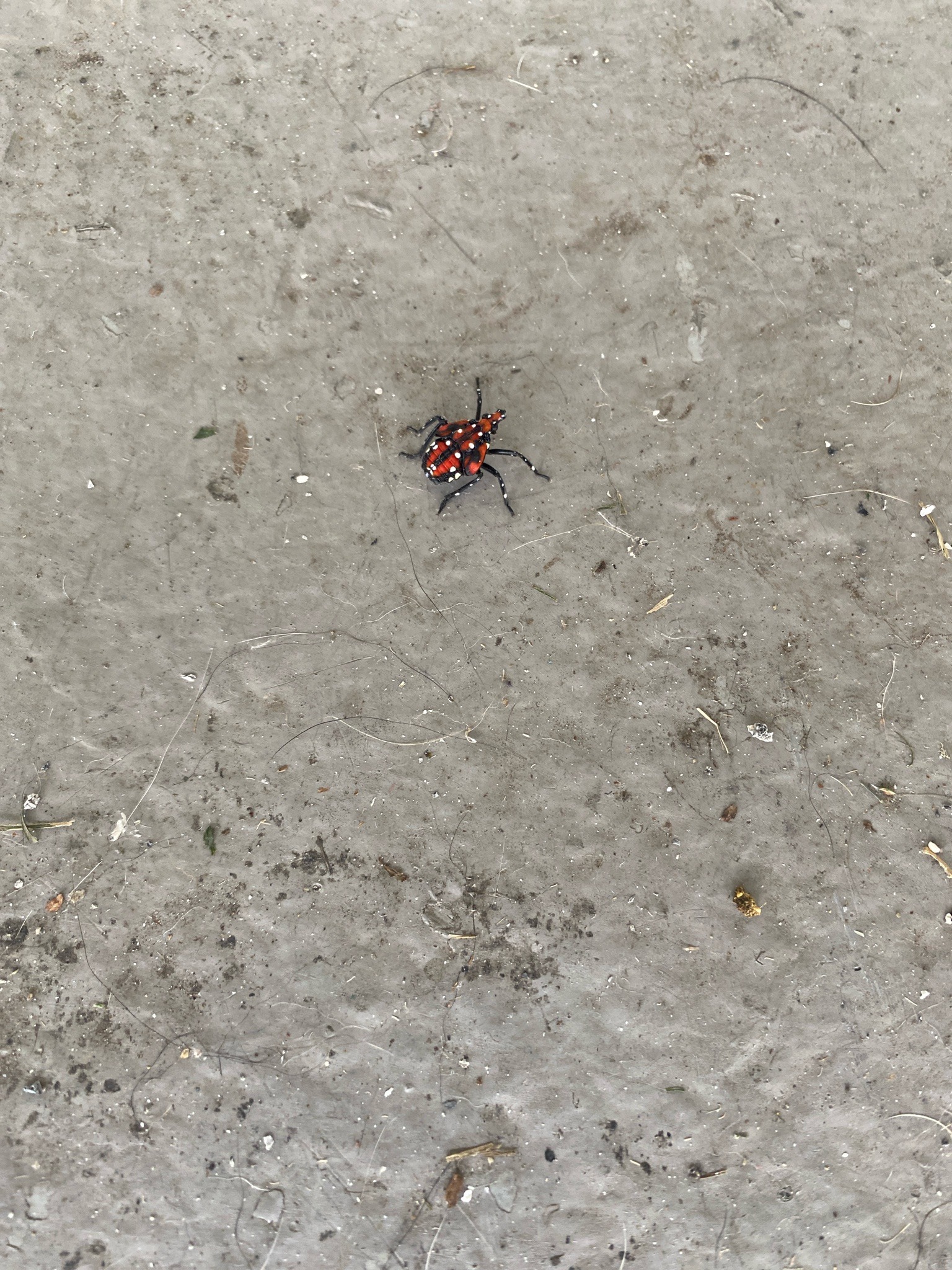
Spotted Lanternfly (Fourth-Instar Nymph)
Lycorma delicatula
- Order & Family
- Hemiptera (True Bugs), Fulgoridae (Planthoppers)
- Size
- Approximately 10 to 13 mm (0.4 to 0.5 inches) at this 4th nymphal stage.
Natural Habitat
Wooded areas, forests, agricultural fields, orchards, and urban gardens, particularly near host trees like Tree-of-Heaven (Ailanthus altissima), grapevines, and fruit trees.
Diet & Feeding
Polyphagous sap-feeder that extracts phloem sap from plants, host plants include Tree-of-Heaven, grapevines, apple trees, stone fruits, and hardwoods like maple and walnut.
Behavior Patterns
Strong jumpers that crawl up plants and jump when threatened. They progress through four nymphal stages (instars) before becoming winged adults in late summer; this red fourth-instar stage occurs right before adulthood. They excrete sticky honeydew that fosters black sooty mold growth.
Risks & Benefits
High agricultural and environmental risk as an invasive pest in North America. They weaken trees, damage crops (especially vineyards), and attract secondary pests like stinging insects with honeydew. They offer no beneficial ecological role outside their native Asian range and squishing them on sight is recommended in invasive areas.