
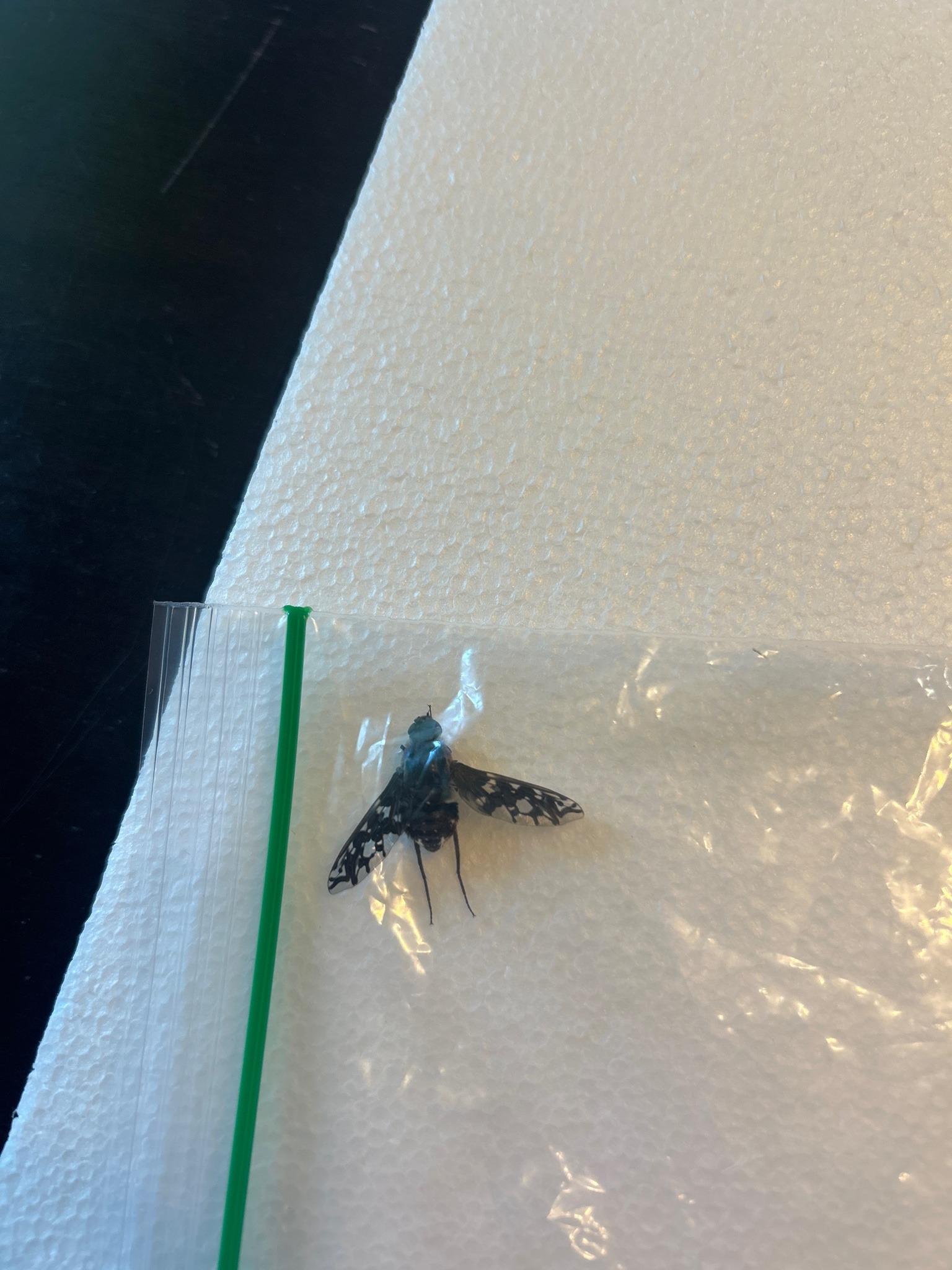
Community identification
Horse fly
Tabanus atratus (or similar Tabanidae species)
- Order & Family
- Order: Diptera, Family: Tabanidae
- Size
- 10mm to 25mm (0.4 to 1.0 inch)
Natural Habitat
Near wetlands, forests, pastures, and areas with livestock or standing water.
Diet & Feeding
Adult females feed on vertebrate blood (including humans, horses, and cattle); males and females also feed on nectar and plant sap.
Behavior Patterns
Active during the day, fast and persistent flyers, attracted to movement, dark silhouettes, and warmth.
Risks & Benefits
Risks include painful bites that can transmit pathogens to livestock and cause secondary infections in humans. Benefits include a minor role in pollination by males visiting flowers.