
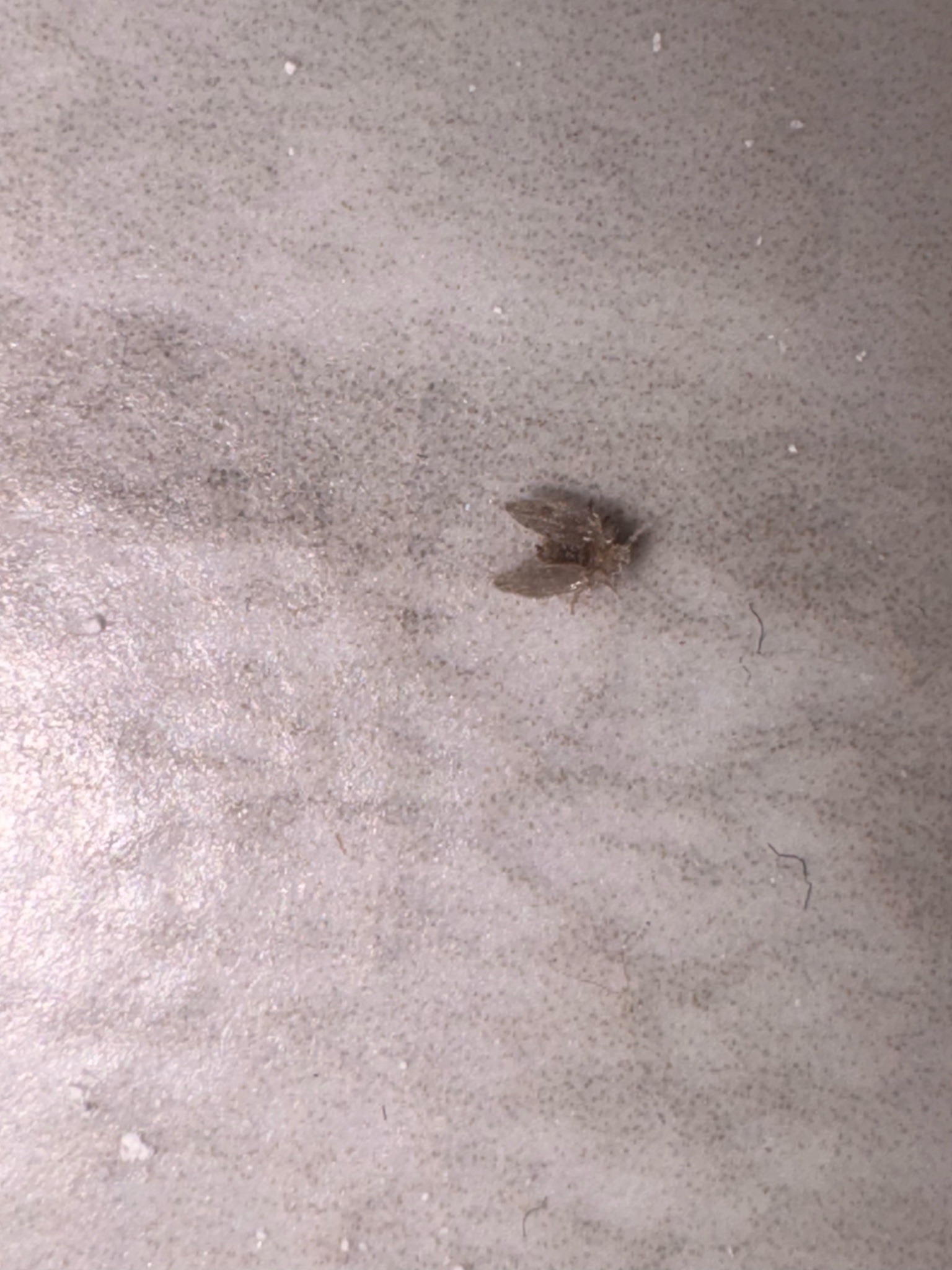
Community identification
Drain fly (moth fly)
Psychodidae; likely Clogmia albipunctata
- Order & Family
- Diptera, family Psychodidae
- Size
- Adults are about 1.5–5 mm long, with broad, fuzzy wings held roof-like over the body.
Natural Habitat
Moist indoor sites, especially bathroom and kitchen drains, sewage pipes, condensate pans, and wet organic sludge.
Diet & Feeding
Larvae feed on bacteria, fungi, algae, and decaying organic matter in drain biofilm. Adults consume little and may take moisture or plant fluids.
Behavior Patterns
Weak, erratic fliers that often rest on walls near plumbing and are most active at night. Eggs and larvae develop in the gelatinous film lining stagnant, damp drains.
Risks & Benefits
They do not bite, sting, or transmit important human diseases, though large infestations indicate unsanitary moisture buildup and may cause minor irritation. Larvae help decompose organic matter, but indoor populations are undesirable.