
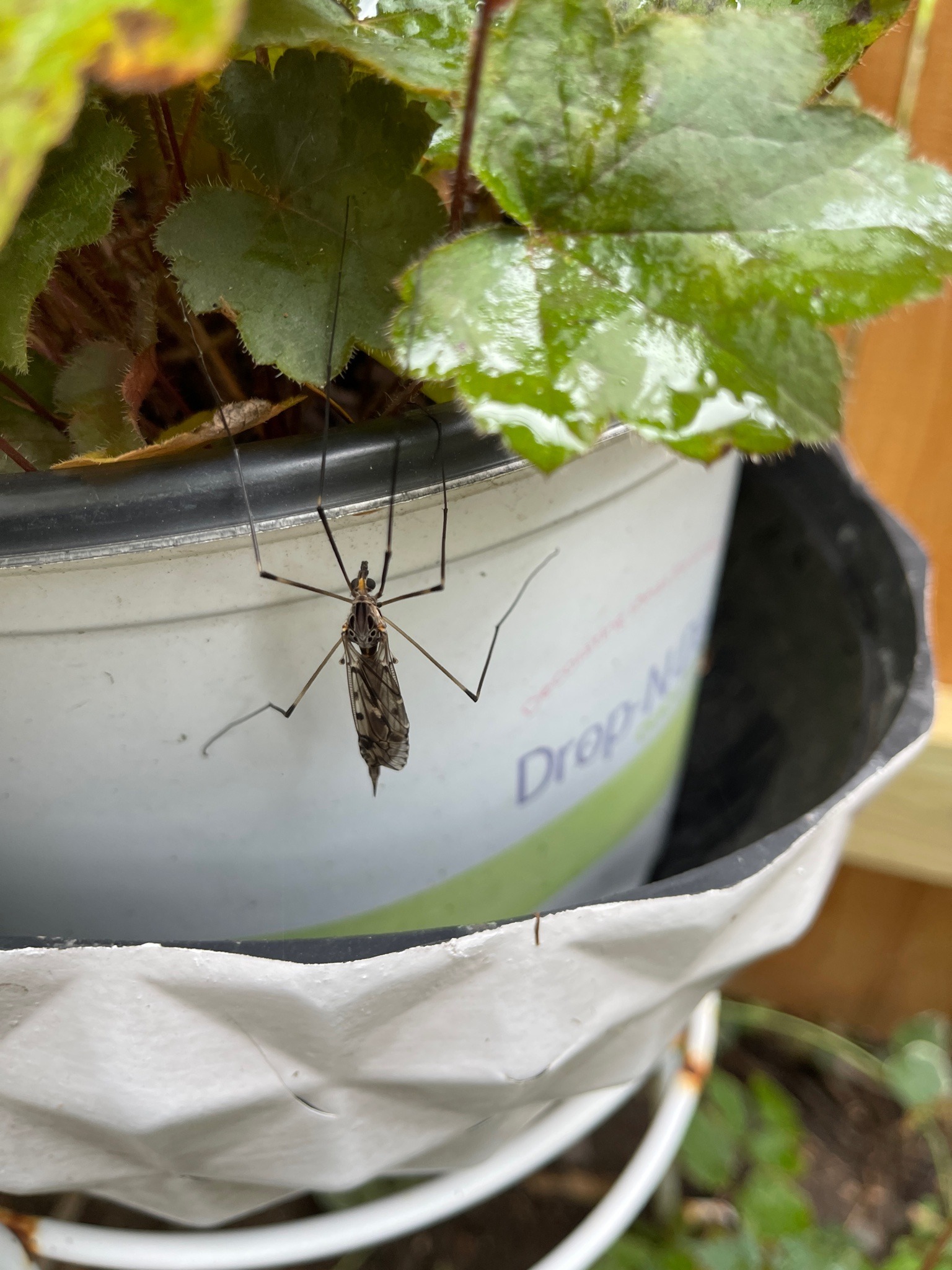
Community identification
Crane fly
Tipula sp. (likely Tipula paludosa group)
- Order & Family
- Diptera; Tipulidae
- Size
- Adults typically 15–25 mm long, with a leg span of up to 50–60 mm.
Natural Habitat
Moist vegetation, lawns, gardens, woodland edges, and streamside habitats. Adults often rest on foliage and walls.
Diet & Feeding
Adults generally feed little or consume nectar and plant fluids; some do not feed. Larvae (“leatherjackets”) eat roots, decaying vegetation, and other organic matter in soil.
Behavior Patterns
Weak, fluttering fliers that are commonly active around dusk and attracted to lights. Females lay eggs in moist soil; larvae develop underground before pupating and emerging as adults.
Risks & Benefits
Harmless to people and do not bite or sting. Larvae recycle organic matter, though abundant populations can damage turf and seedlings by feeding on roots.