
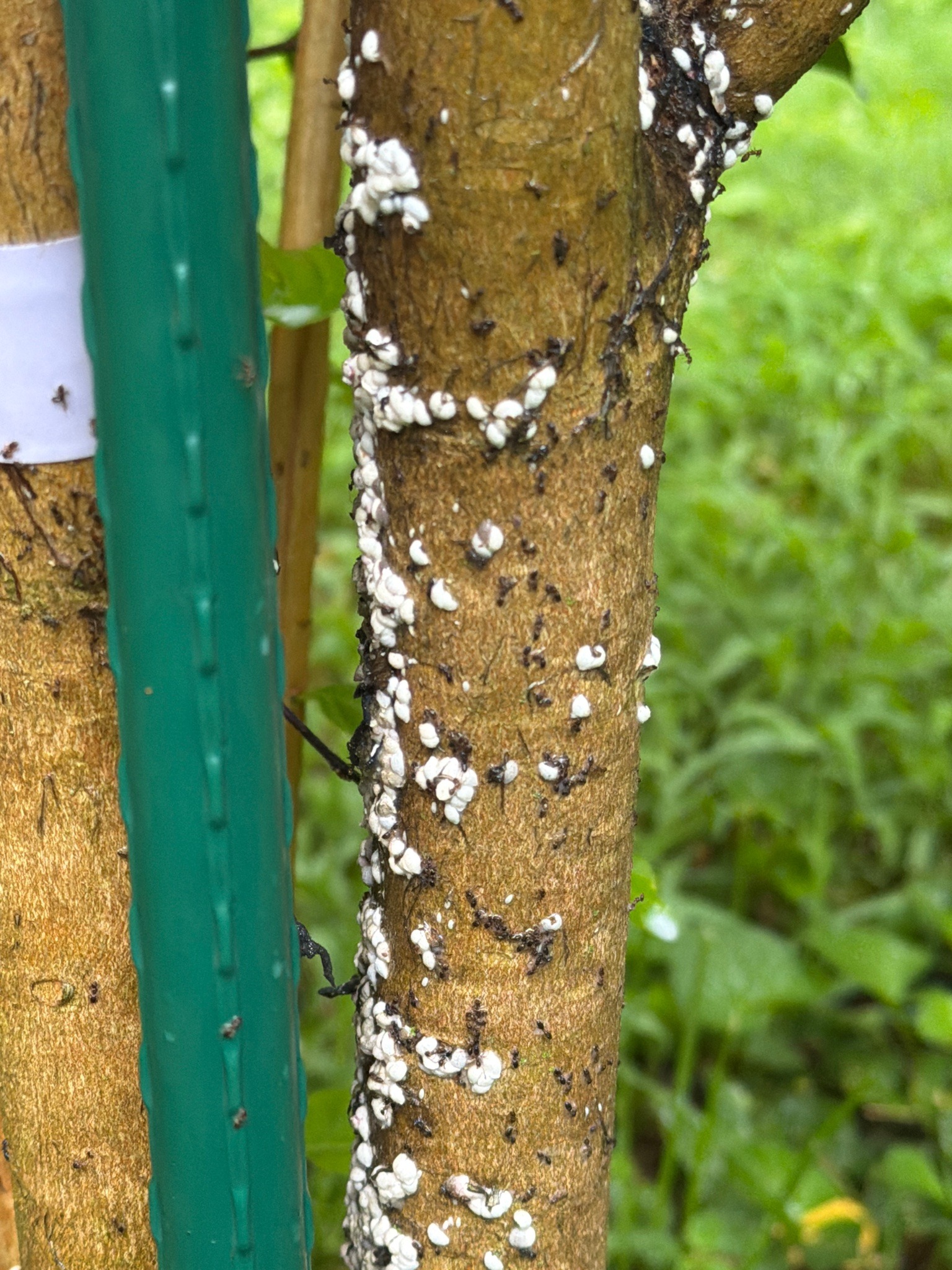
Community identification
Coconut mealybug (likely)
Nipaecoccus nipae
- Order & Family
- Hemiptera; Pseudococcidae (mealybugs)
- Size
- Adults are about 2–4 mm long; colonies appear larger because of white waxy filaments and egg sacs.
Natural Habitat
Tropical and subtropical gardens, orchards, nurseries, and greenhouses; commonly colonizes trunks, stems, leaves, and roots of woody plants.
Diet & Feeding
Feeds by sucking phloem sap from plants. It often produces honeydew, which supports sooty mold and attracts ants.
Behavior Patterns
Usually forms dense, wax-covered colonies in bark crevices and sheltered plant surfaces. Females are wingless; populations spread through crawling, wind, ants, infested plant material, and sometimes nursery trade.
Risks & Benefits
Can cause yellowing, stunting, dieback, honeydew buildup, and sooty mold, especially during heavy infestations. It has little direct ecosystem benefit, though it serves as prey for lady beetles, lacewings, parasitoid wasps, and other predators.