
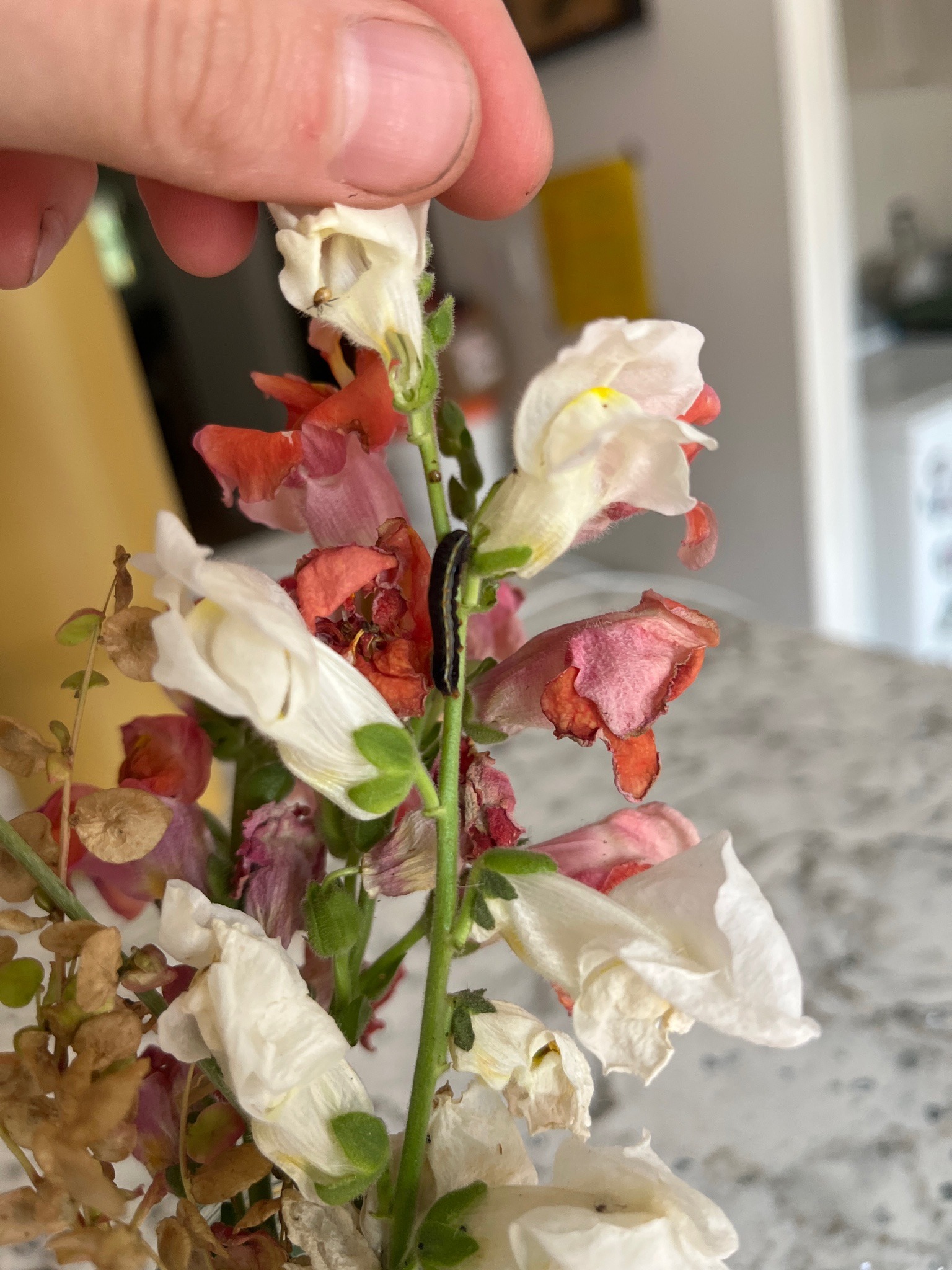
Community identification
Aphid (likely black bean aphid)
Aphis fabae
- Order & Family
- Hemiptera; Aphididae
- Size
- Adults are about 1.5–3 mm long; winged forms are slightly larger and slimmer.
Natural Habitat
Colonies occur on tender stems, flower spikes, and undersides of leaves, especially on ornamentals and broad-leaved plants. They are common in gardens, fields, and greenhouses.
Diet & Feeding
Pierces phloem tissue with a stylet and drinks plant sap. Feeding can cause curling, yellowing, wilting, sticky honeydew, and sooty mold.
Behavior Patterns
Usually feeds in dense colonies and reproduces rapidly by live birth during favorable seasons; winged forms disperse when crowded or the plant declines. Ants may protect colonies to collect honeydew.
Risks & Benefits
Can weaken plants and transmit plant viruses, though this species is not dangerous to humans. It provides food for lady beetles, lacewings, hoverfly larvae, and parasitoid wasps.