
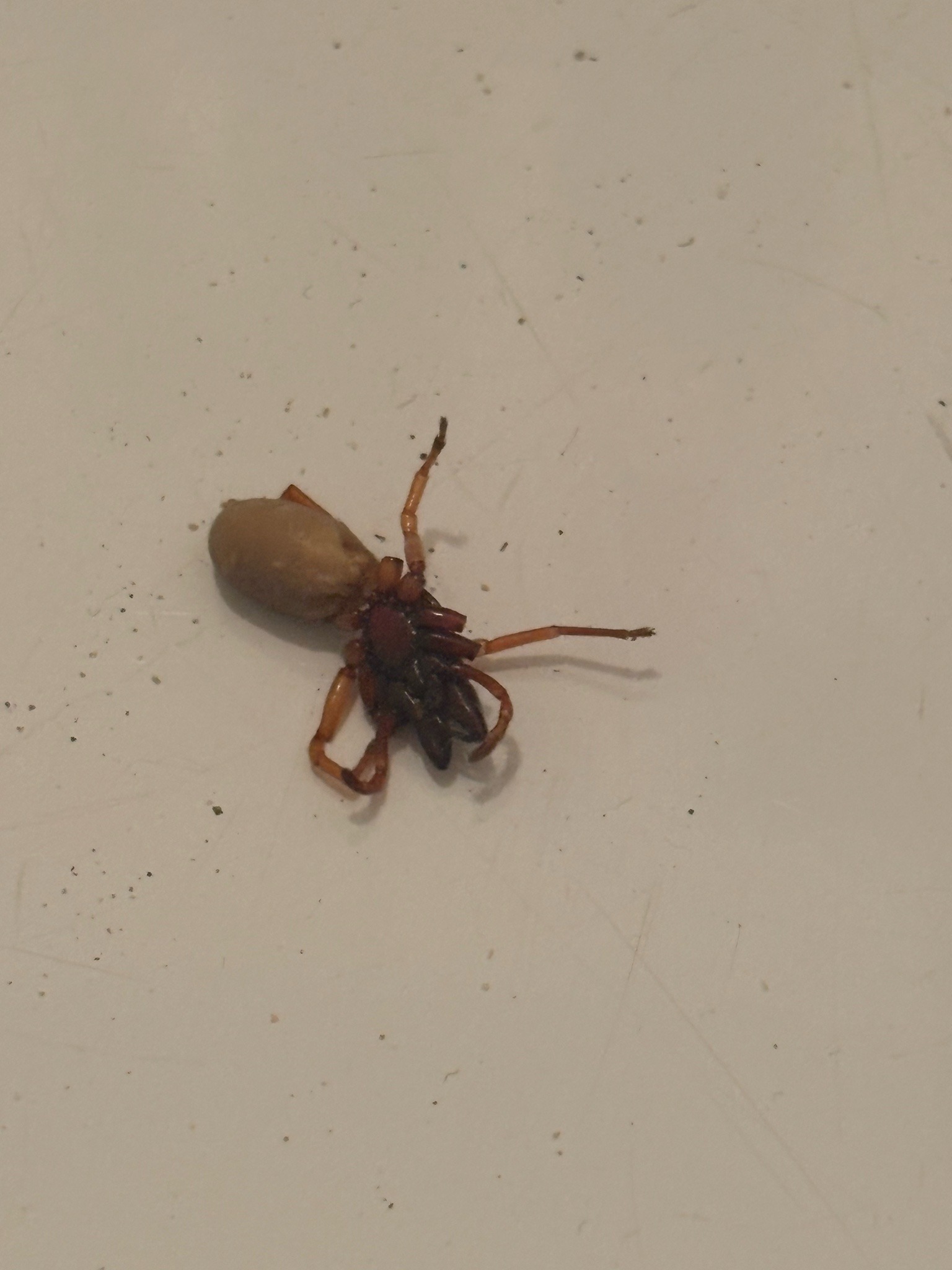
Community identification
Woodlouse Spider
Dysdera crocata
- Order & Family
- Araneae (Order), Dysderidae (Family)
- Size
- Body length is typically 9-15 mm for females, slightly smaller for males.
Natural Habitat
Often found under logs, rocks, bricks, and in leaf litter, as well as in basements and damp indoor areas where their prey resides.
Diet & Feeding
Primarily feeds on woodlice (pillbugs/sowbugs), using their large, prominent chelicerae to pierce the tough exoskeleton of their prey.
Behavior Patterns
They are nocturnal hunters that do not spin webs to catch prey. They build silken retreats for molting and egg-laying.
Risks & Benefits
They are beneficial as they help control woodlouse populations. Their bite can be painful due to the large fangs, comparable to a bee sting, but their venom is not known to be medically significant to humans.