
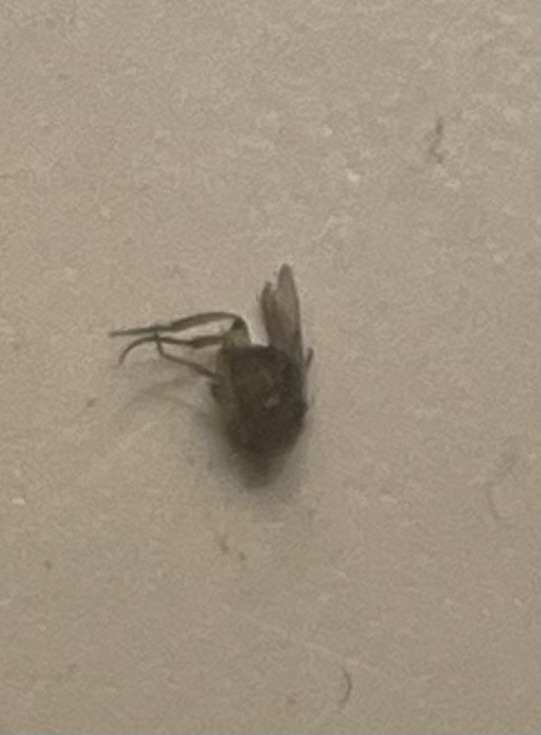
Small house fly (likely a flesh fly or blow fly)
Sarcophagidae or Calliphoridae; species uncertain from the blurred image
- Order & Family
- Diptera; likely Sarcophagidae (flesh flies) or Calliphoridae (blow flies)
- Size
- Approximately 6–12 mm (0.25–0.5 in) long, depending on species.
Natural Habitat
Common around homes, garbage, pet waste, carrion, and decaying organic matter; adults often enter buildings attracted to light or odors.
Diet & Feeding
Adults consume liquid or liquefied organic material, including sugars, waste, and carrion fluids. Larvae typically develop in decomposing flesh, feces, or other organic material.
Behavior Patterns
Adults are strong fliers and may rapidly move across surfaces or windows. Females deposit larvae or eggs in suitable decaying material; development can be rapid in warm conditions.
Risks & Benefits
They can mechanically transfer bacteria and other pathogens onto food and surfaces, though they do not normally bite. Their larvae aid decomposition and nutrient recycling, and some species assist with forensic investigations.