
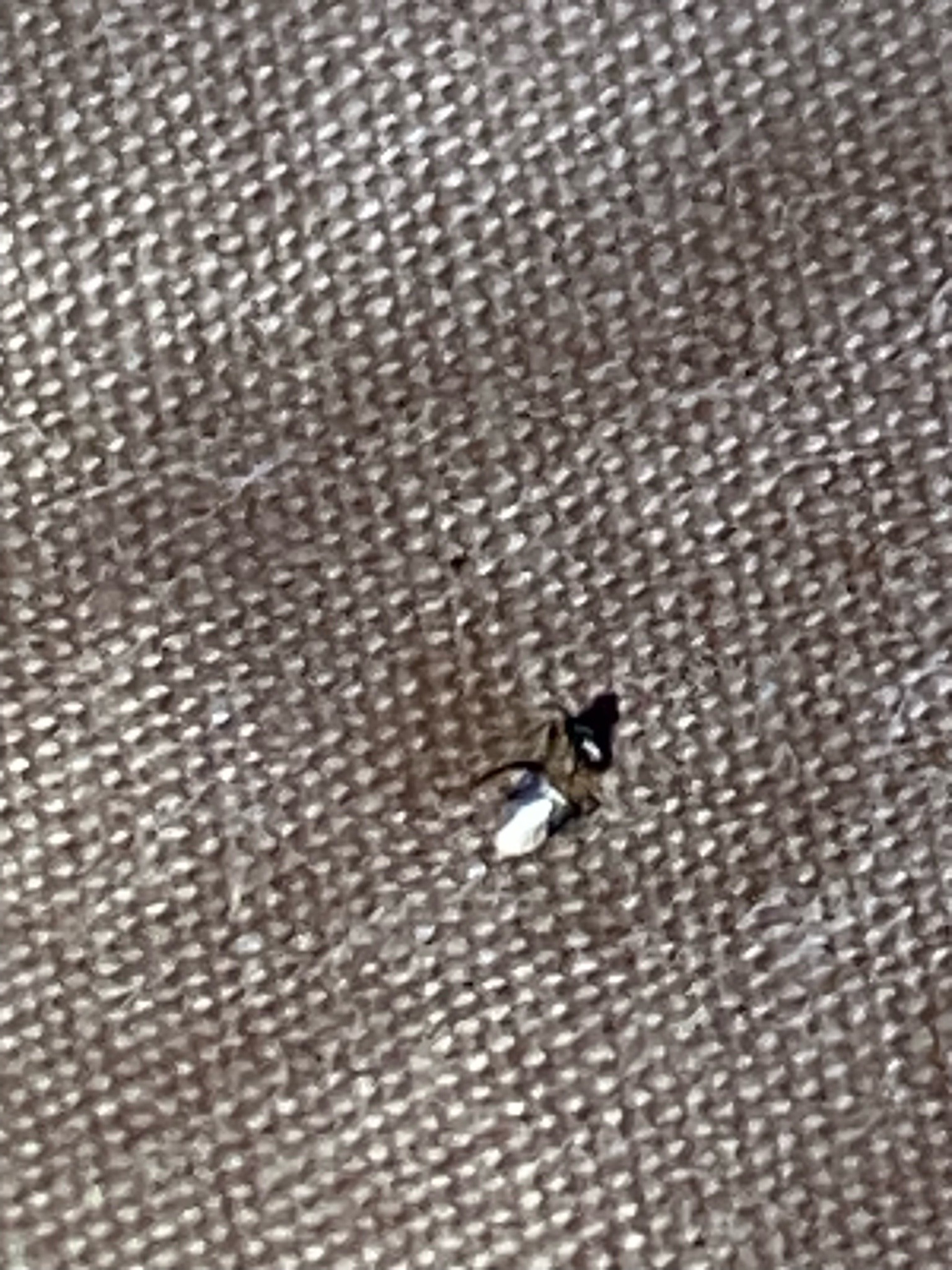
Community identification
Black-and-white ant (likely a velvet ant)
Uncertain from the image; possibly a female velvet ant in the genus Dasymutilla
- Order & Family
- Hymenoptera; Mutillidae
- Size
- Commonly about 6–20 mm, depending on species.
Natural Habitat
Usually dry, sunny areas with sandy or loose soil; adults may wander indoors accidentally.
Diet & Feeding
Adults take nectar; larvae develop as parasites of ground-nesting bees and wasps.
Behavior Patterns
Females are wingless and resemble ants; they move over the ground and can sting when handled. The photo is too unclear for reliable species-level identification.
Risks & Benefits
The sting can be very painful but is not generally medically dangerous. Velvet ants help regulate populations of solitary bees and wasps.