
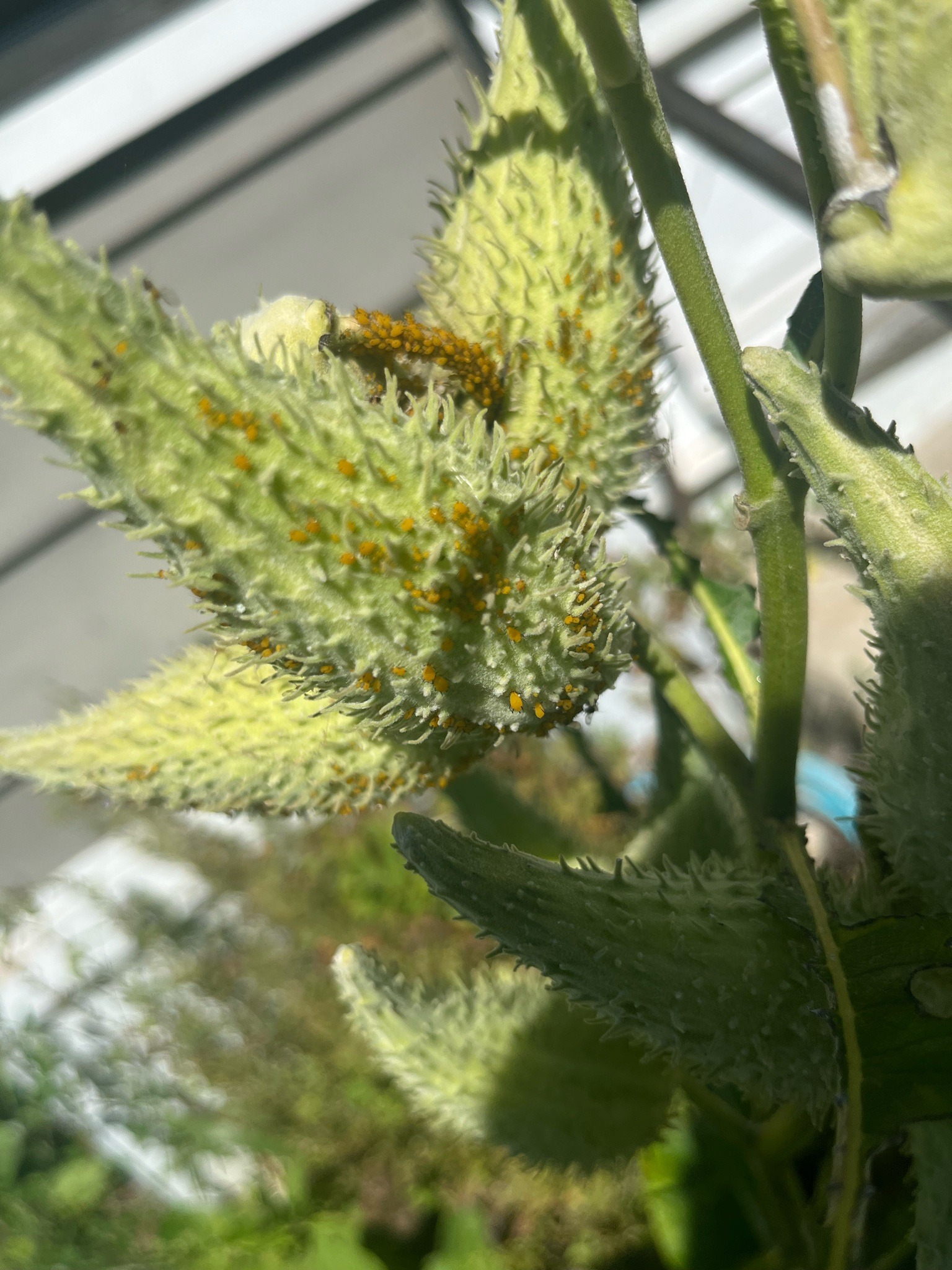
Community identification
Milkweed tussock moth caterpillar (early instar)
Euchaetes egle
- Order & Family
- Lepidoptera; family Erebidae, subfamily Arctiinae
- Size
- Larvae range from about 3 mm when newly hatched to 35–40 mm when mature.
Natural Habitat
Milkweed plants in meadows, roadsides, prairies, gardens, and other sunny habitats across much of North America.
Diet & Feeding
Feeds primarily on milkweed leaves, flowers, and seed pods; older caterpillars can consume substantial foliage and accumulate milkweed toxins.
Behavior Patterns
Young larvae often feed communally in groups and become covered with dense black, white, and orange setae as they mature. They eventually pupate in a loose silken cocoon containing larval hairs, with adults emerging as gray moths.
Risks & Benefits
Not dangerous to handle, though hairs may mildly irritate sensitive skin. It helps regulate milkweed growth and supports predators adapted to chemically defended caterpillars; it is not generally a serious crop pest.