
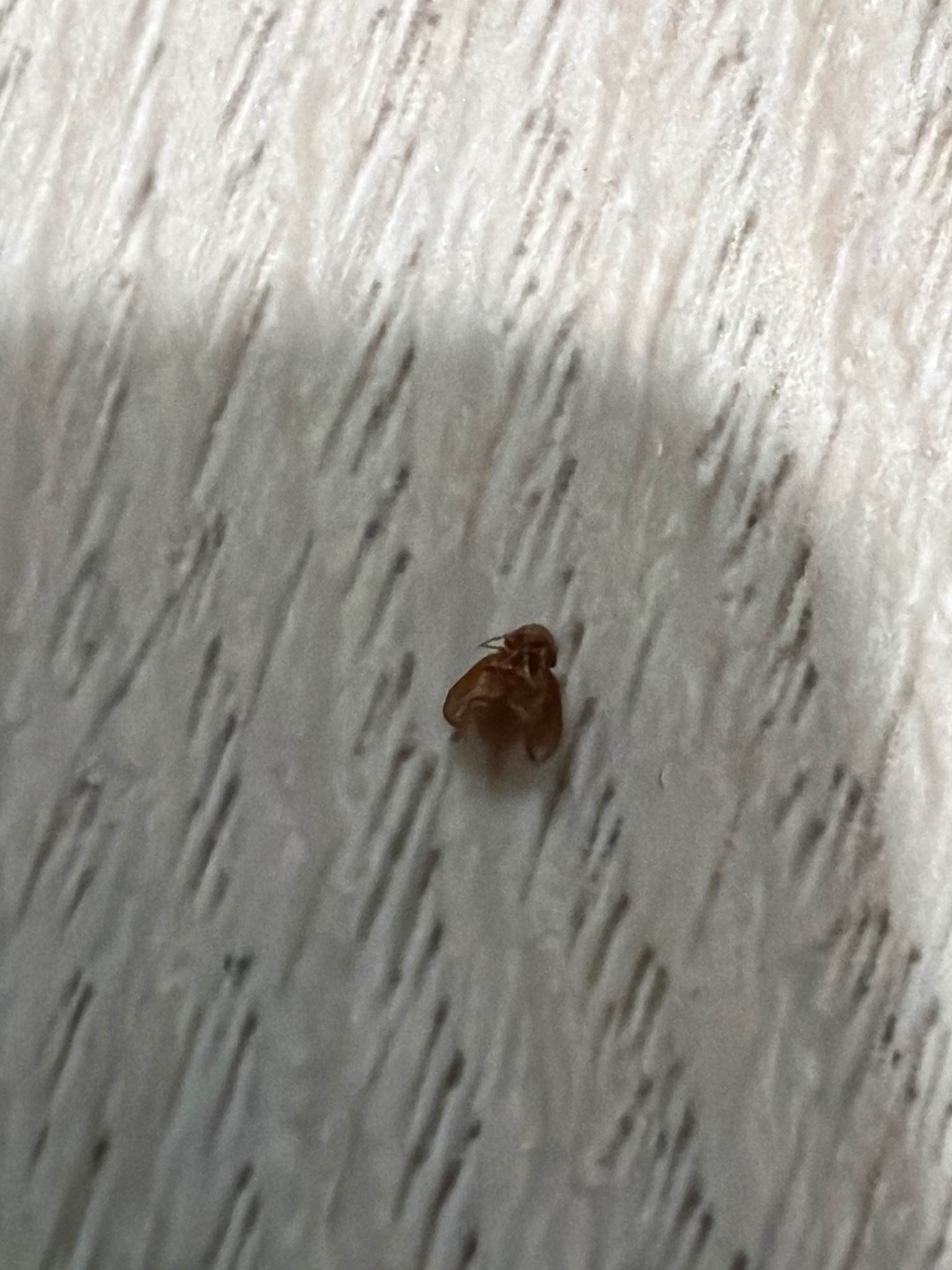
Community identification
Tick (likely a hard tick)
Ixodidae; exact species cannot be identified from this image
- Order & Family
- Ixodida, Ixodidae
- Size
- About 2–10 mm unfed, depending on species and life stage; larger when engorged.
Natural Habitat
Ticks occur in vegetation, leaf litter, and areas frequented by wildlife or pets; they may enter homes on hosts.
Diet & Feeding
All life stages feed on the blood of vertebrates, including mammals, birds, and reptiles.
Behavior Patterns
Ticks do not fly or jump; they wait on vegetation or crawl onto hosts, attach, and feed for hours or days. Their life cycle includes egg, larval, nymphal, and adult stages.
Risks & Benefits
Bites can cause irritation and, in some species, transmit diseases. Ticks also serve as food for some wildlife; the pictured specimen is too small and blurry for species-level identification.