
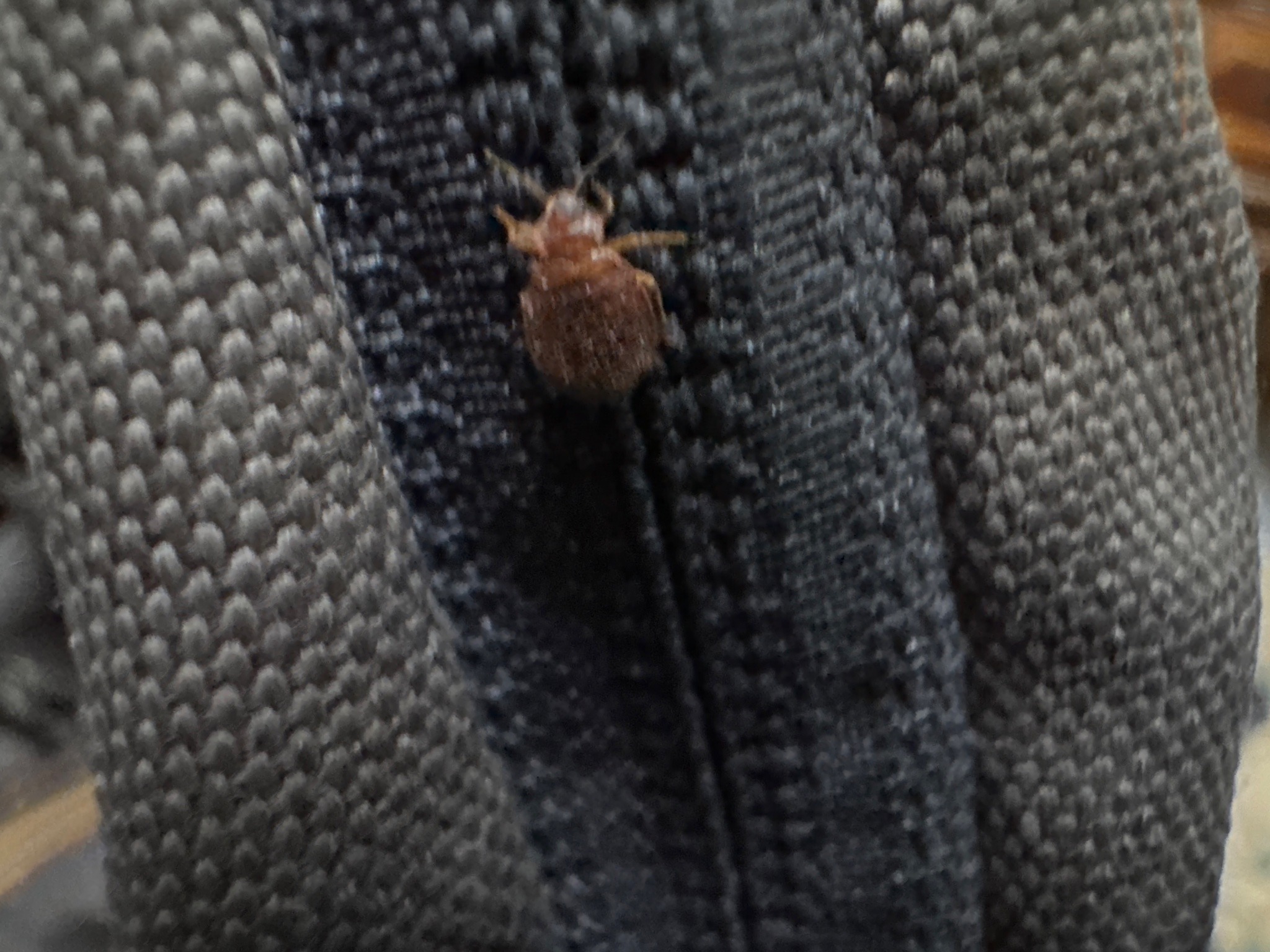
Community identification
Bed bug
Cimex lectularius
- Order & Family
- Hemiptera; Cimicidae
- Size
- Adults are about 4–7 mm long, roughly apple-seed sized; nymphs are smaller and paler.
Natural Habitat
Mattresses, bed frames, upholstered furniture, luggage, and cracks near sleeping areas. They hide in fabric seams and crevices during daylight.
Diet & Feeding
Feeds primarily on blood, usually from humans, by piercing skin with specialized mouthparts. It can also feed on other warm-blooded animals.
Behavior Patterns
Nocturnal and attracted to body heat and carbon dioxide; adults, nymphs, and eggs may be transported in clothing or belongings. Females lay eggs in sheltered cracks, and infestations can persist for months without feeding.
Risks & Benefits
Bites cause itchy, localized welts and occasionally allergic reactions, but bed bugs are not known to transmit human diseases. They provide little ecological benefit in human environments.