
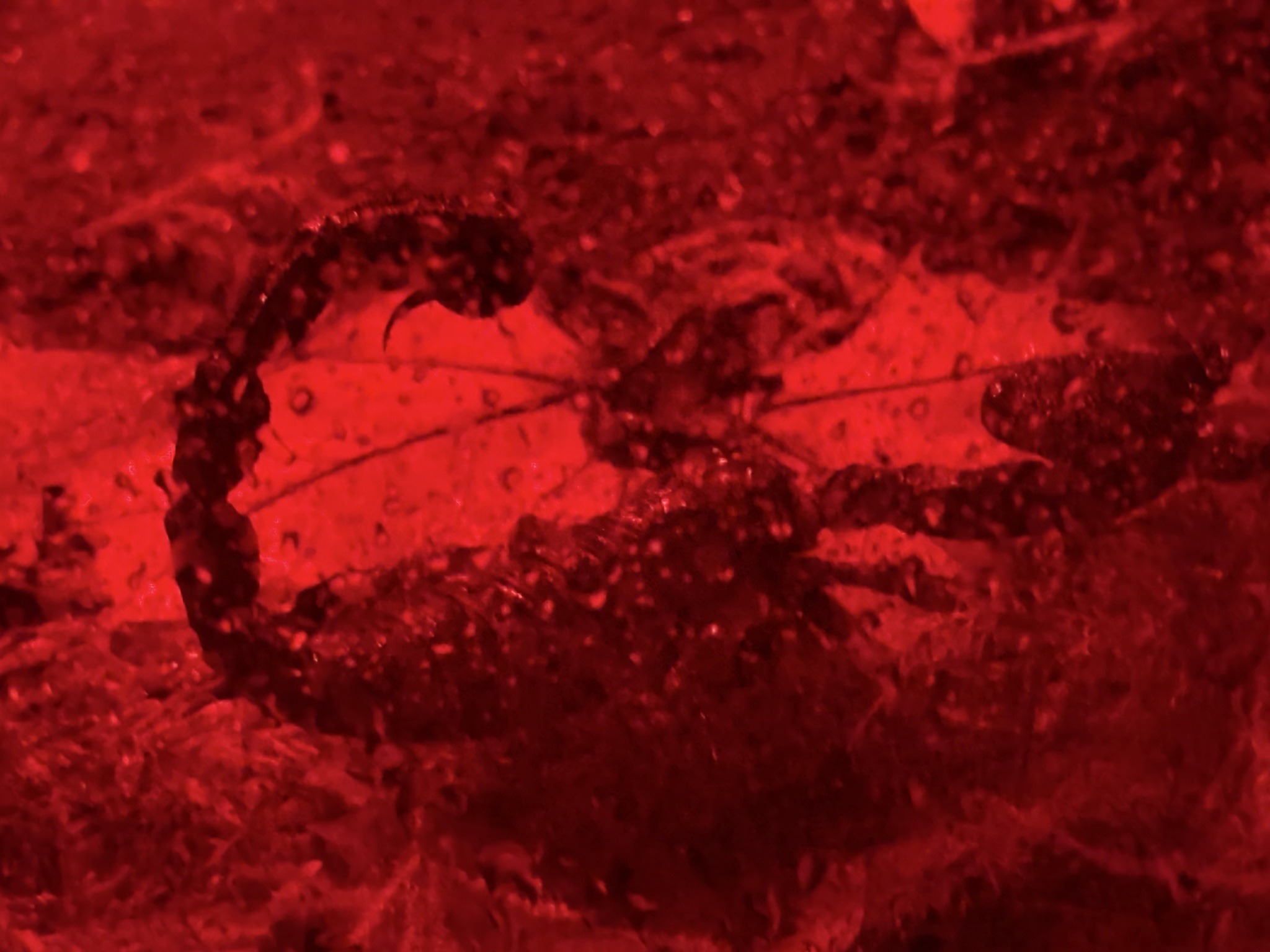
Scorpion
Scorpiones (order)
- Order & Family
- Order: Scorpiones, Family: Various (e.g., Buthidae, Caraboctonidae, Euscorpiidae)
- Size
- 9 mm to 23 cm (0.35 to 9 inches) depending on species
Natural Habitat
Arid deserts, tropical rainforests, grasslands, caves, and beneath rocks, leaf litter, or bark.
Diet & Feeding
Carnivorous; primarily feeds on insects, spiders, other arachnids, and occasionally small vertebrates like lizards and mice.
Behavior Patterns
Strictly nocturnal, hiding during the day to conserve moisture and avoid predators. They use pincers (pedipalps) to catch prey and a venomous tail sting (telson) to subduing prey or for self-defense. Female scorpions give birth to live young and carry them on their backs.
Risks & Benefits
Risks: Possesses a venomous sting that causes pain, localized swelling, and in some medically significant species (such as bark scorpions or fat-tailed scorpions), severe systemic reactions or fatality. Benefits: Important natural pest controllers that keep populations of insects and arachnids in check; scorpion venom is also researched for pharmaceutical applications.