
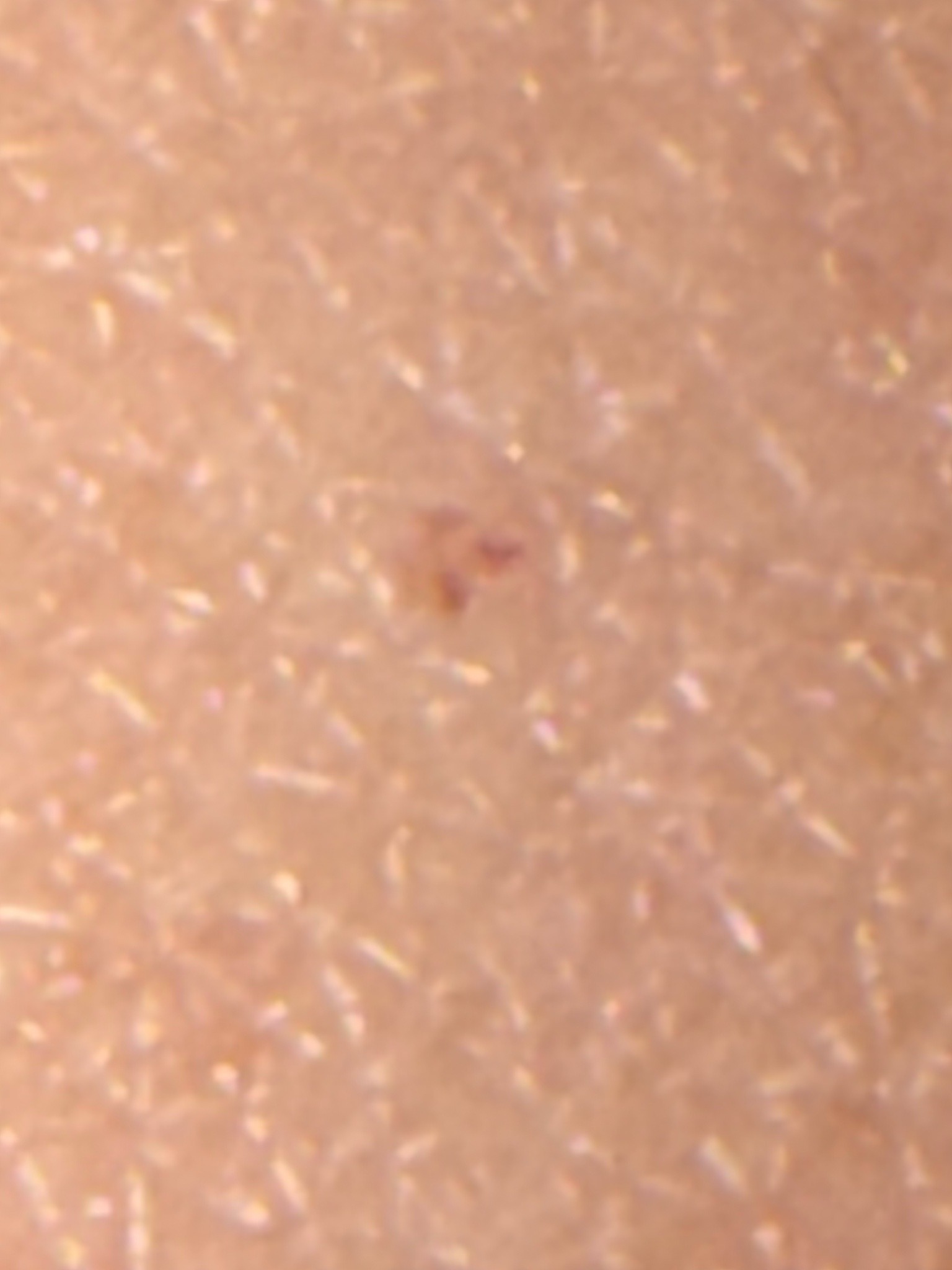
Community identification
Possible chigger (red mite larva)
Trombiculidae, likely *Trombicula* or *Neotrombicula* species
- Order & Family
- Acari (mites); family Trombiculidae
- Size
- Larvae are typically about 0.15–0.3 mm long, often barely visible without magnification.
Natural Habitat
Leaf litter, grassy vegetation, gardens, and humid soil; larvae may attach temporarily to people and animals.
Diet & Feeding
Larvae feed on liquefied skin tissue and tissue fluids; adults and nymphs primarily consume small arthropods and organic matter.
Behavior Patterns
Larvae climb vegetation and attach to passing hosts, commonly causing intensely itchy bites after several hours. They do not burrow into skin and usually detach within days.
Risks & Benefits
Bites can cause itchy, inflamed welts but chiggers are not established vectors of disease in most regions. Free-living stages help regulate small soil organisms and contribute to decomposition.