
Community identification
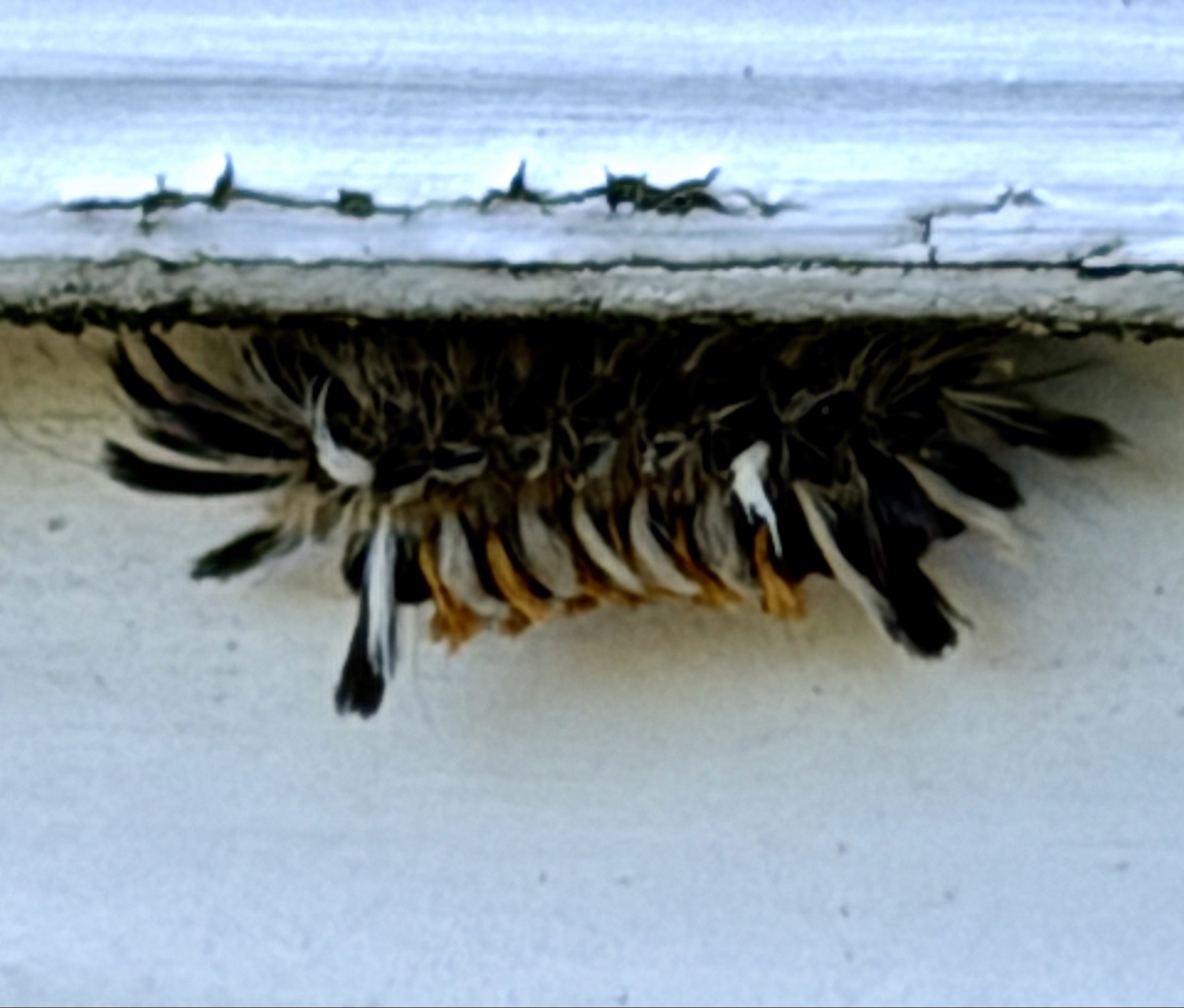
Tussock moth caterpillar
Likely Orgyia spp. (identification uncertain from image)
- Order & Family
- Lepidoptera; Erebidae (formerly Lymantriidae)
- Size
- Usually 25–40 mm (1–1.6 in) long when mature, depending on species.
Natural Habitat
Found on trees, shrubs, fences, and building surfaces, especially in temperate woodland, gardens, and urban areas.
Diet & Feeding
Larvae chew foliage from deciduous and occasionally coniferous plants; adults generally do not feed or feed minimally.
Behavior Patterns
Caterpillars are often hairy, solitary or clustered, and may wander to sheltered sites to pupate. Many species produce conspicuous egg masses covered with hairs from the female.
Risks & Benefits
Barbed hairs can cause itchy skin irritation, eye irritation, or respiratory symptoms in sensitive people. They are important herbivores and support birds, parasitoids, and other predators.