
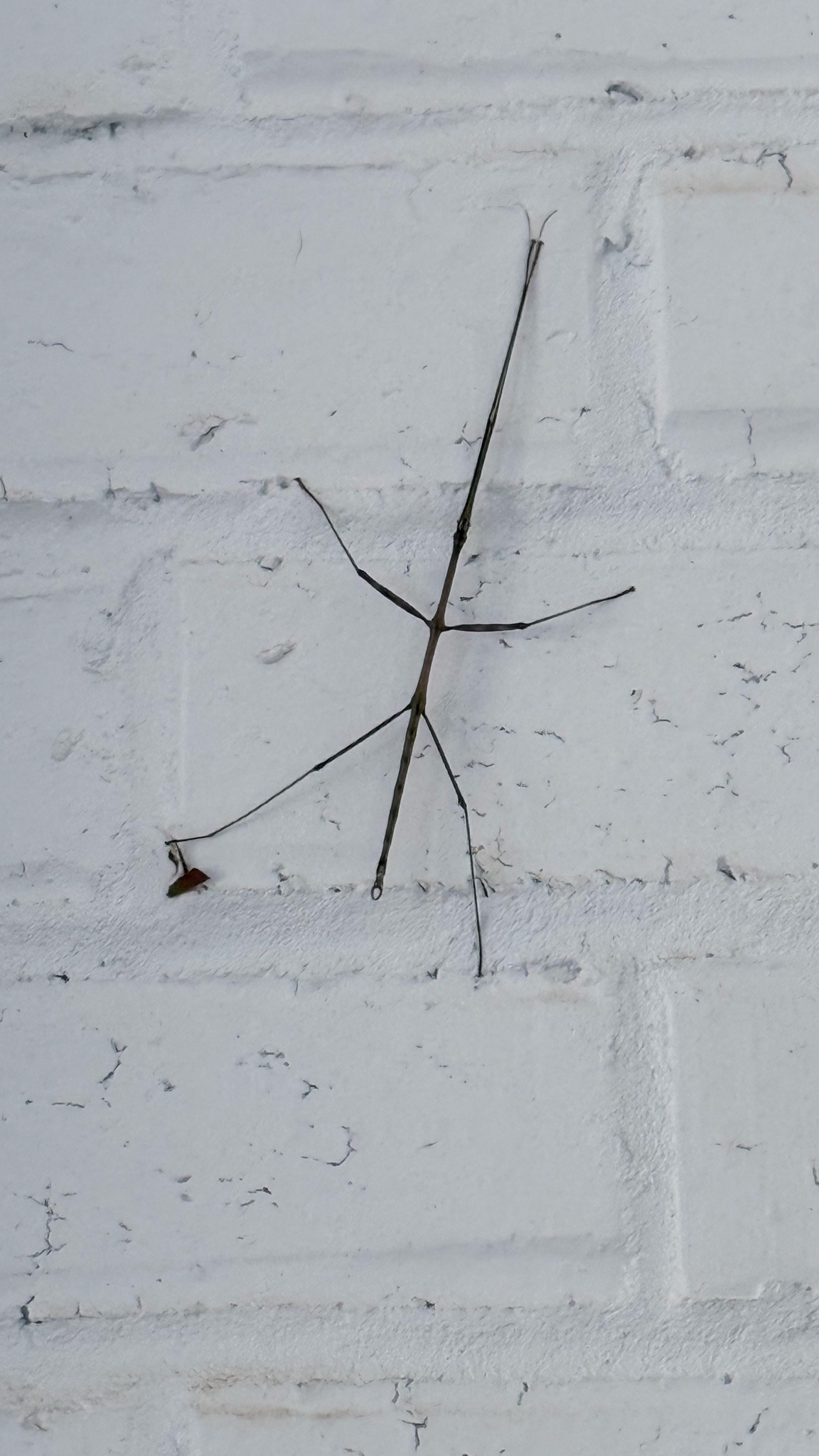
Stick insect (walking stick)
Likely Diapherodes sp. or a related stick insect; species-level identification is uncertain from the image
- Order & Family
- Phasmatodea; likely family Phasmatidae
- Size
- Common walking sticks range from about 25–150 mm (1–6 in), excluding antennae; this individual appears roughly 100–150 mm long.
Natural Habitat
Vegetation, shrubs, trees, and gardens, especially in warm temperate or tropical regions. It is shown resting on a wall, where stick insects may wander or seek shelter.
Diet & Feeding
Herbivorous, feeding mainly at night on leaves from trees, shrubs, and vines. Typical foods include bramble, rose, eucalyptus, guava, or other local foliage.
Behavior Patterns
Usually slow-moving and nocturnal, relying on extreme camouflage and remaining motionless when threatened; some sway like a twig in wind. Adults reproduce sexually or, in some species, by parthenogenesis, and females drop or deposit eggs individually.
Risks & Benefits
Generally harmless to people and do not bite or sting. They contribute to plant-based food webs and nutrient cycling, though abundant populations can occasionally damage ornamental or crop foliage.