
Community identification
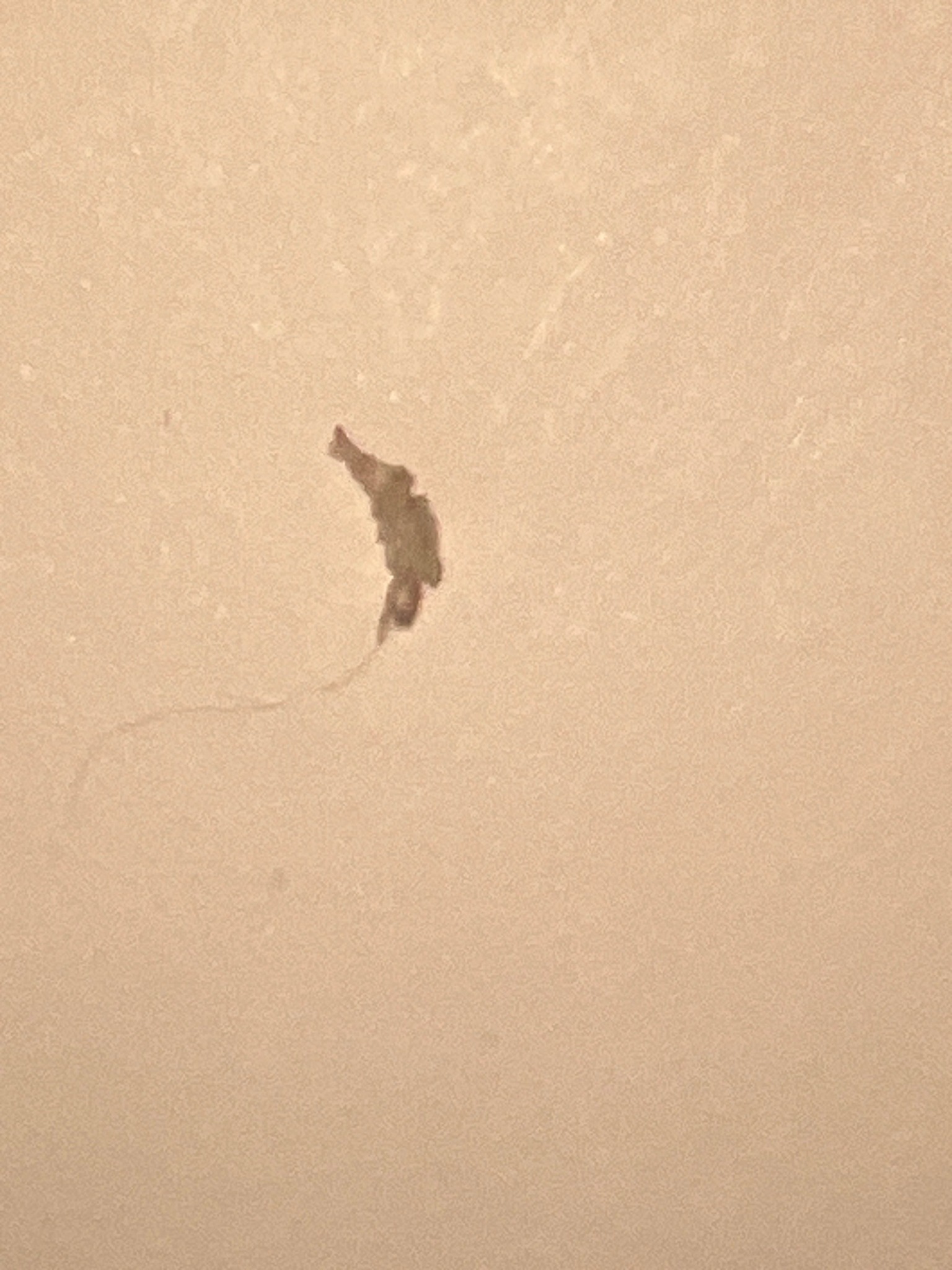
Unidentified small moth (likely a clothes moth)
Possibly Tineola bisselliella
- Order & Family
- Lepidoptera; Tineidae
- Size
- Adults are about 6–8 mm long, with a wingspan of roughly 9–16 mm; the pictured object may be a larval case or debris rather than an adult.
Natural Habitat
Dark, undisturbed indoor areas such as closets, carpets, upholstery, and stored textiles; larvae prefer protected, humid locations.
Diet & Feeding
Larvae consume keratin-containing materials, including wool, fur, feathers, hair, and natural-fiber textiles. Adults generally do not feed.
Behavior Patterns
Adults are weak fliers and avoid light; larvae hide while feeding and may leave silken webbing or portable cases. Development can take weeks to months depending on temperature and food.
Risks & Benefits
Not dangerous to people and do not bite, but larvae can damage clothing, carpets, and animal-fiber furnishings. Ecologically, moths serve as prey and help recycle organic material.