
Community identification
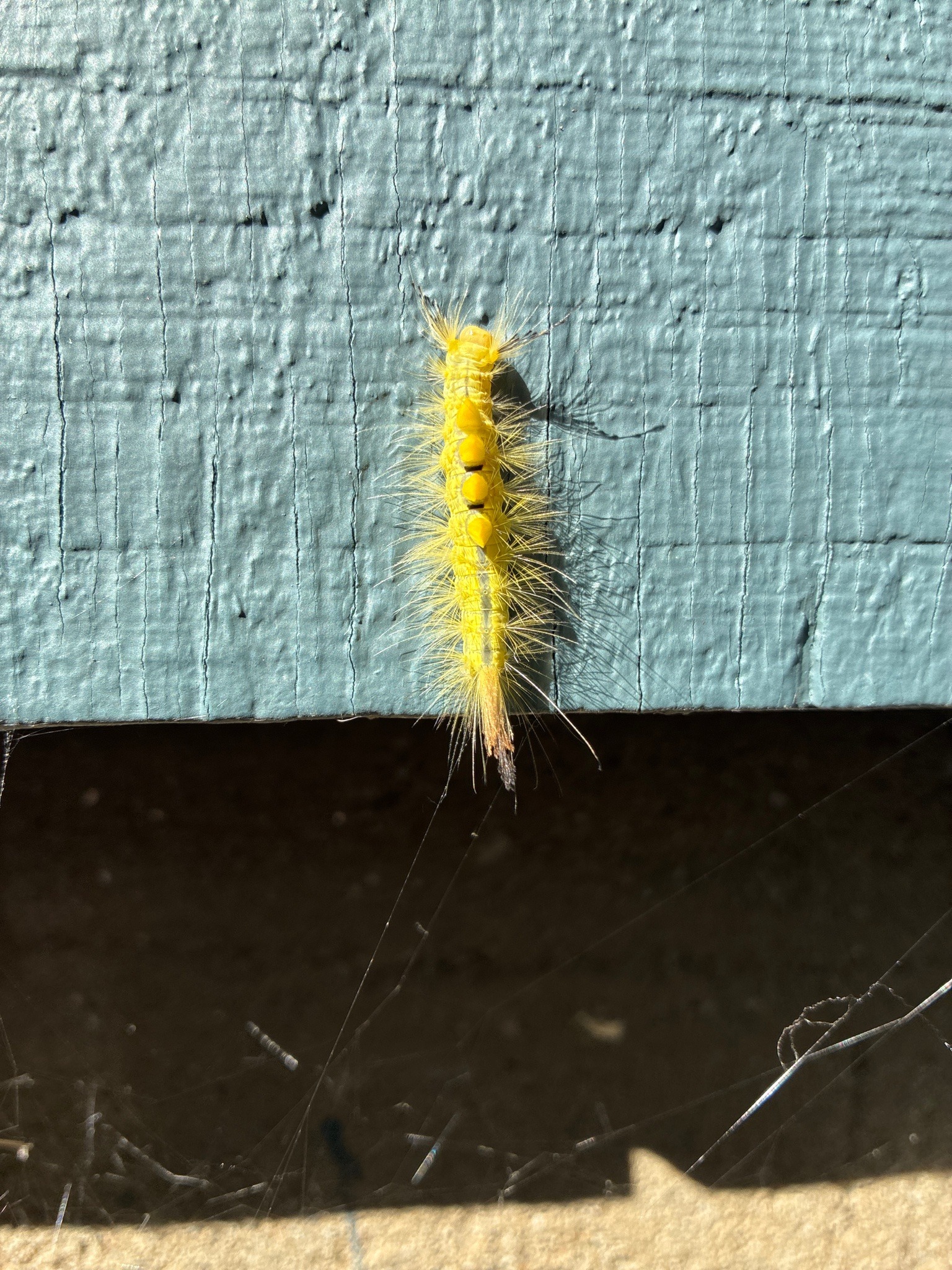
Yellow tussock moth caterpillar
Likely Orgyia sp. (tussock moth larva)
- Order & Family
- Lepidoptera; Erebidae (subfamily Lymantriinae)
- Size
- About 2–4 cm (0.8–1.6 in) long, depending on species and growth stage.
Natural Habitat
Trees, shrubs, gardens, and buildings near vegetation; commonly found in temperate regions. This larva may be wandering to pupate.
Diet & Feeding
Chews leaves from many deciduous trees and shrubs, including oak, willow, fruit trees, and ornamentals.
Behavior Patterns
Larvae are active mostly at night and may wander on walls or other surfaces before pupating. Dense tufts and long hairs provide defense; adults emerge as moths.
Risks & Benefits
Its hairs can cause itchy, irritating dermatitis in sensitive people, so avoid handling it. It contributes to food webs, while heavy infestations can defoliate ornamental or forest trees.