
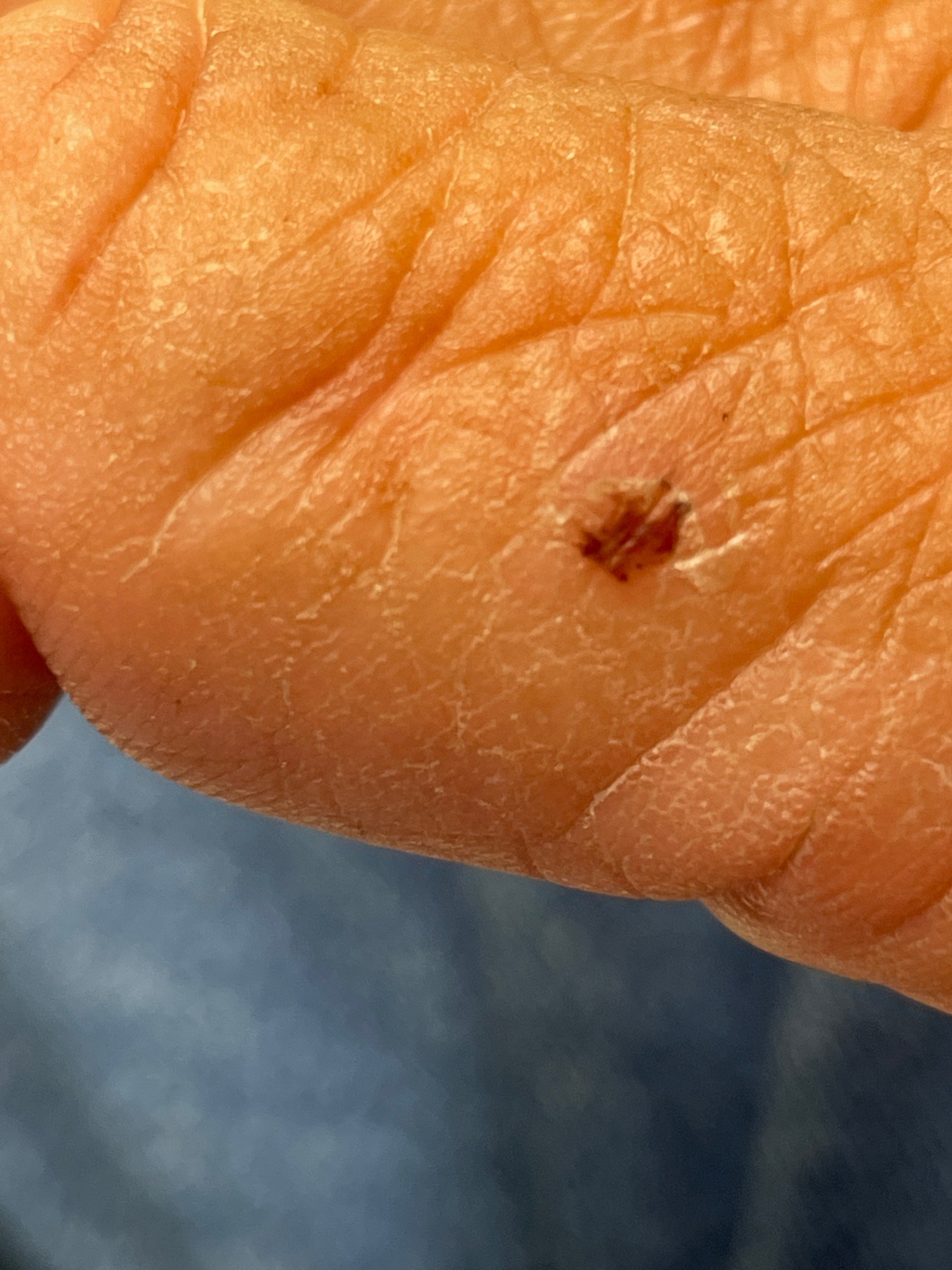
Community identification
Black legged tick (Nymph or Seed Tick)
Ixodes scapularis
- Order & Family
- Ixodida / Ixodidae
- Size
- 0.5 mm to 2 mm (unfed larvae and nymphs are extremely small, often appearing as tiny specks or flecks on the skin).
Natural Habitat
Wooded areas, brushy, high-grass zones, leaf litter, and vegetation edges where mammalian hosts frequent.
Diet & Feeding
Hematophagous (feeds exclusively on the blood of vertebrate hosts, such as mammals, birds, and reptiles).
Behavior Patterns
Engages in 'questing' by climbing low vegetation and extending legs to grasp passing hosts. Once attached, it inserts its mouthparts into the skin to feed for several days.
Risks & Benefits
Risks: Vector for Lyme disease, Anaplasmosis, Babesiosis, and Powassan virus. Early, safe removal using fine-tipped tweezers is recommended. Benefits: Serves as a food source for small predators, birds, and reptiles in natural ecosystems.