
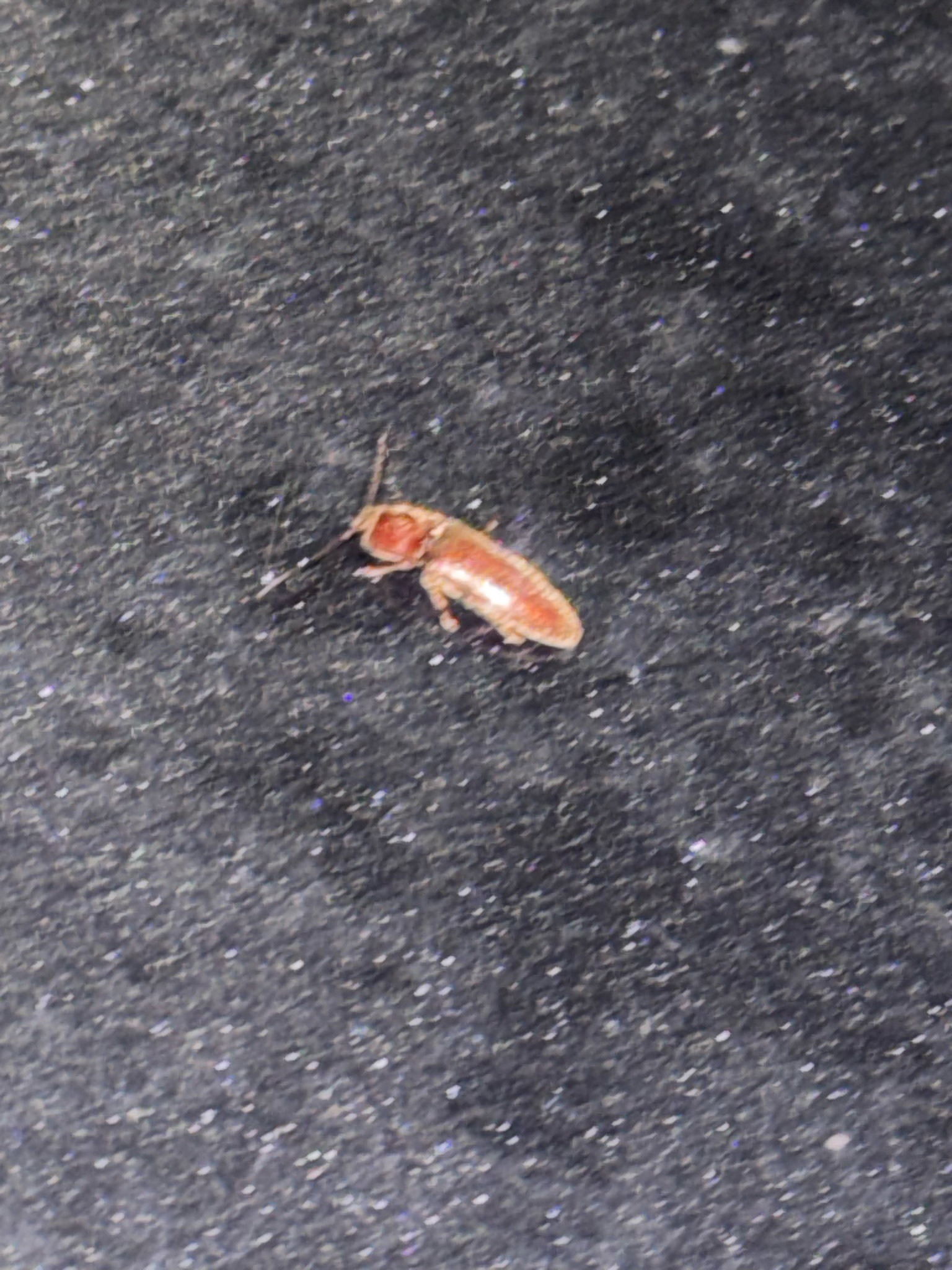
Community identification
Termite (likely a worker or nymph)
Undetermined; likely *Reticulitermes* or another subterranean termite
- Order & Family
- Blattodea, family Rhinotermitidae (tentative)
- Size
- Typically 3–6 mm long for workers; reproductive forms are larger and winged. Exact size is difficult to determine from the image.
Natural Habitat
Moist soil, decaying wood, wall voids, crawl spaces, and other concealed areas near structures. The pictured insect may have emerged from infested wood or debris.
Diet & Feeding
Feeds mainly on cellulose in wood, paper, cardboard, and plant debris, using gut microbes to digest it.
Behavior Patterns
Highly social and usually lives in colonies with workers, soldiers, and reproductives. Workers forage in protected tunnels and avoid light; winged adults may swarm seasonally.
Risks & Benefits
Can cause serious structural and property damage when colonies infest buildings. Ecologically, termites recycle dead wood and return nutrients to soil; a professional inspection is advisable if more are found.