
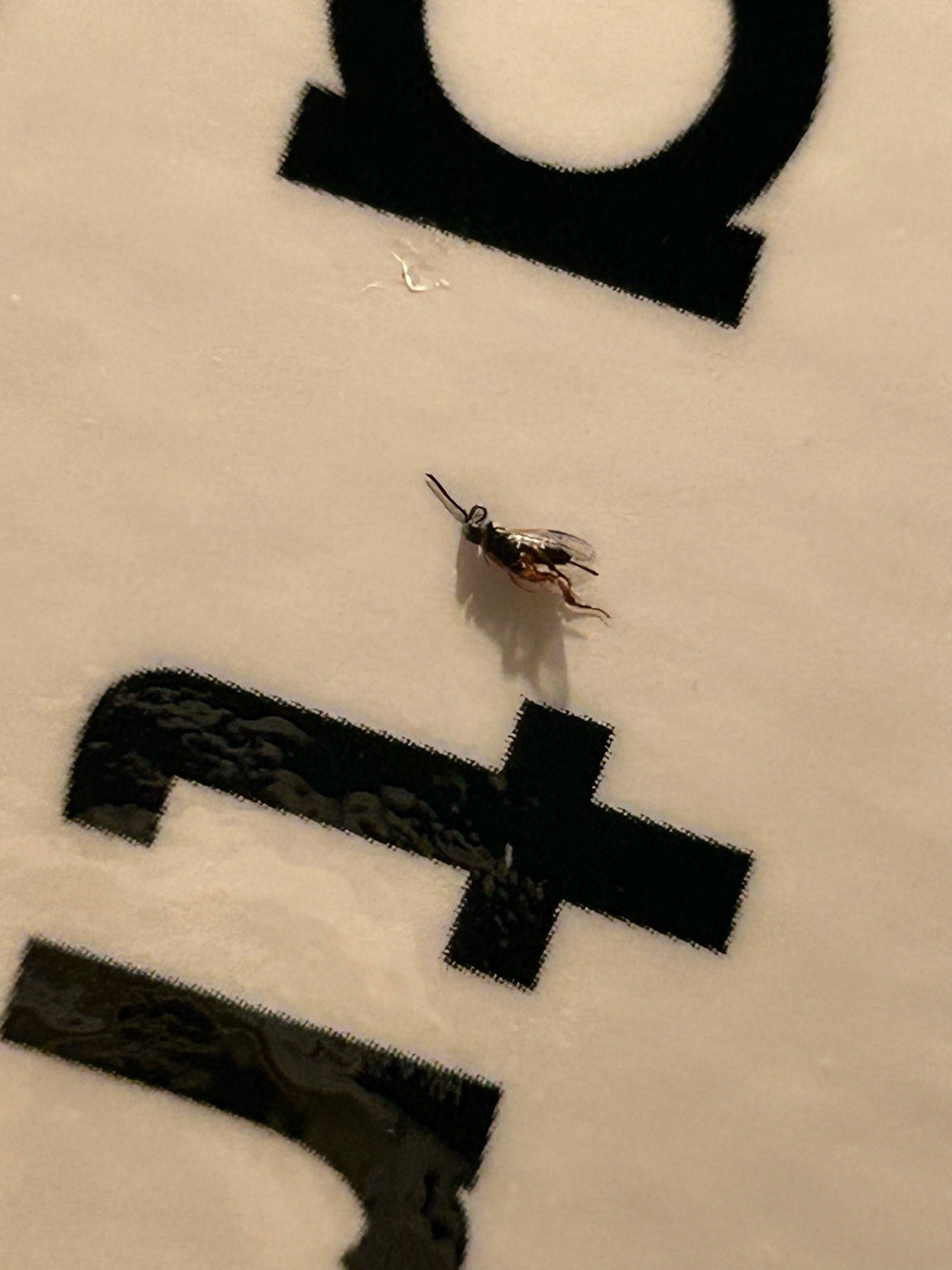
Community identification
Parasitic Wasp
Hymenoptera (suborder Apocrita)
- Order & Family
- Order: Hymenoptera, Various Families (such as Ichneumonidae or Braconidae)
- Size
- Varies widely from microscopic up to several centimeters, though most common small parasitic wasps are 2 to 10 millimeters.
Natural Habitat
Gardens, forests, fields, and occasionally indoor spaces where other insects are present.
Diet & Feeding
Adults feed primarily on nectar, pollen, and honeydew. Larvae are parasitic and feed on the body fluids and tissues of host insects like caterpillars, aphids, or beetle larvae.
Behavior Patterns
Females actively search for host insects to lay their eggs inside or on them. The developing larvae consume the host from the inside out before pupating.
Risks & Benefits
Benefits include acting as natural biological control agents by managing populations of garden and agricultural pests. Risks to humans are extremely low, as most do not sting humans, and those that can only do so defensively if mishandled.