
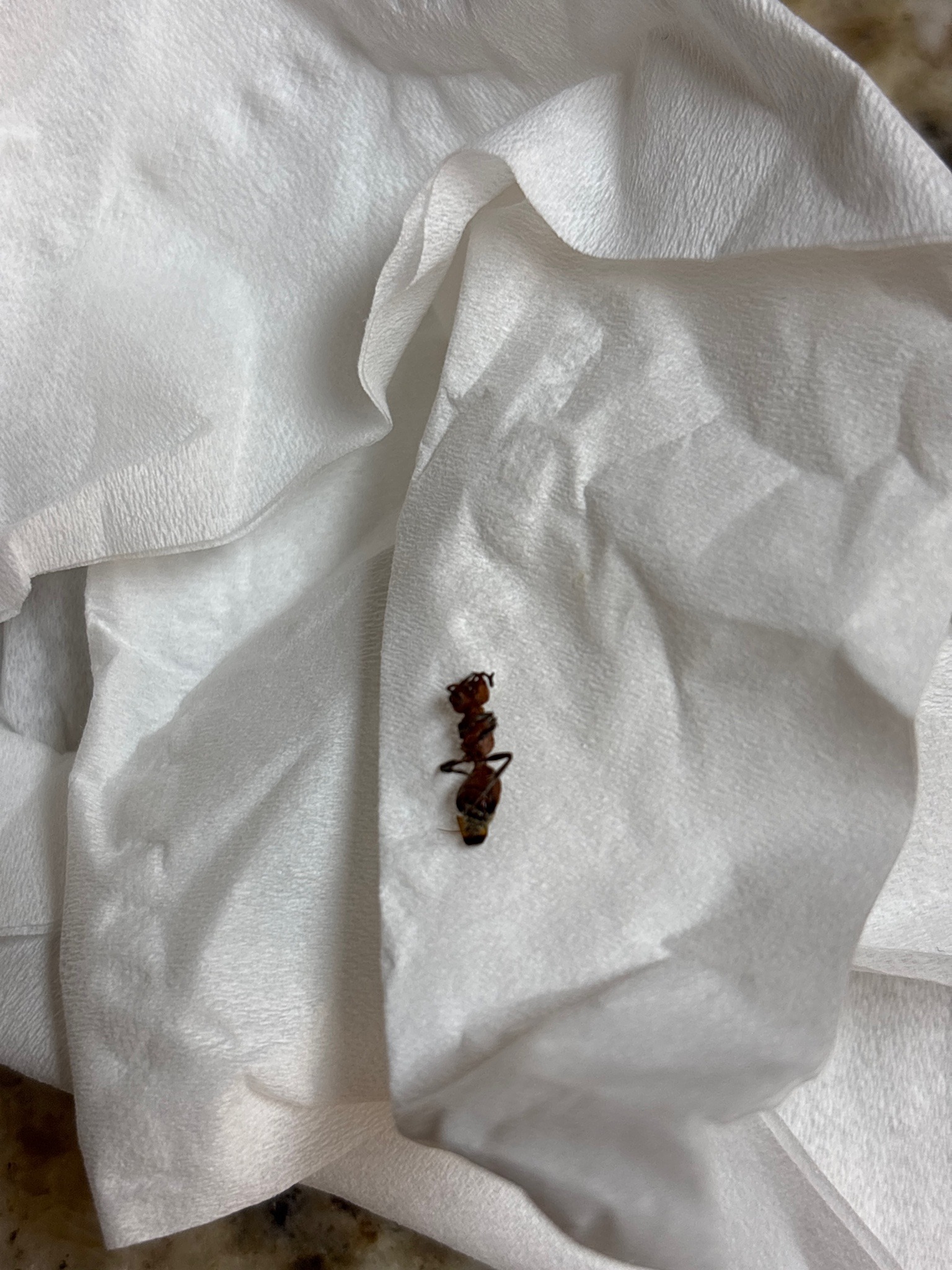
Community identification
Velvet ant (wingless female wasp)
Likely Dasymutilla sp.
- Order & Family
- Hymenoptera; Mutillidae
- Size
- About 6–25 mm long, depending on species; this individual appears roughly 10–15 mm.
Natural Habitat
Dry, sandy or open habitats, including lawns, gardens, and woodland edges. Females often roam across the ground or enter buildings accidentally.
Diet & Feeding
Adults commonly consume nectar and other plant fluids; some also take small insect prey. Larvae consume developing bees or wasps inside their nests.
Behavior Patterns
Wingless females are solitary, fast-moving, and conspicuously hairy, with a painful defensive sting. They are parasitoids: females locate host nests and lay eggs on bee or wasp larvae.
Risks & Benefits
They are not aggressive but can deliver a very painful sting if handled or stepped on; the nickname “cow killer” is exaggerated. They help regulate solitary bee and wasp populations and contribute modestly to pollination.