
Community identification
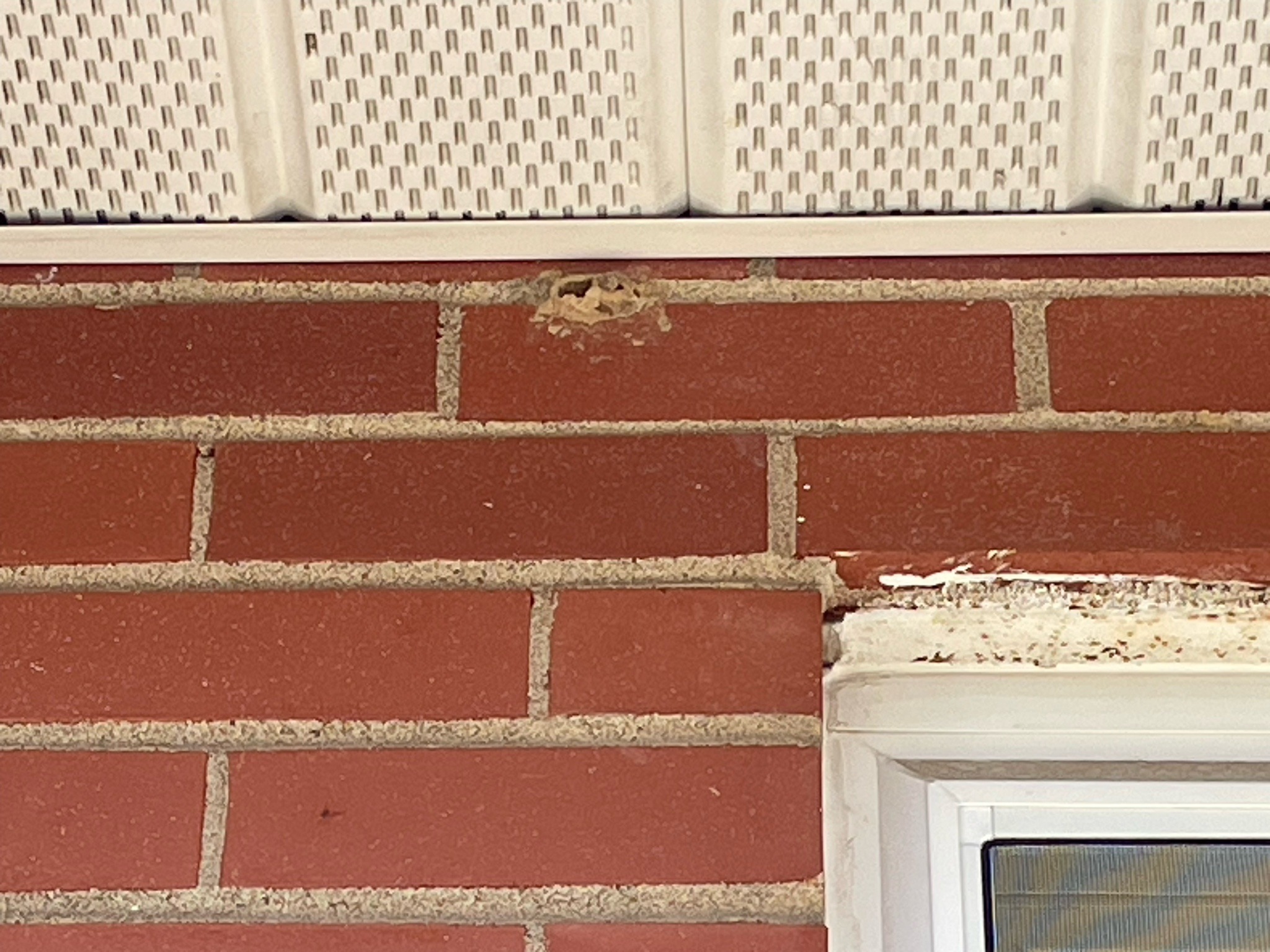
Mud dauber nest (insect not visible)
Likely Sceliphron or Trypoxylon species
- Order & Family
- Hymenoptera; Sphecidae or Crabronidae
- Size
- Adult wasps are typically 12–30 mm long; individual mud nest cells are about 10–20 mm wide.
Natural Habitat
Sheltered, dry structures such as walls, eaves, porches, and window frames. These solitary wasps commonly build nests on buildings.
Diet & Feeding
Adults mainly consume nectar. Females provision nest cells with paralyzed spiders or other small insects for their larvae.
Behavior Patterns
Solitary females collect mud to construct cylindrical or clustered brood cells, then seal them after depositing prey and an egg. Adults are generally nonaggressive and do not defend large colonies.
Risks & Benefits
They rarely sting unless handled and are not structural pests. They benefit gardens by reducing spiders and other arthropods; the pictured mud structure can usually be left in place or removed when inactive.