
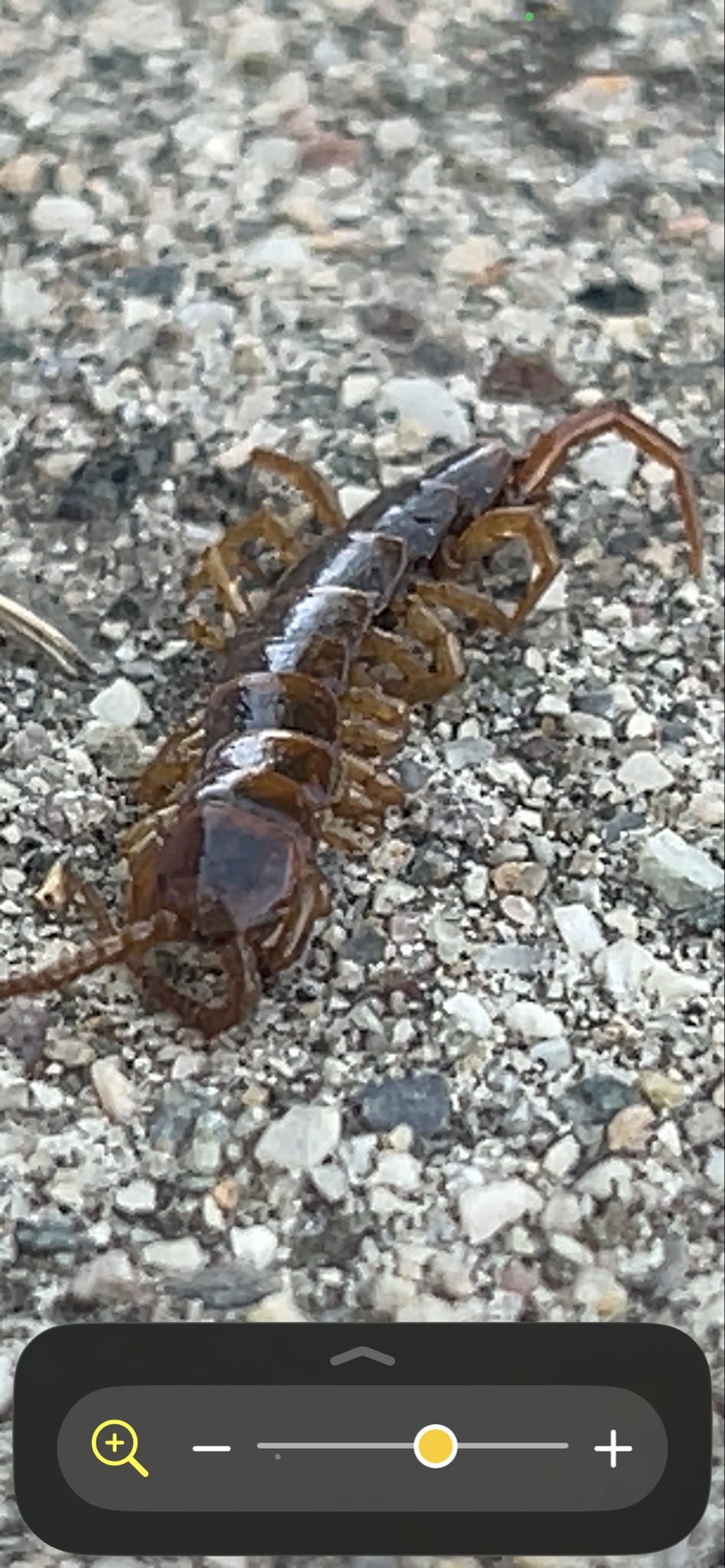
Community identification
Bark scorpion (likely)
Centruroides sp.
- Order & Family
- Scorpiones; family Buthidae
- Size
- Typically 5–7.5 cm (2–3 in), depending on species.
Natural Habitat
Warm, dry habitats such as deserts, rocky ground, leaf litter, and buildings. It shelters under stones, bark, debris, and crevices during the day.
Diet & Feeding
Predatory; eats insects, spiders, and other arthropods, usually grasping prey with its pincers and injecting venom with its stinger.
Behavior Patterns
Nocturnal and solitary, detecting prey with sensory hairs and vibrations. Young ride on the mother’s back until their first molt; it fluoresces under ultraviolet light.
Risks & Benefits
Most bark scorpion stings cause intense pain, numbness, and tingling; severe neurological symptoms are possible, especially in children. It benefits ecosystems by controlling insect and spider populations.