
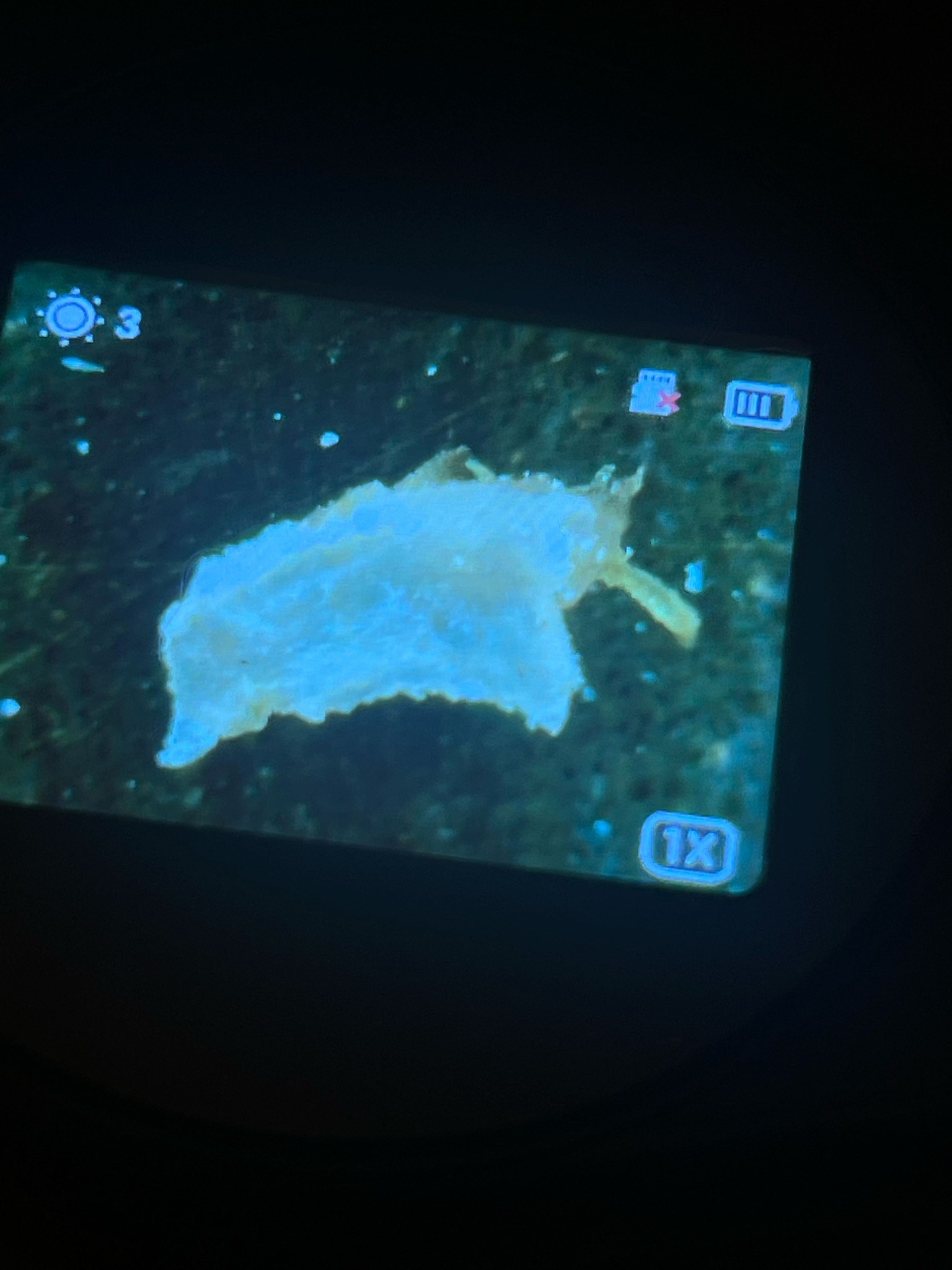
Green lacewing larva (likely), often called an aphid lion
Chrysopidae; species indeterminate
- Order & Family
- Neuroptera, Chrysopidae
- Size
- Larvae commonly measure about 2–10 mm; adults are typically 10–20 mm long with wings.
Natural Habitat
Vegetation, gardens, forests, and crops, especially where aphids and other soft-bodied prey occur. The image appears to show a larva carrying debris or prey remains as camouflage.
Diet & Feeding
Larvae are predatory, sucking fluids from aphids, mites, scale insects, thrips, and other small arthropods. Adults usually eat nectar, pollen, honeydew, or sometimes small insects, depending on species.
Behavior Patterns
Larvae actively hunt and may carry debris, shed skins, or prey remains on their backs for camouflage and protection. They pupate in a silken, spherical cocoon before emerging as winged adults.
Risks & Benefits
Harmless to people and beneficial in gardens and agriculture because larvae control aphids and other pests. They may occasionally nip if handled, but they do not pose a significant health risk.