
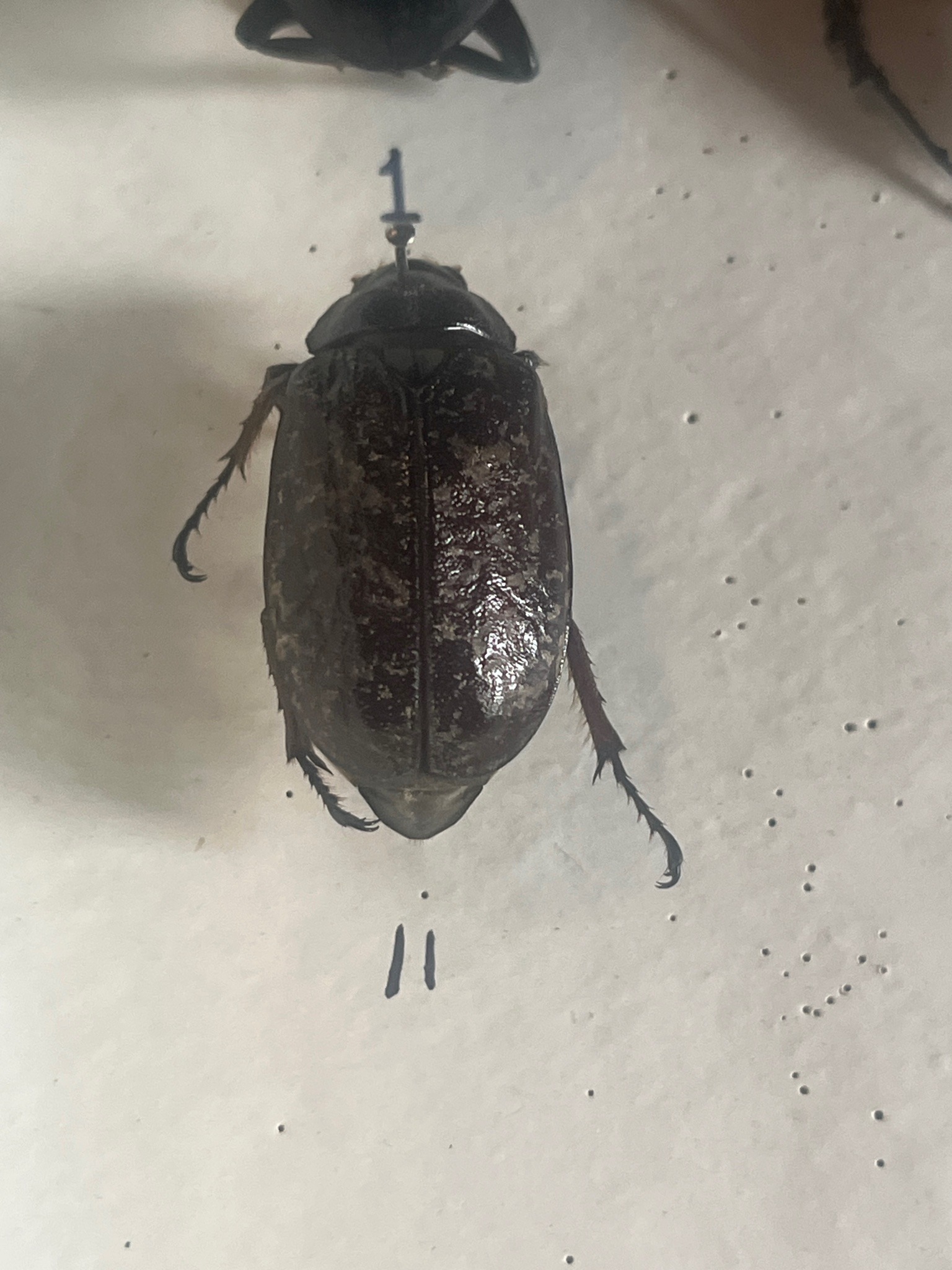
Community identification
Predaceous diving beetle
Likely Dytiscus species (exact species uncertain from the image)
- Order & Family
- Coleoptera; Dytiscidae
- Size
- Typically 25–40 mm long; some Dytiscus species reach about 45 mm.
Natural Habitat
Freshwater ponds, lakes, marshes, and slow-moving streams; adults often fly to new water bodies at night.
Diet & Feeding
Adults and larvae are aquatic predators that eat insects, tadpoles, small crustaceans, and other small aquatic animals; larvae inject digestive enzymes into prey.
Behavior Patterns
Strong swimmers with flattened, streamlined bodies and oar-like hind legs. They periodically surface to store air beneath the wing covers and may overwinter underwater or in nearby soil.
Risks & Benefits
They are beneficial predators that help regulate aquatic invertebrate populations. Adults and especially larvae can deliver a painful defensive bite, but they are not medically dangerous and do not infest homes.