
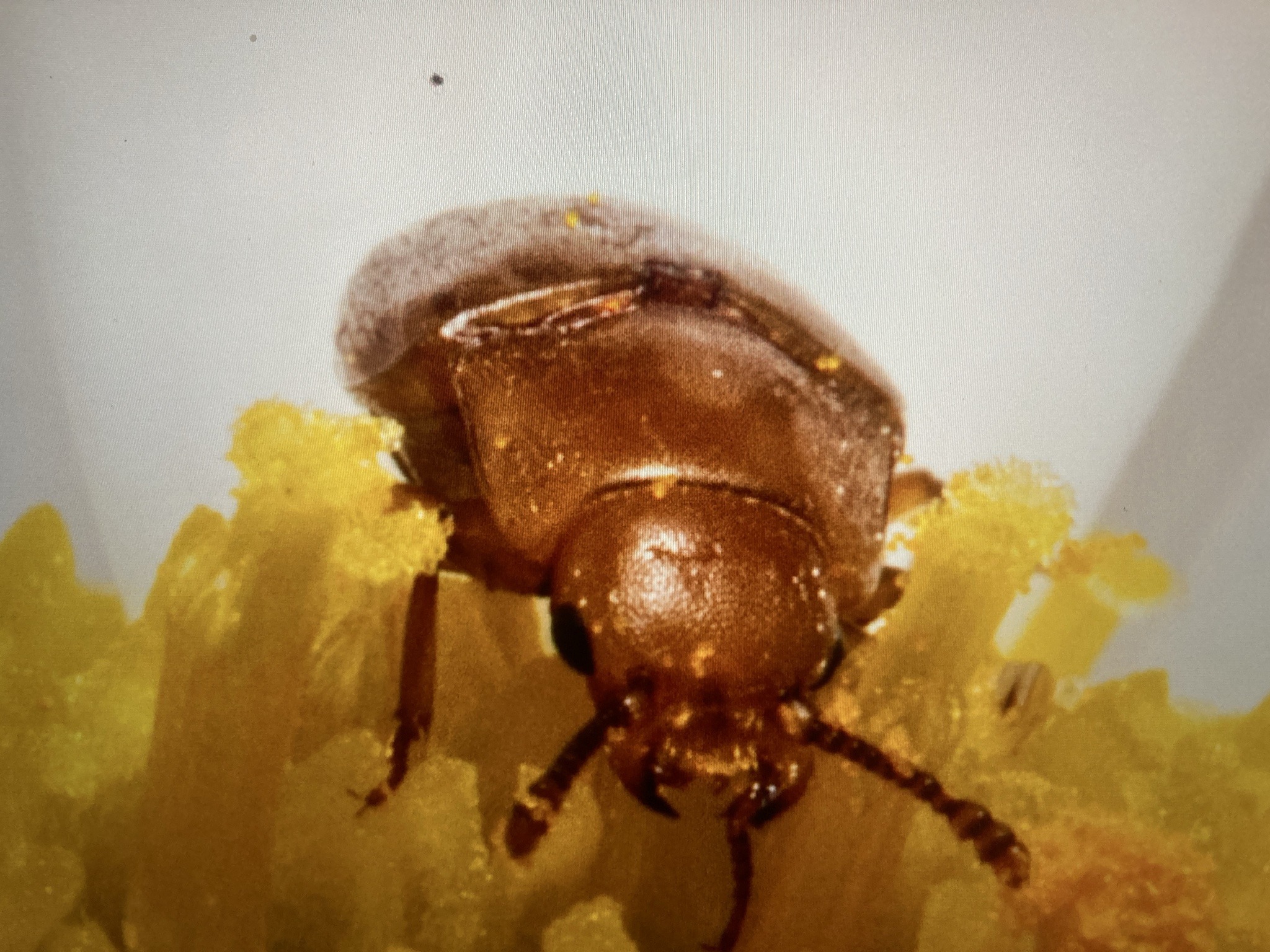
Community identification
June beetle (June bug)
Phyllophaga spp.
- Order & Family
- Coleoptera; Scarabaeidae
- Size
- Typically 15–30 mm (0.6–1.2 in) long, depending on species.
Natural Habitat
Woodlands, grasslands, gardens, and areas with turf or sandy soil; adults are commonly attracted to lights at night.
Diet & Feeding
Adults feed mainly on leaves, flowers, and sometimes fruit. Larvae (“white grubs”) eat grass and other plant roots underground.
Behavior Patterns
Adults are nocturnal, strong but clumsy fliers, and often emerge in late spring or summer. Females lay eggs in soil; larvae remain underground for one to several years before pupating.
Risks & Benefits
Adults can damage foliage, while larvae may injure lawns, crops, and garden plants by eating roots. They also provide food for birds, mammals, and other predators and help cycle nutrients in soil.