
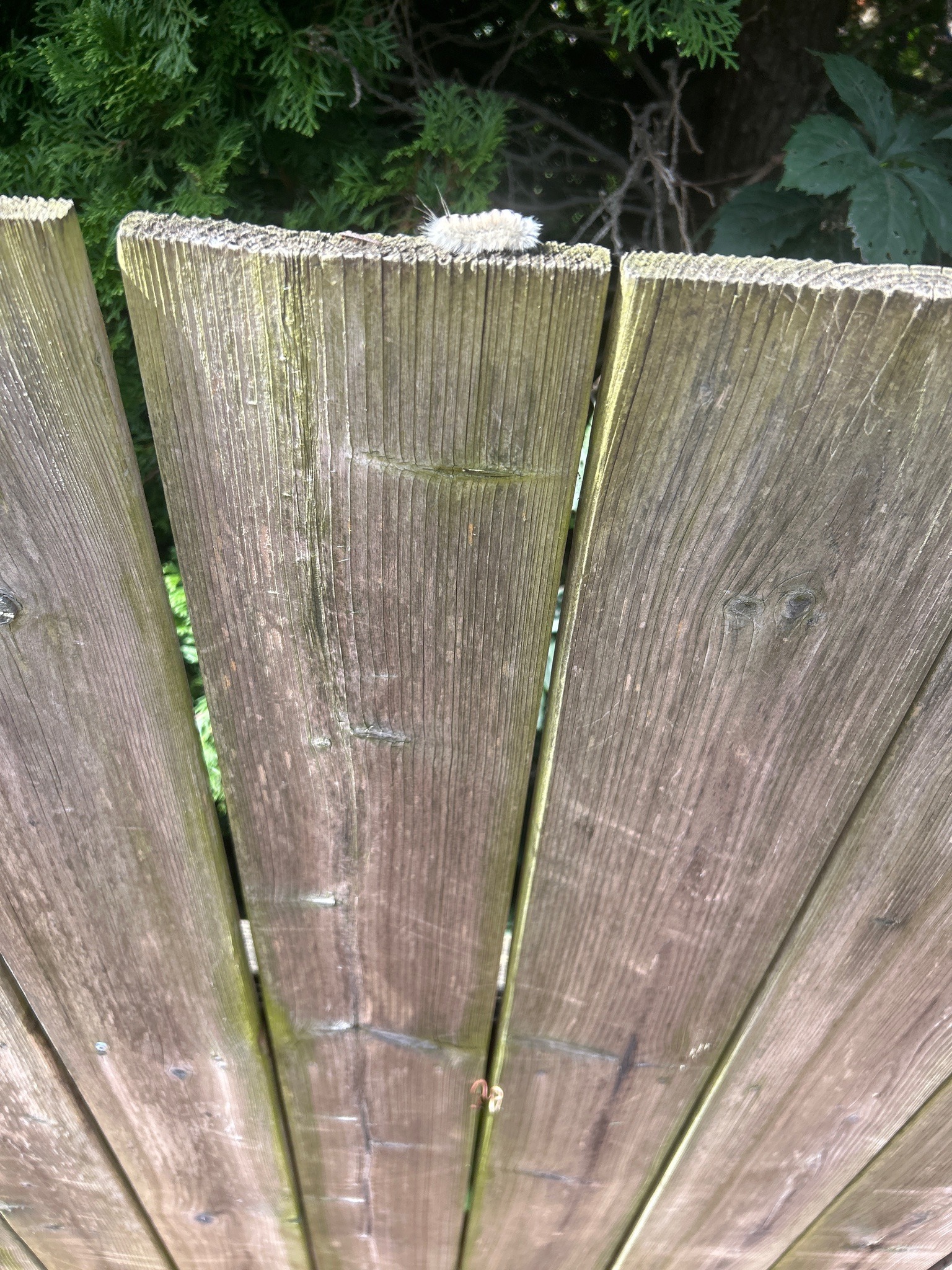
Whitefly (likely woolly whitefly)
Aleurothrixus floccosus (probable)
- Order & Family
- Hemiptera; Aleyrodidae
- Size
- Adults are about 1–2 mm long; the conspicuous waxy filaments can make colonies appear several millimeters wide.
Natural Habitat
Plant foliage and nearby surfaces in warm gardens, especially where evergreen trees or shrubs provide host plants. The insects often cluster on leaf undersides but may rest on fences and other structures.
Diet & Feeding
Nymphs and adults pierce plant tissues and suck phloem sap. They excrete honeydew, which can support sooty mold.
Behavior Patterns
Adults are tiny, moth-like insects that readily fly when disturbed. Immature stages remain attached to leaves beneath a white, cottony wax covering and reproduce rapidly in warm conditions.
Risks & Benefits
Usually harmless to people and animals, but heavy infestations can weaken ornamental plants and cause yellowing or sooty mold. They are prey for lady beetles, lacewings, parasitoid wasps, and other beneficial insects.