
Community identification
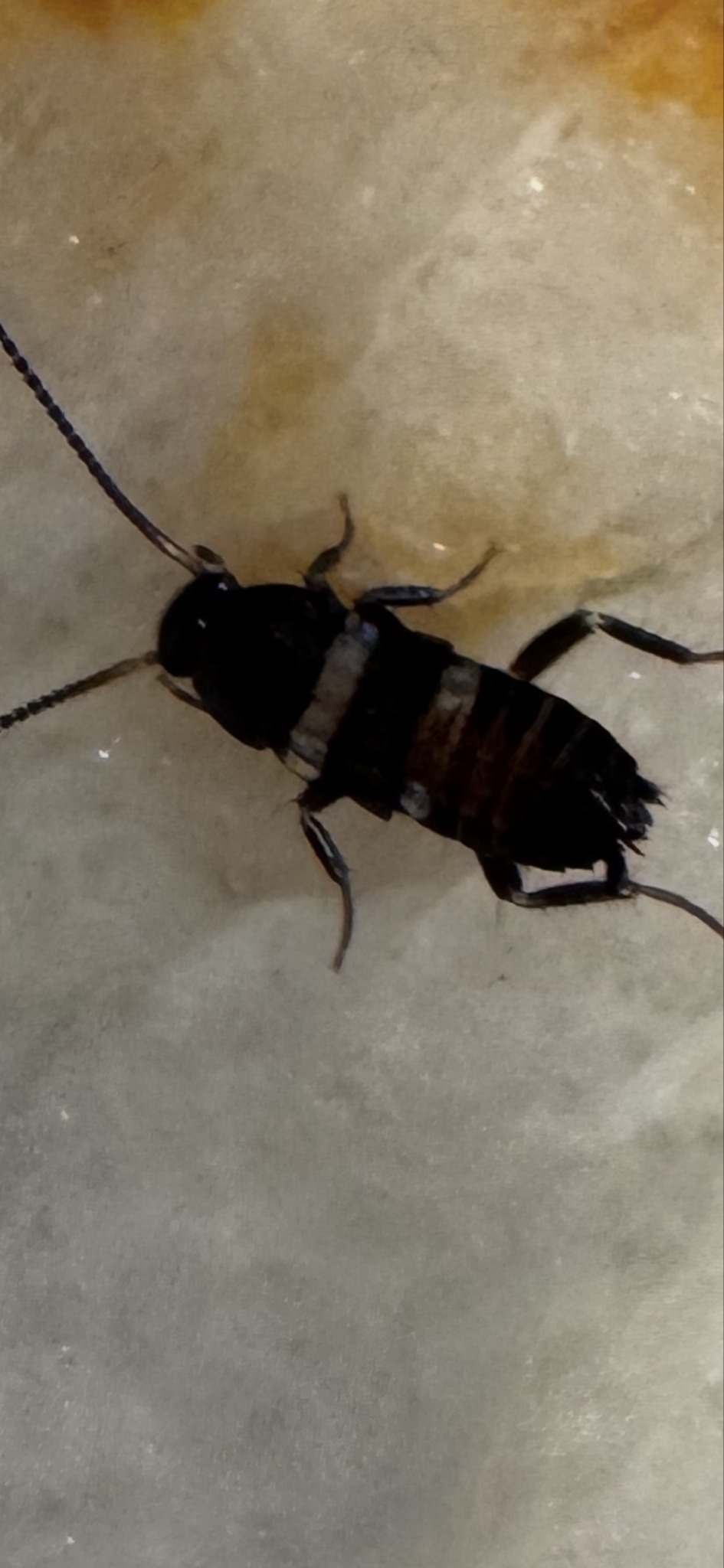
Earwig (likely a juvenile European earwig)
Forficula auricularia
- Order & Family
- Dermaptera; Forficulidae
- Size
- Adults are typically 12–16 mm long, excluding the forceps; juveniles are smaller and lack fully developed wings and pincers.
Natural Habitat
Moist, sheltered places such as leaf litter, mulch, gardens, under stones, and buildings. They are mainly nocturnal and may enter homes seeking moisture.
Diet & Feeding
Omnivorous, feeding on decaying plant matter, algae, fungi, small insects, and soft plant tissues. They may scavenge household food residues.
Behavior Patterns
Nocturnal and moisture-seeking, hiding during daylight. Females guard and tend their eggs and young; juveniles molt several times before adulthood.
Risks & Benefits
Harmless to people and not venomous; the abdominal forceps are used for defense and mating but rarely pinch humans. Earwigs recycle organic matter and eat some aphids, though they can occasionally damage flowers, fruit, and seedlings.