
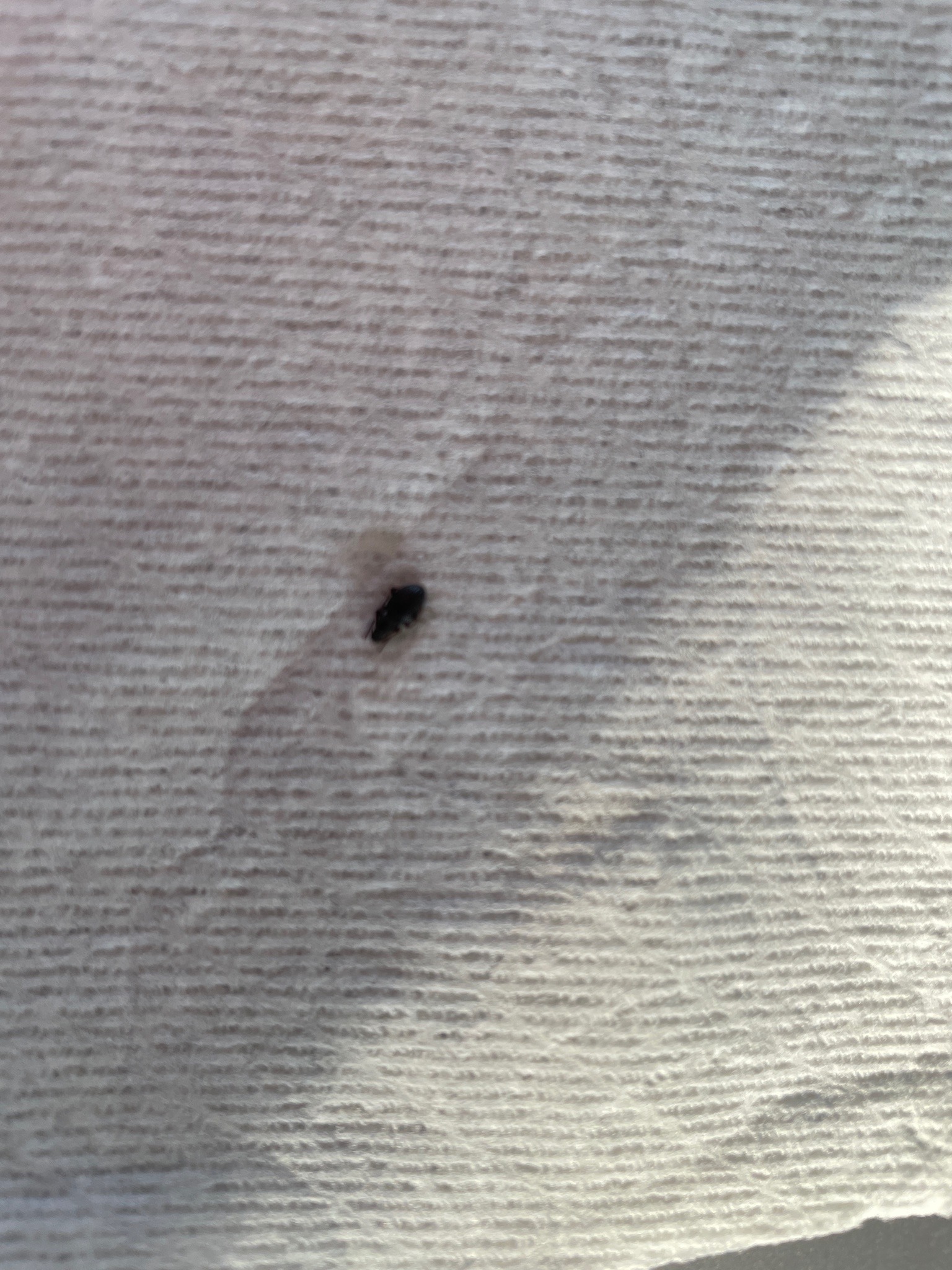
Community identification
Flea (likely cat flea)
Ctenocephalides felis
- Order & Family
- Siphonaptera; Pulicidae
- Size
- Adults are about 1.5–3.3 mm long; the pictured insect is too small and indistinct for certain identification.
Natural Habitat
Fleas live on mammals—especially cats, dogs, and wildlife—and in carpets, bedding, upholstery, and soil where immature stages develop.
Diet & Feeding
Adults feed on blood. Larvae consume dried blood in feces, shed skin, and other organic debris in the environment.
Behavior Patterns
Wingless adults jump powerfully and move rapidly through fur or fabric. Eggs and larvae commonly accumulate in pet resting areas, with development accelerated by warmth and humidity.
Risks & Benefits
Bites cause itching and allergic dermatitis and may transmit pathogens or tapeworms. Fleas have little direct ecological benefit to humans but serve as food for predators and parasites.