
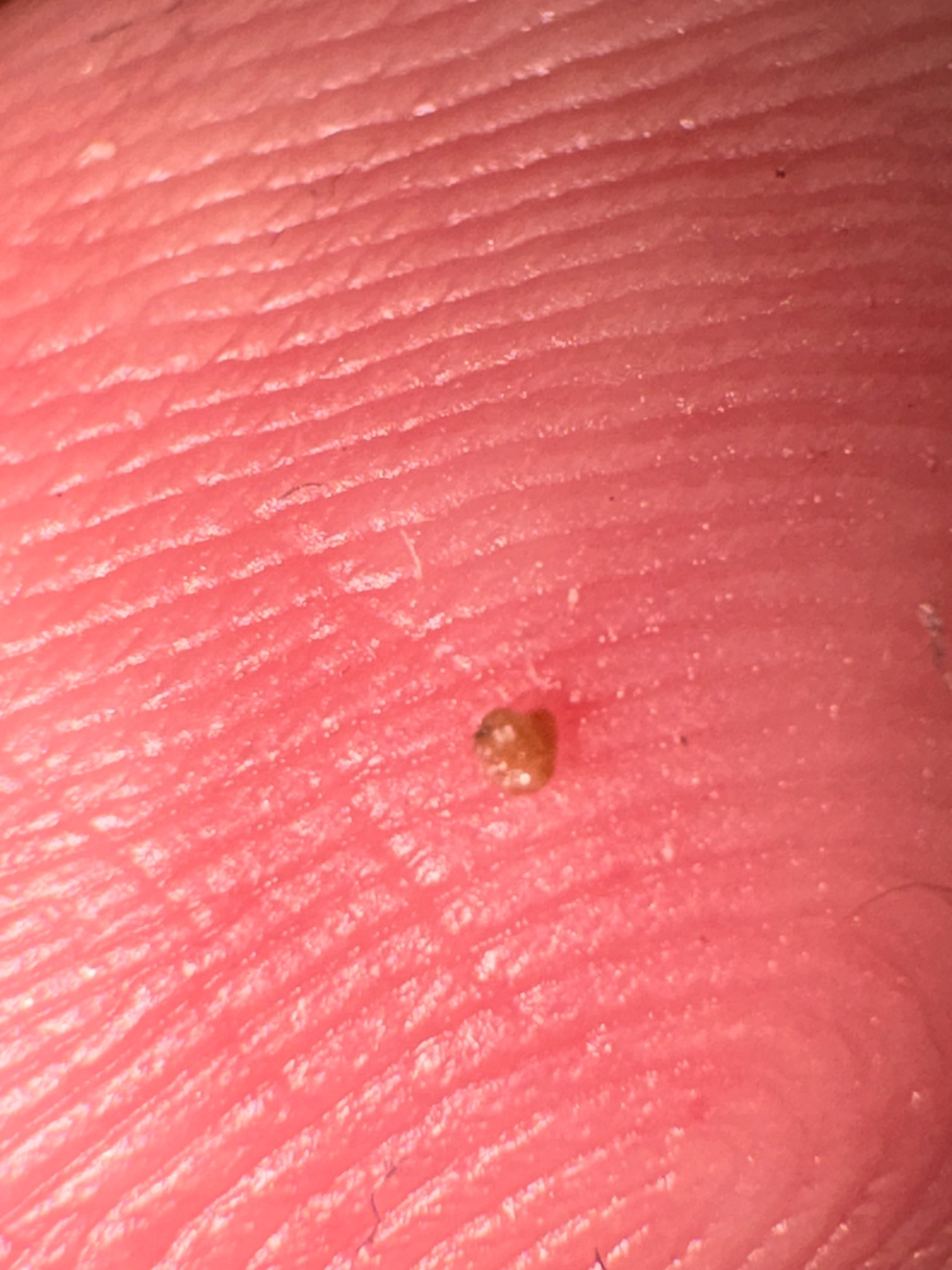
Community identification
Flea (likely)
Ctenocephalides species, probably Ctenocephalides felis
- Order & Family
- Siphonaptera; Pulicidae
- Size
- About 1.5–3.3 mm long; the photographed specimen appears much smaller than a typical adult, so identification is uncertain.
Natural Habitat
Homes, carpets, bedding, upholstery, and animal resting areas; adults live on mammalian hosts.
Diet & Feeding
Adults consume blood, mainly from cats, dogs, wildlife, or humans; larvae feed on dried blood and organic debris.
Behavior Patterns
Wingless, laterally flattened, and powerful jumpers; adults emerge in response to heat, movement, or vibration, while eggs and larvae develop off-host.
Risks & Benefits
Bites cause itchy, irritating welts and may trigger flea-allergy dermatitis; fleas can transmit pathogens and tapeworms. They provide minor food for predators but are primarily household and veterinary pests.