
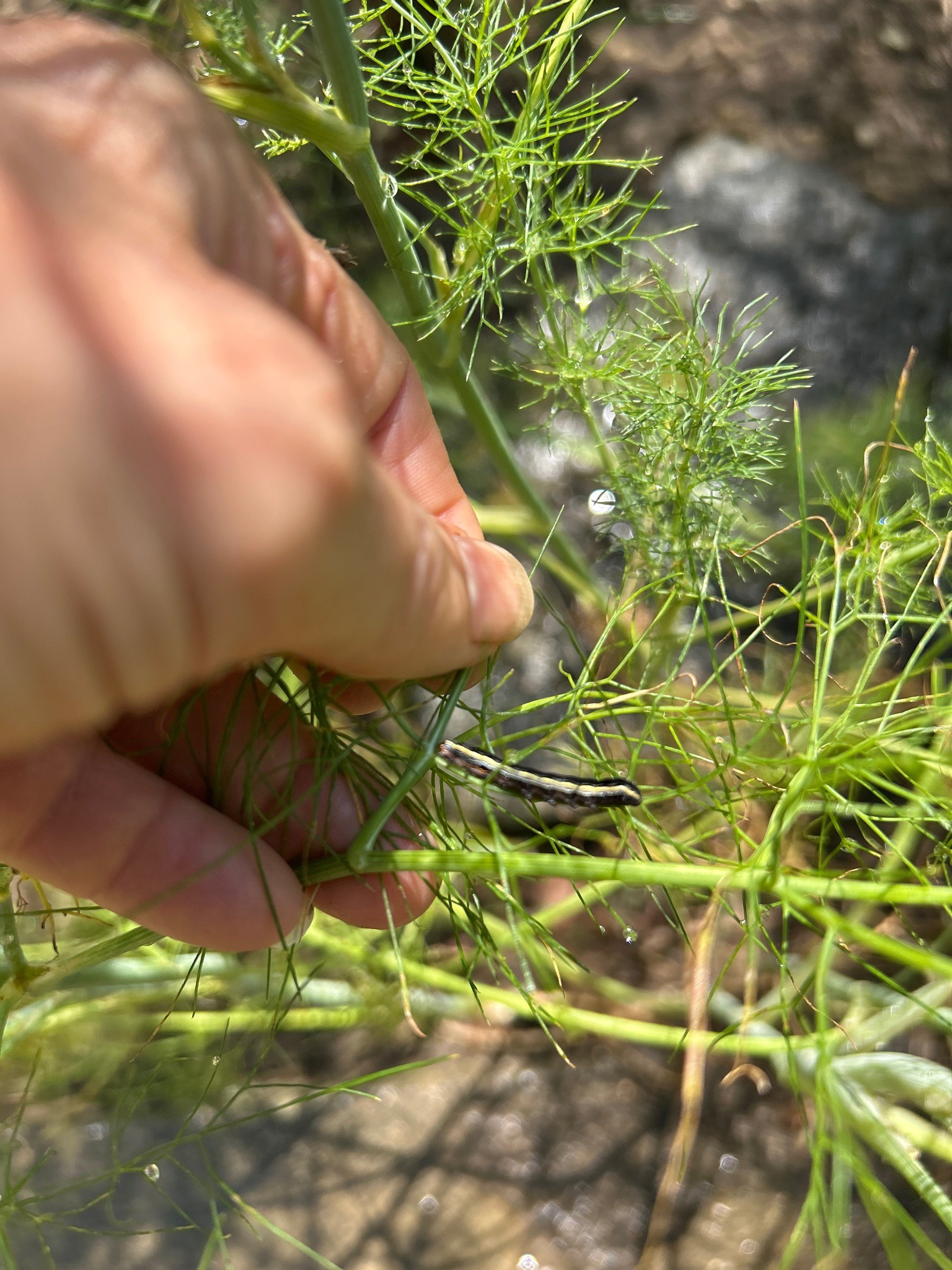
Community identification
Giant swallowtail caterpillar (likely)
Papilio cresphontes
- Order & Family
- Lepidoptera; Papilionidae
- Size
- Mature caterpillars reach about 45–60 mm (1.8–2.4 in) long; earlier instars are much smaller.
Natural Habitat
Citrus trees and other plants in the citrus family, including prickly ash and hoptree, especially in gardens, woodland edges, and open habitats.
Diet & Feeding
Larvae chew leaves of Rutaceae plants, including citrus. Adults feed mainly on flower nectar and do not damage plants.
Behavior Patterns
Young larvae resemble bird droppings; older larvae become green and may hide among foliage. When threatened, they extend a forked orange osmeterium that releases a strong odor; pupae overwinter in many regions.
Risks & Benefits
Harmless to people and nonvenomous, though caterpillars can noticeably defoliate citrus plants. Adults are important pollinators and attractive native butterflies.