
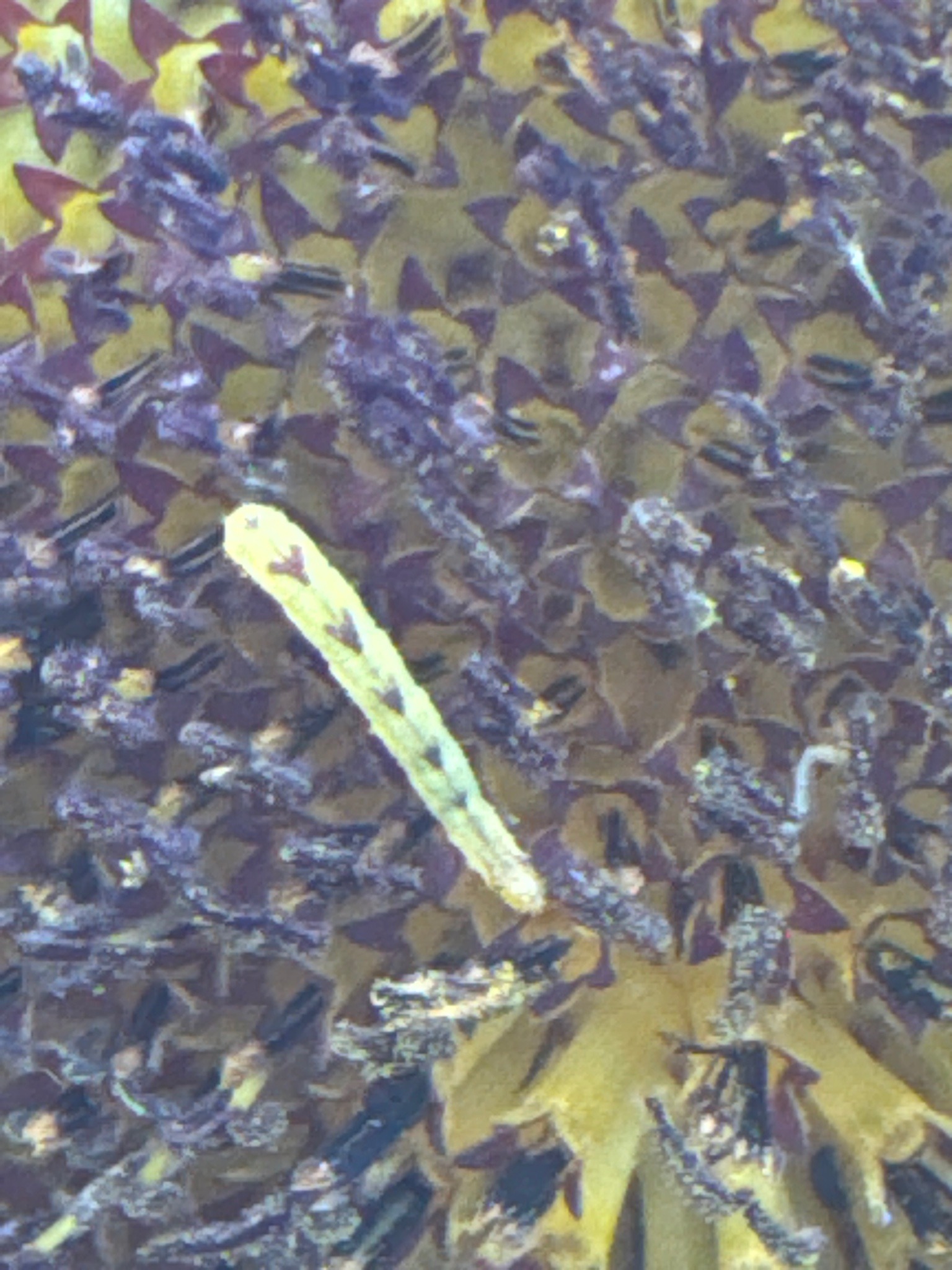
Community identification
Caddisfly larva (case-bearing caddisfly)
Trichoptera; likely Limnephilidae or related family
- Order & Family
- Order Trichoptera; family cannot be confirmed from the image
- Size
- Usually 10–30 mm as a larva; adult caddisflies commonly measure 5–25 mm.
Natural Habitat
Freshwater streams, ponds, and lake margins, especially among aquatic vegetation and leaf litter.
Diet & Feeding
Larvae graze on algae, scrape biofilm, or shred dead leaves; some species prey on small aquatic organisms. The pictured larva appears to be a plant- or leaf-material feeder.
Behavior Patterns
The larva constructs and carries a portable case from plant fragments, sand, or pebbles, adding material as it grows. It pupates underwater, and adults emerge as short-lived, moth-like fliers attracted to lights.
Risks & Benefits
Harmless to people and pets. Caddisfly larvae help break down organic matter and are important food for fish; their presence often indicates relatively healthy freshwater.