
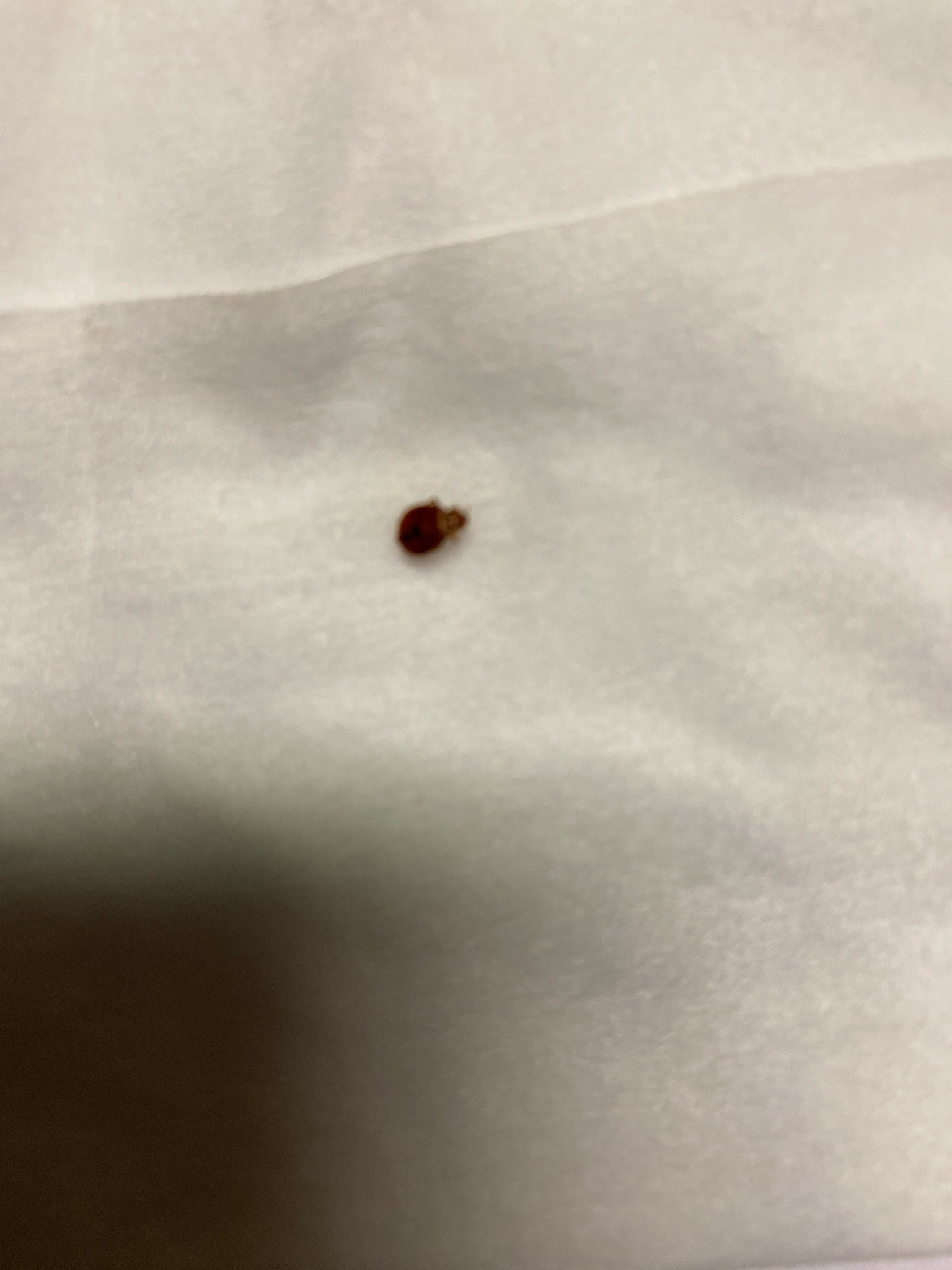
Community identification
Bed bug (probable)
Cimex lectularius
- Order & Family
- Hemiptera; Cimicidae
- Size
- Adults are about 4–7 mm long, broadly oval, and reddish-brown; the image is too blurred for definitive sizing or identification.
Natural Habitat
Mattresses, bed frames, upholstery, cracks, and other sheltered areas near sleeping hosts.
Diet & Feeding
Feeds primarily on blood, usually from humans and other warm-blooded animals, using piercing-sucking mouthparts.
Behavior Patterns
Nocturnal and cryptic; hides during daylight and emerges to feed. Females lay eggs in protected crevices, and infestations spread through luggage, clothing, and furniture.
Risks & Benefits
Bites can cause itchy welts, allergic reactions, and significant nuisance, but bed bugs are not known to transmit disease routinely. They provide little meaningful ecological benefit indoors; visual confirmation by an expert is recommended because several small beetles resemble them.