
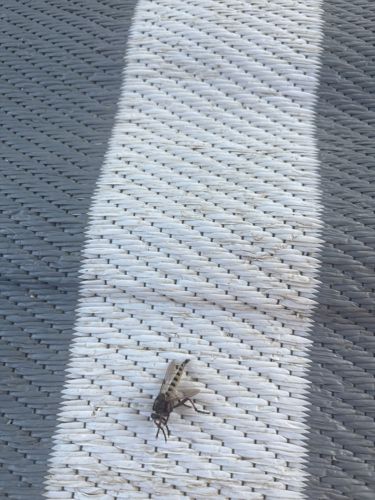
Horse Fly
Tabanus spp. (genus, as specific species cannot be determined from the image)
- Order & Family
- Order: Diptera, Family: Tabanidae
- Size
- Typically 10-30 mm (0.4-1.2 inches) in length
Natural Habitat
Adults are commonly found in pastures, meadows, forests, and near water sources where their prey (mammals) gather. Larvae live in moist soil, mud, or shallow water along the edges of ponds, streams, and swamps.
Diet & Feeding
Adult males primarily feed on nectar and plant sap. Adult females require blood meals for egg development, feeding on mammals (including humans) and other vertebrates. Larvae are predatory, feeding on small invertebrates in their aquatic or semi-aquatic habitats.
Behavior Patterns
Horse flies are strong, agile fliers, often active during the day, especially in warm, sunny weather. Female horse flies are persistent in their pursuit of a blood meal. Larvae are aquatic or semi-aquatic and predatory within their environment.
Risks & Benefits
Risks: Female horse flies deliver painful bites that can cause itchy welts. They can also transmit diseases to livestock, such as anthrax, anaplasmosis, and trypanosomiasis, and can potentially transmit tularemia to humans. Benefits: As pollinators, male horse flies contribute to plant fertilization. Larvae play a role in their ecosystems as predators, helping to control populations of other small invertebrates.