
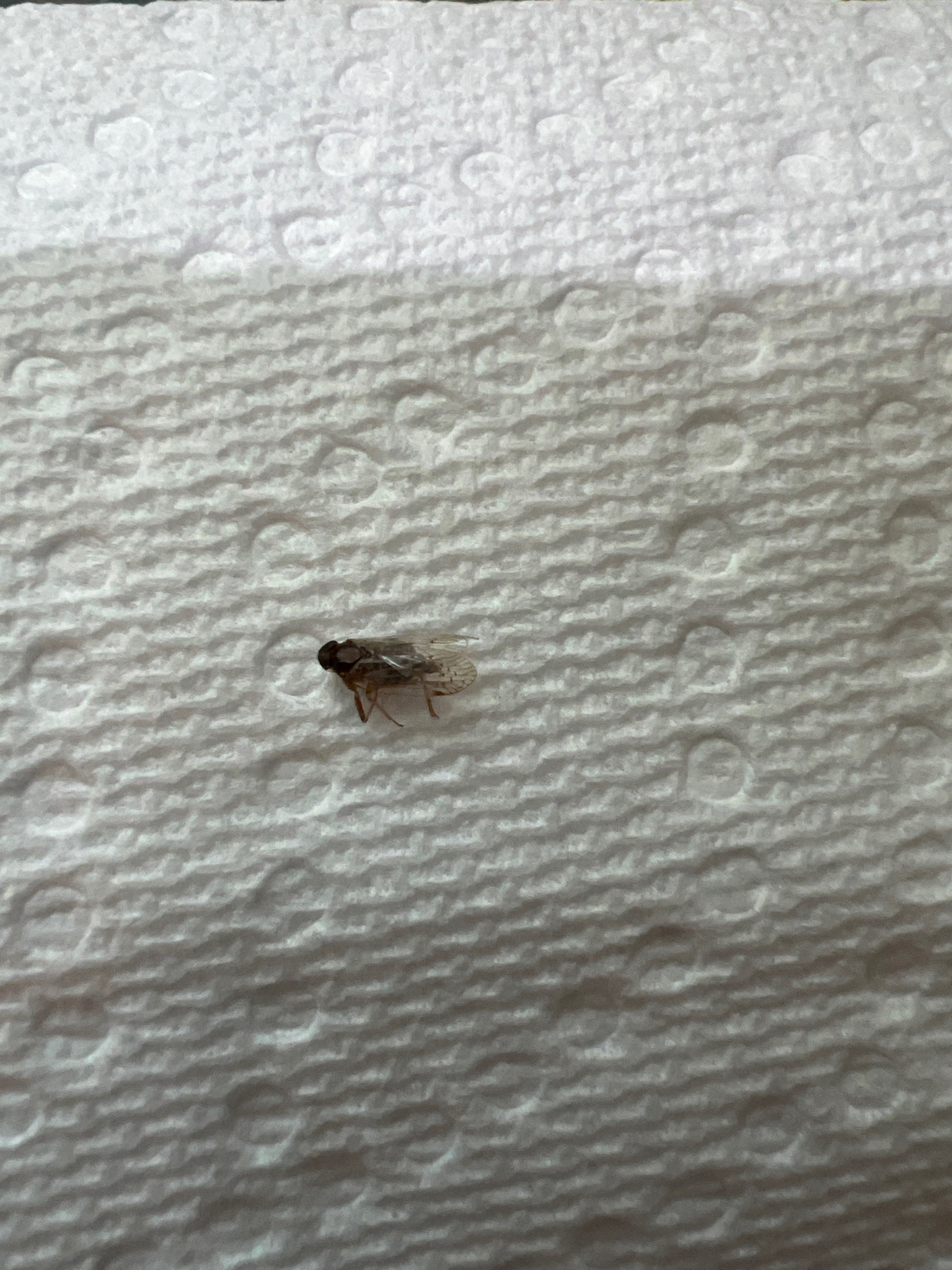
Community identification
Small house fly (likely lesser house fly)
Fannia canicularis
- Order & Family
- Diptera; Fanniidae
- Size
- About 4–6 mm (0.16–0.24 in) long.
Natural Habitat
Common indoors near buildings, especially kitchens, garbage areas, animal housing, and damp organic material. Adults rest on walls and windows.
Diet & Feeding
Adults feed on liquids such as sugary substances, decaying organic matter, and animal waste. Larvae develop in decaying plant or animal material, including manure and wet refuse.
Behavior Patterns
Adults are active fliers and may hover or circle in characteristic patterns. Females lay eggs in moist organic substrates; development from egg to adult can take several weeks, depending on temperature.
Risks & Benefits
They can mechanically transfer bacteria and other pathogens to food, though they do not bite or sting. Larvae help decompose organic matter, but indoor infestations indicate sanitation or moisture issues.