
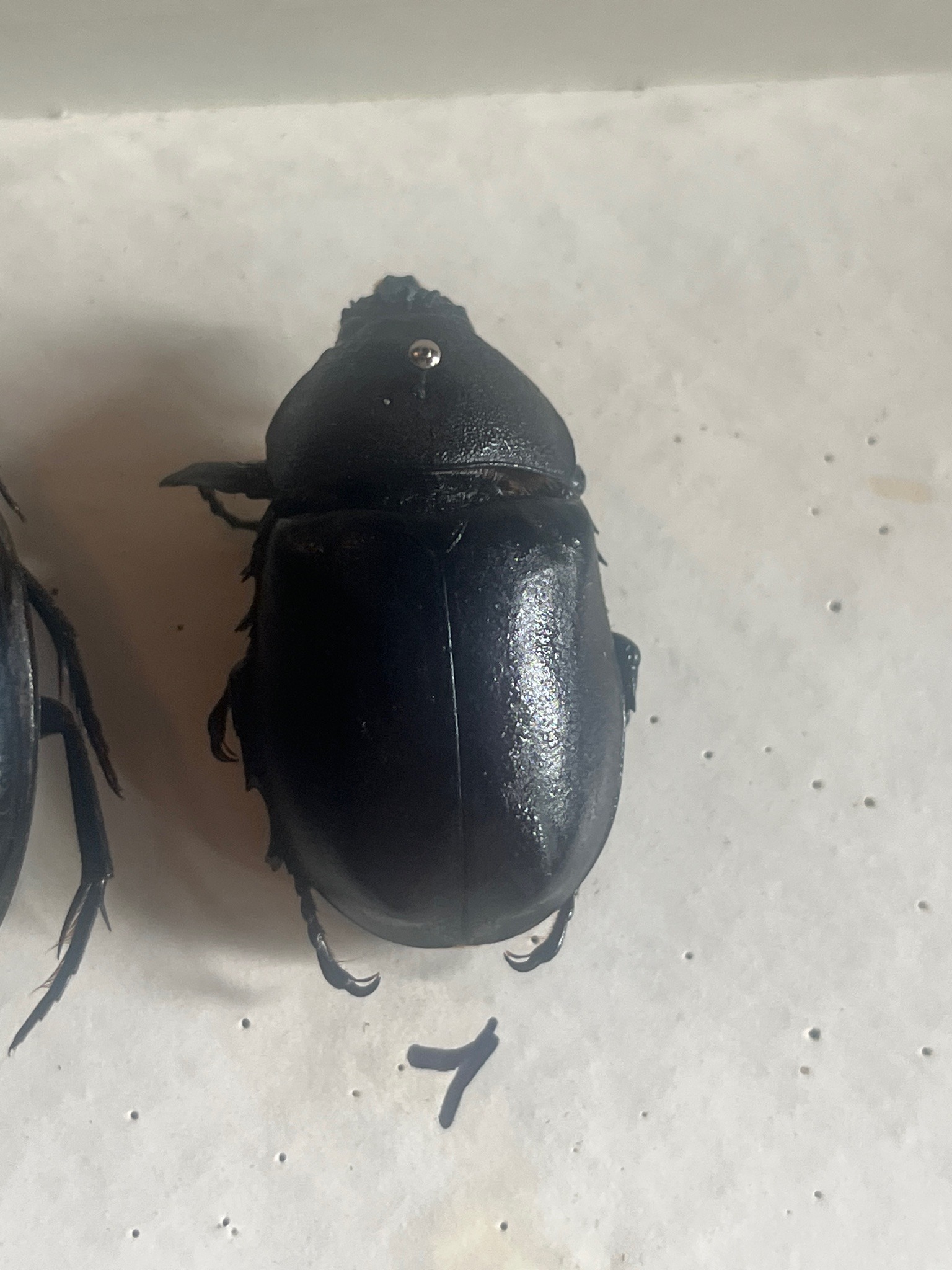
Darkling beetle (likely a desert darkling beetle)
Tenebrionidae; exact genus/species cannot be confirmed from the image
- Order & Family
- Coleoptera (beetles), family Tenebrionidae
- Size
- Typically 10–35 mm long, depending on species; this specimen appears about 20–25 mm.
Natural Habitat
Dry habitats such as deserts, scrublands, grasslands, and occasionally buildings or animal enclosures. Many shelter beneath rocks, logs, leaf litter, or debris during the day.
Diet & Feeding
Adults commonly eat decaying plant matter, seeds, fungi, and occasionally live vegetation. Larvae (“false wireworms”) feed on roots, detritus, and other organic material.
Behavior Patterns
Usually nocturnal and ground-dwelling, hiding by day and walking or climbing at night. Many species are flightless or reluctant fliers and have slow development in dry environments.
Risks & Benefits
Generally harmless to people and not a biting or stinging pest. They recycle organic matter and serve as food for birds, reptiles, and small mammals; some species can damage stored products or seedlings.