
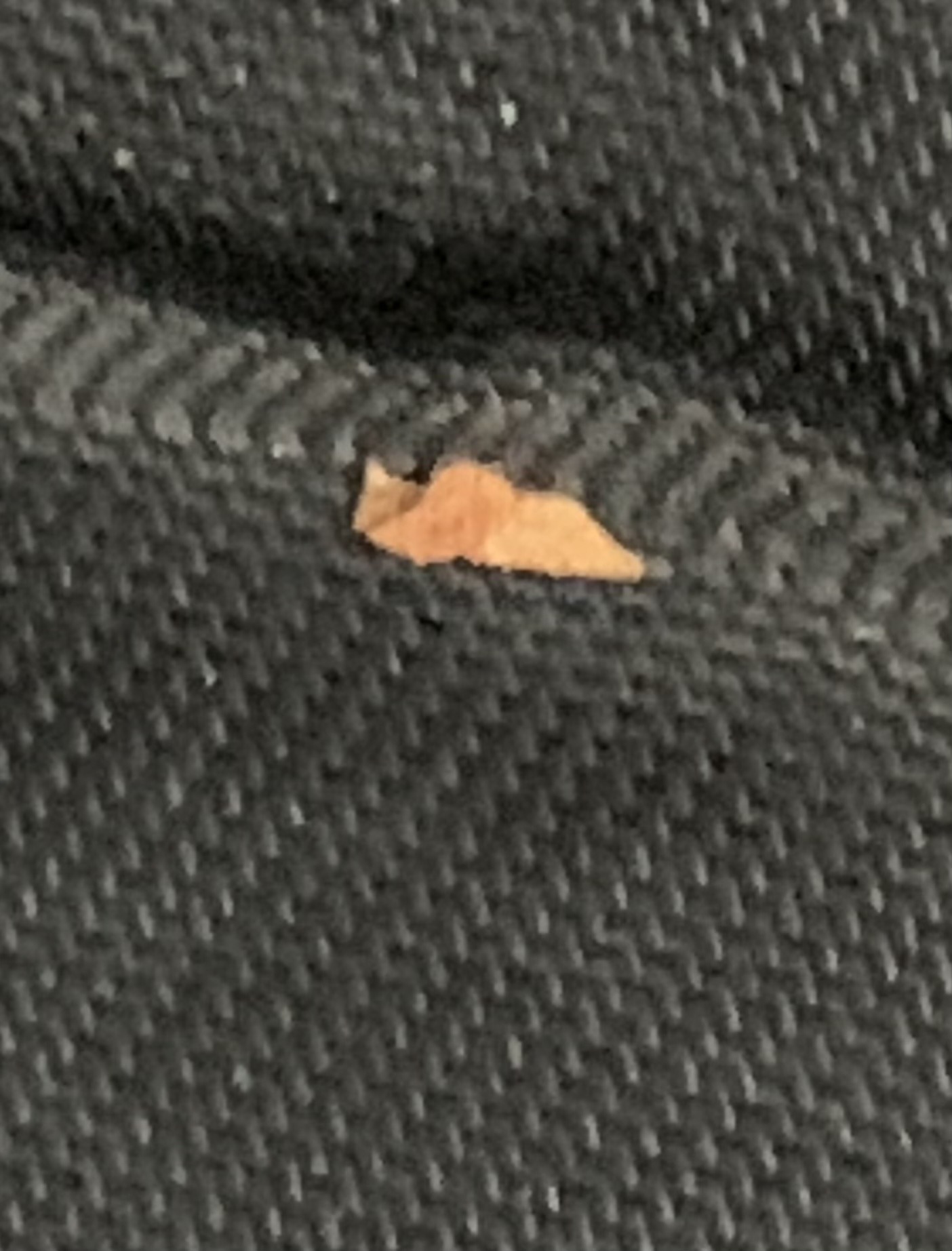
Community identification
Unidentifiable moth or moth fragment
Not determinable from the image
- Order & Family
- Likely Lepidoptera; family cannot be determined
- Size
- Visible fragment is approximately 8–12 mm; the intact insect may have been larger.
Natural Habitat
Moths commonly occur in homes, gardens, woodland, and other habitats with host plants or stored materials.
Diet & Feeding
Adults generally feed on nectar or do not feed; larvae chew plants, fabrics, or stored products depending on species.
Behavior Patterns
Most are nocturnal and attracted to light. Larvae undergo complete metamorphosis and may leave silk, droppings, or feeding damage.
Risks & Benefits
Most moths are harmless and important pollinators and prey. Some larvae damage clothing, carpets, food, or crops, but this image does not support identifying a pest species.