
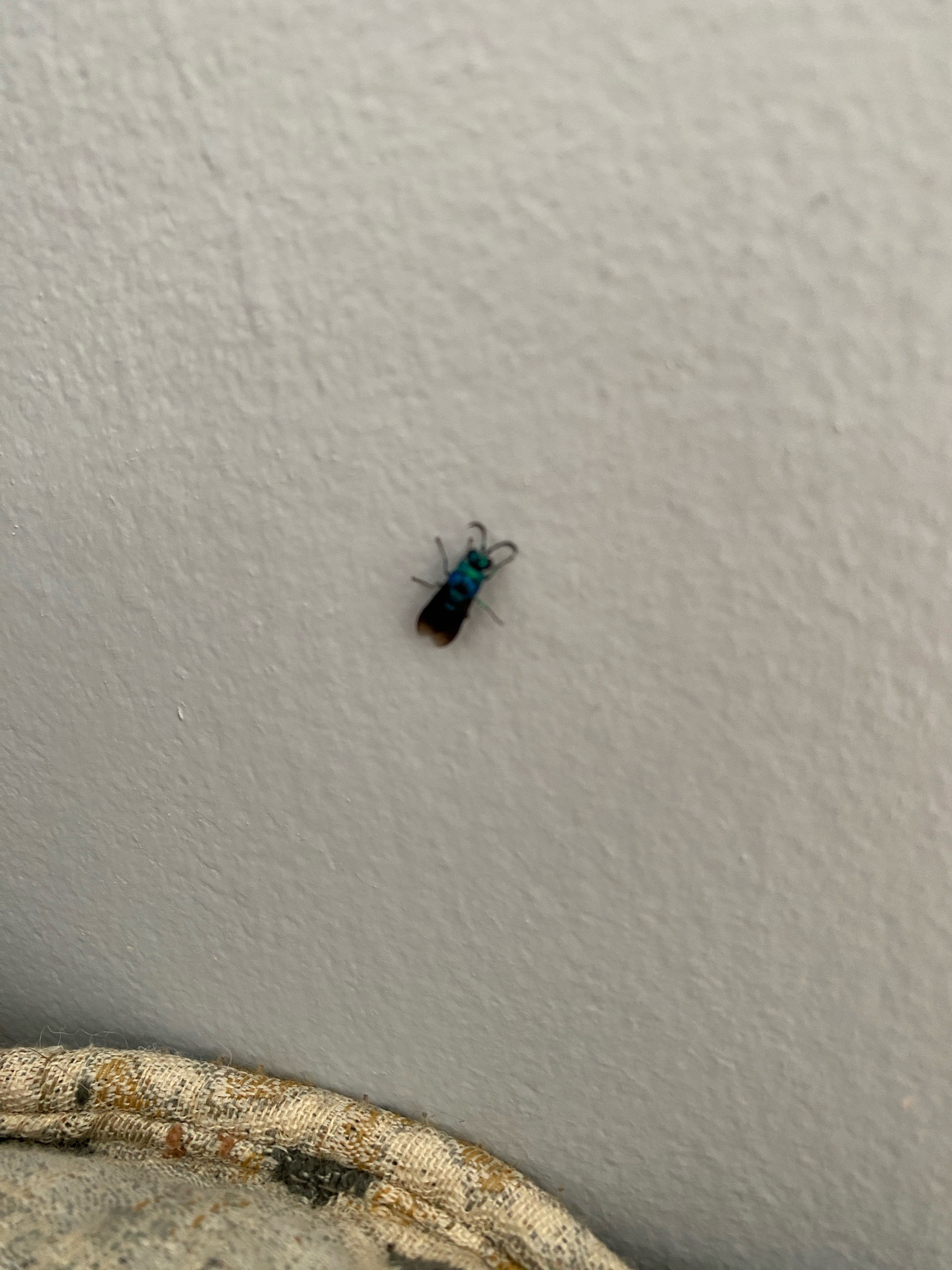
Green blister beetle (likely cantharid beetle)
Likely *Zonitis* or a related Meloidae species; exact identification is uncertain from the image
- Order & Family
- Coleoptera; Meloidae
- Size
- About 6–15 mm long.
Natural Habitat
Adults occur on flowers, foliage, and walls near vegetation, especially in warm, dry regions. Larvae develop in soil or near solitary bee nests, depending on species.
Diet & Feeding
Adults commonly eat pollen, nectar, or flowers; some feed on foliage. Larvae are specialized predators or nest associates, often consuming bee provisions or eggs.
Behavior Patterns
Adults are active fliers and may be attracted to lights or buildings. Many blister beetles undergo complex metamorphosis, with mobile larvae locating host insect nests.
Risks & Benefits
Meloid beetles can secrete cantharidin, which causes skin and eye irritation or blistering; avoid handling with bare hands. They contribute to pollination and natural regulation of other insects, though some species damage crops.