
Community identification
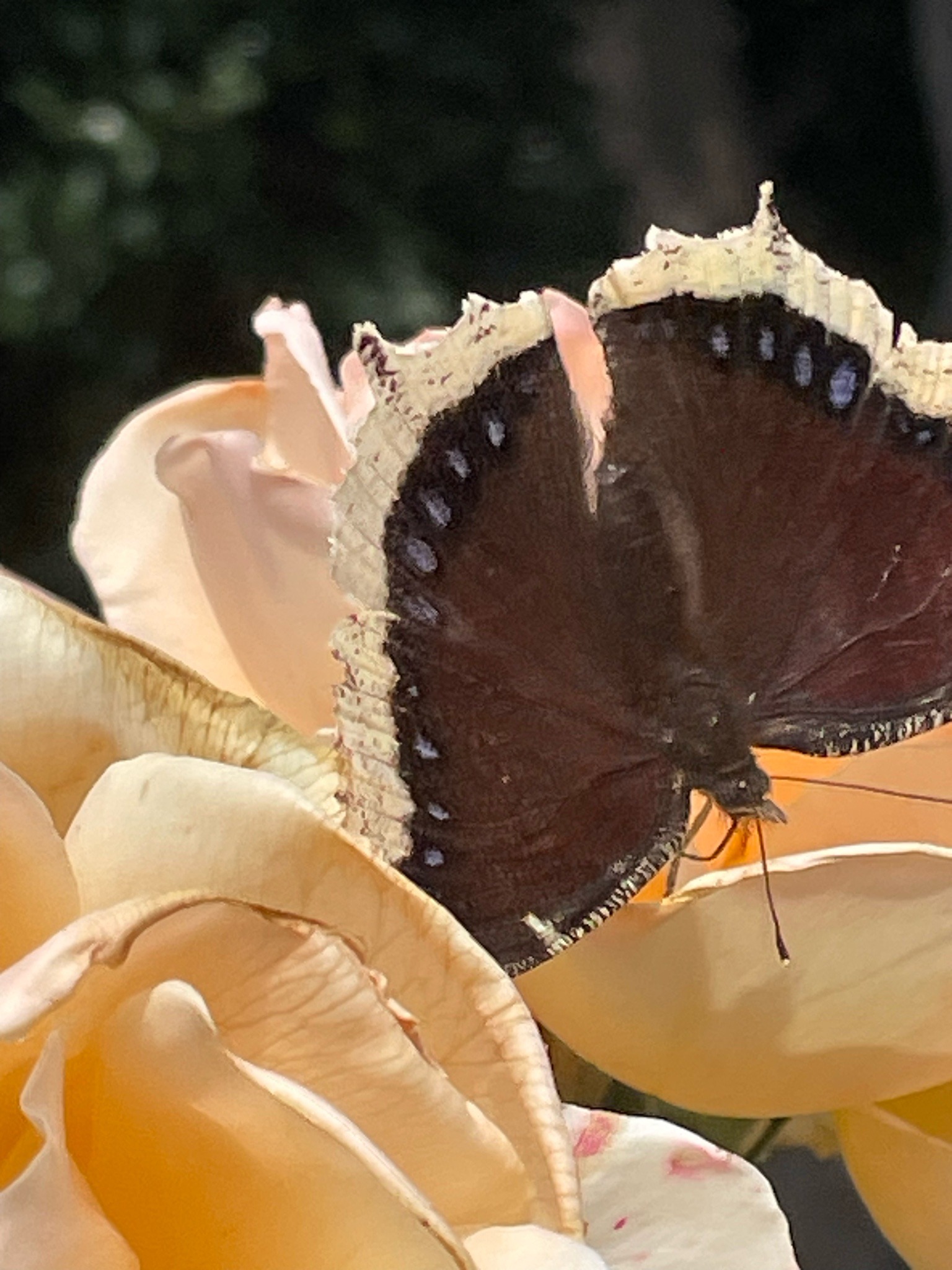
Mourning cloak butterfly
Nymphalis antiopa
- Order & Family
- Lepidoptera; Nymphalidae
- Size
- Wingspan typically 6–10 cm (2.4–4 in).
Natural Habitat
Woodlands, forest edges, parks, gardens, and stream corridors across much of the Northern Hemisphere. Adults often bask on tree trunks, rocks, or flowers.
Diet & Feeding
Adults feed mainly on tree sap, rotting fruit, and occasionally nectar; the pictured individual is visiting a flower. Caterpillars eat leaves of willow, elm, birch, poplar, and related trees.
Behavior Patterns
Strong, erratic fliers that overwinter as adults and emerge early in spring. Caterpillars are gregarious when young, while adults defend territories and may live for many months.
Risks & Benefits
Harmless to people and plants as adults; caterpillars rarely cause significant defoliation. They contribute to pollination and serve as prey for birds and other wildlife.