
Community identification
Black-legged tick
Ixodes scapularis
- Order & Family
- Ixodida; Ixodidae
- Size
- About 1–3 mm as a nymph and 3–5 mm as an unfed adult; engorged females grow larger.
Natural Habitat
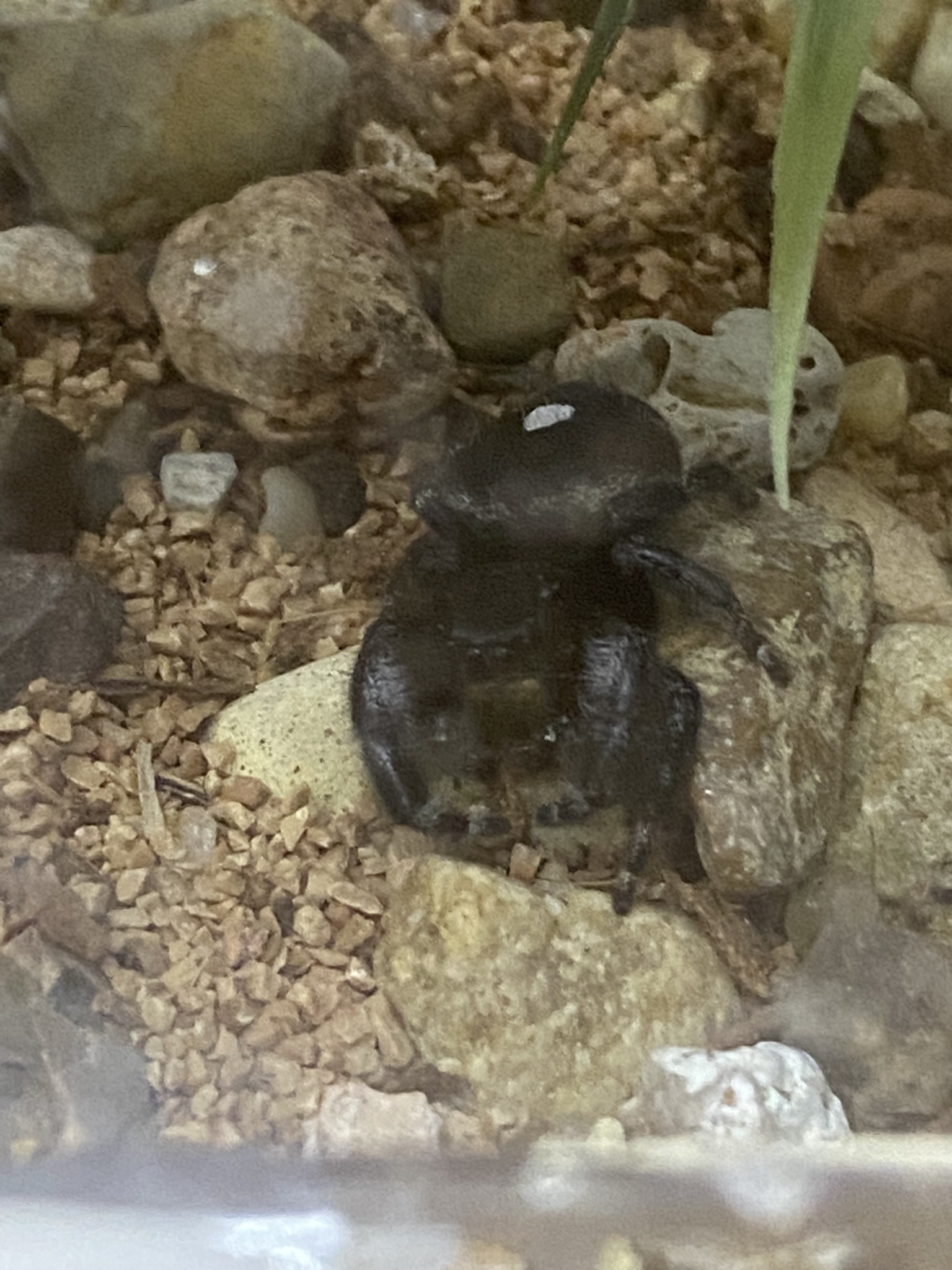
Wooded and brushy areas with leaf litter, where it waits on vegetation or seeks hosts; this individual appears to be in a terrarium.
Diet & Feeding
Blood-feeding parasite of mammals, birds, and reptiles; each active life stage typically takes one blood meal.
Behavior Patterns
Attaches to a passing host and feeds for several days. Its dark body and pale marking are consistent with a female black-legged tick, but the image is not clear enough for certain identification.
Risks & Benefits
Can transmit Lyme disease and other infections. It has little direct ecological benefit beyond serving as prey for some animals.