
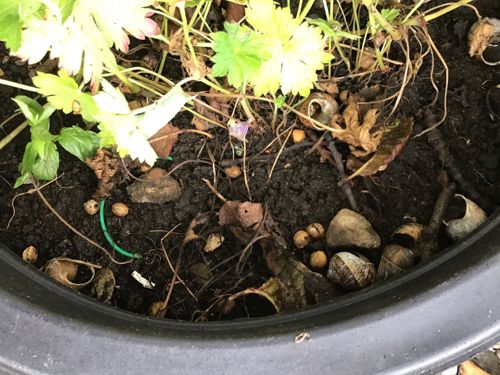
Garden Snail
Cornu aspersum (formerly Helix aspersa)
- Order & Family
- Stylommatophora (Order); Helicidae (Family)
- Size
- Shell diameter typically ranges from 25 to 40 mm (1 to 1.6 inches)
Natural Habitat
Found in gardens, agricultural fields, woodlands, and other temperate, moist environments. They prefer areas with good cover, such as under rocks, logs, leaf litter, and in dense vegetation, to protect themselves from predators and dehydration.
Diet & Feeding
Garden snails are primarily herbivores, feeding on a wide variety of living and decaying plant material, including leaves, stems, flowers, fruits, and vegetables. They can be particularly destructive to young seedlings.
Behavior Patterns
Snails are hermaphroditic, meaning an individual has both male and female reproductive organs, though they usually still mate with another snail. They lay eggs in moist soil or under debris. They are most active during damp, warm conditions, often at night, which helps them avoid dehydration and the attention of predators.
Risks & Benefits
Risks: Can be significant agricultural and garden pests, causing damage to crops and ornamental plants. They can also be vectors for parasites, such as the rat lungworm, which can infect humans if undercooked snails are consumed or if produce contaminated by snail slime is eaten. Benefits: In natural ecosystems, they contribute to decomposition by breaking down organic matter. They also serve as a food source for various animals, including birds, reptiles, amphibians, and some insects.