
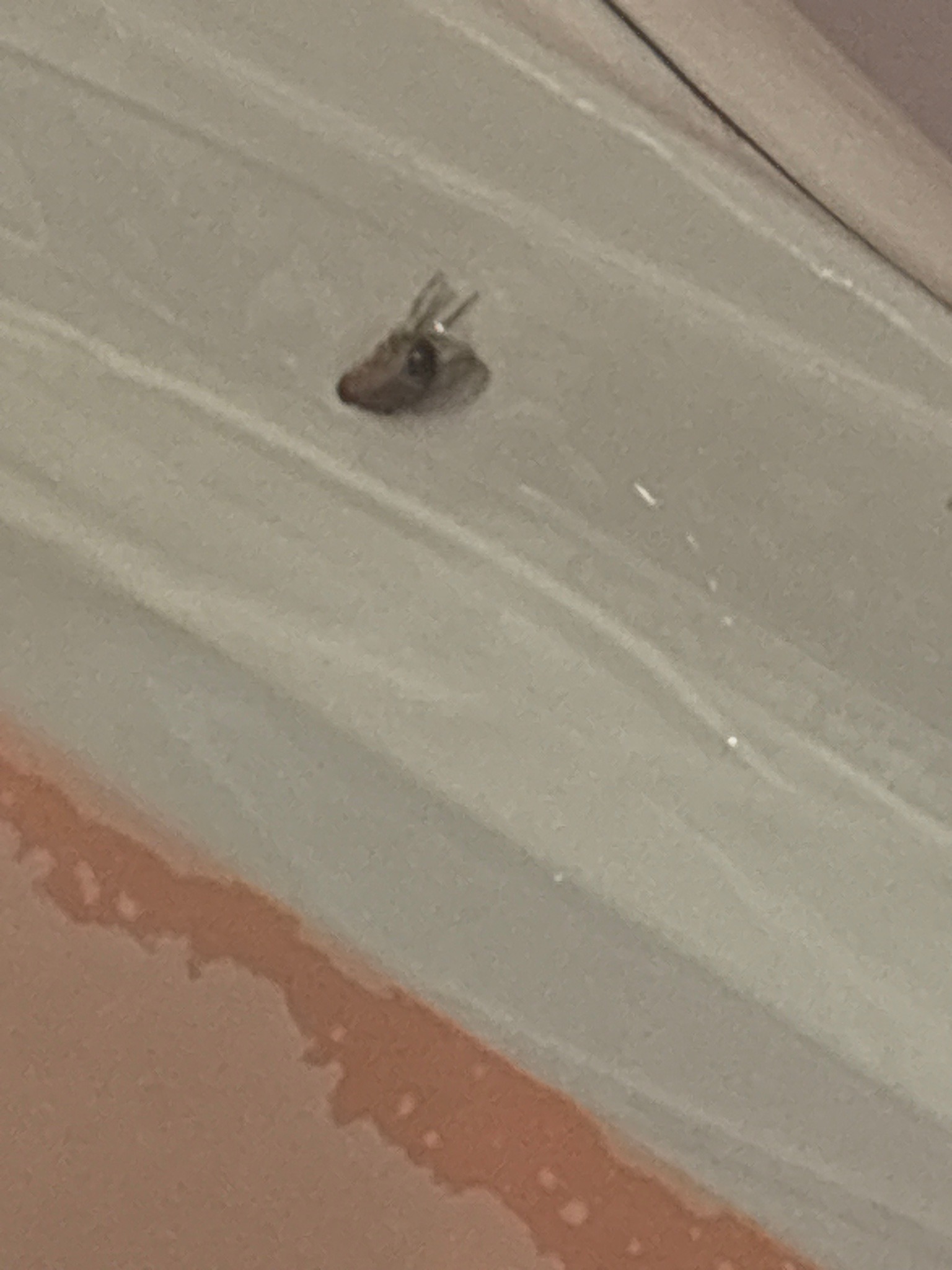
Drain fly (moth fly)
Psychodidae, likely Clogmia albipunctata
- Order & Family
- Diptera; Psychodidae
- Size
- Adults are about 1.5–5 mm long, with broad, fuzzy, moth-like wings.
Natural Habitat
Moist indoor areas near drains, sinks, showers, and sewage systems; larvae develop in organic film and sludge. Adults rest on nearby walls and surfaces.
Diet & Feeding
Larvae consume bacteria, fungi, algae, and decaying organic matter in drain biofilm. Adults feed little, taking moisture or occasionally sugary liquids.
Behavior Patterns
Weak, erratic fliers that commonly rest with wings roof-like over the body. Populations increase where drains remain wet and organically fouled; development can be rapid in warm conditions.
Risks & Benefits
Generally harmless and do not bite or transmit disease routinely, though heavy infestations indicate unsanitary drain buildup. Larvae contribute modestly to decomposition, but control usually requires cleaning drain interiors and removing standing moisture.