
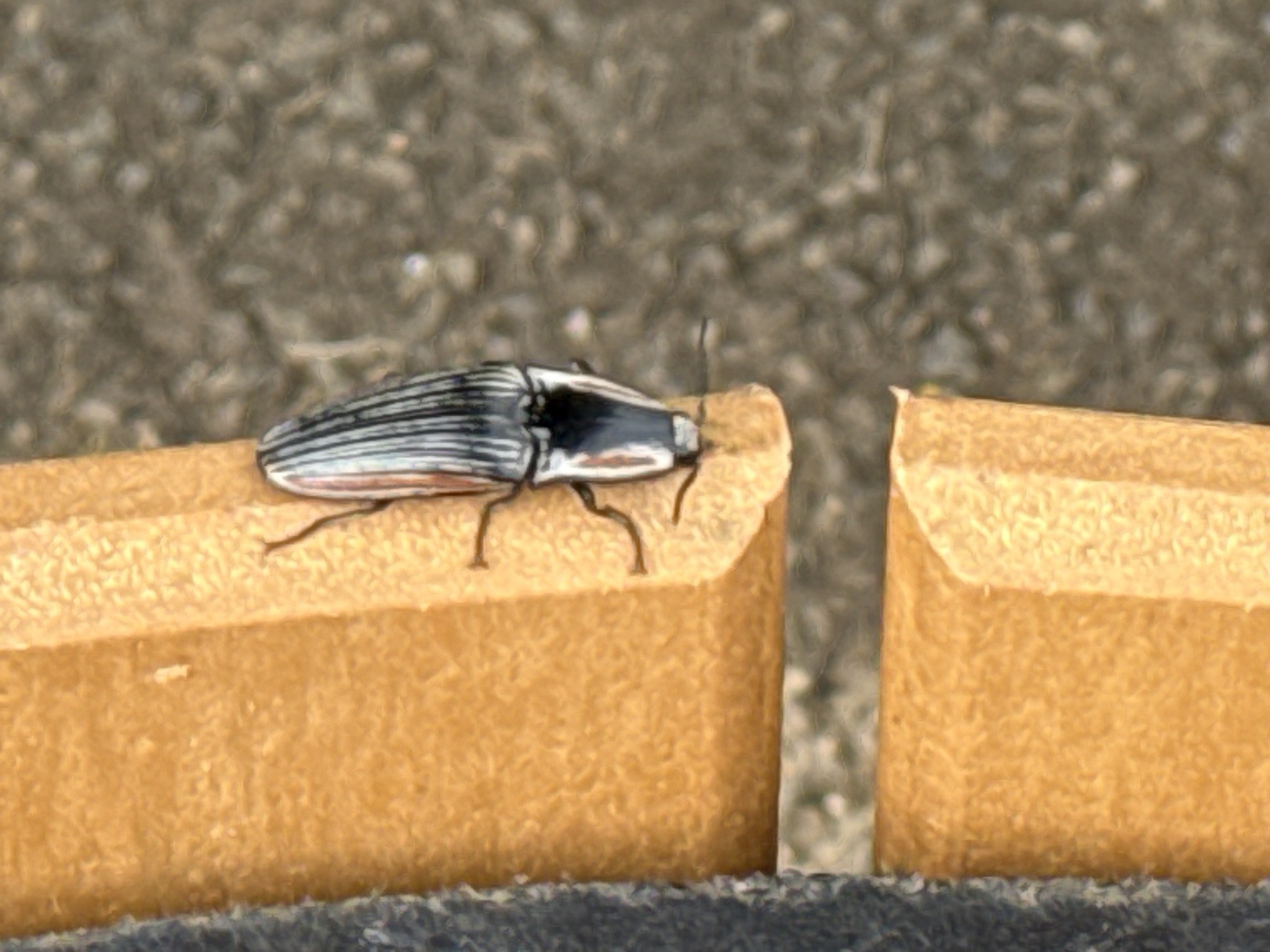
Click beetle
Likely *Alaus* species (eyed click beetle group)
- Order & Family
- Coleoptera; Elateridae
- Size
- Typically 25–45 mm long, depending on species.
Natural Habitat
Woodlands, forest edges, gardens, and areas near decaying logs or trees; adults may enter buildings when attracted to light.
Diet & Feeding
Adults usually feed little, or consume nectar, pollen, and plant juices. Larvae live in soil or decaying wood and prey on insect larvae or feed on plant roots, varying by species.
Behavior Patterns
Adults are elongated, hard-bodied beetles active mainly at night and attracted to lights. When overturned, they snap a spine against a notch to produce a click and launch themselves into the air; development from larva to adult can take several years.
Risks & Benefits
They are harmless to people and do not bite or sting. Larvae can occasionally damage roots, while many species help regulate other soil insects and contribute to decomposition.