
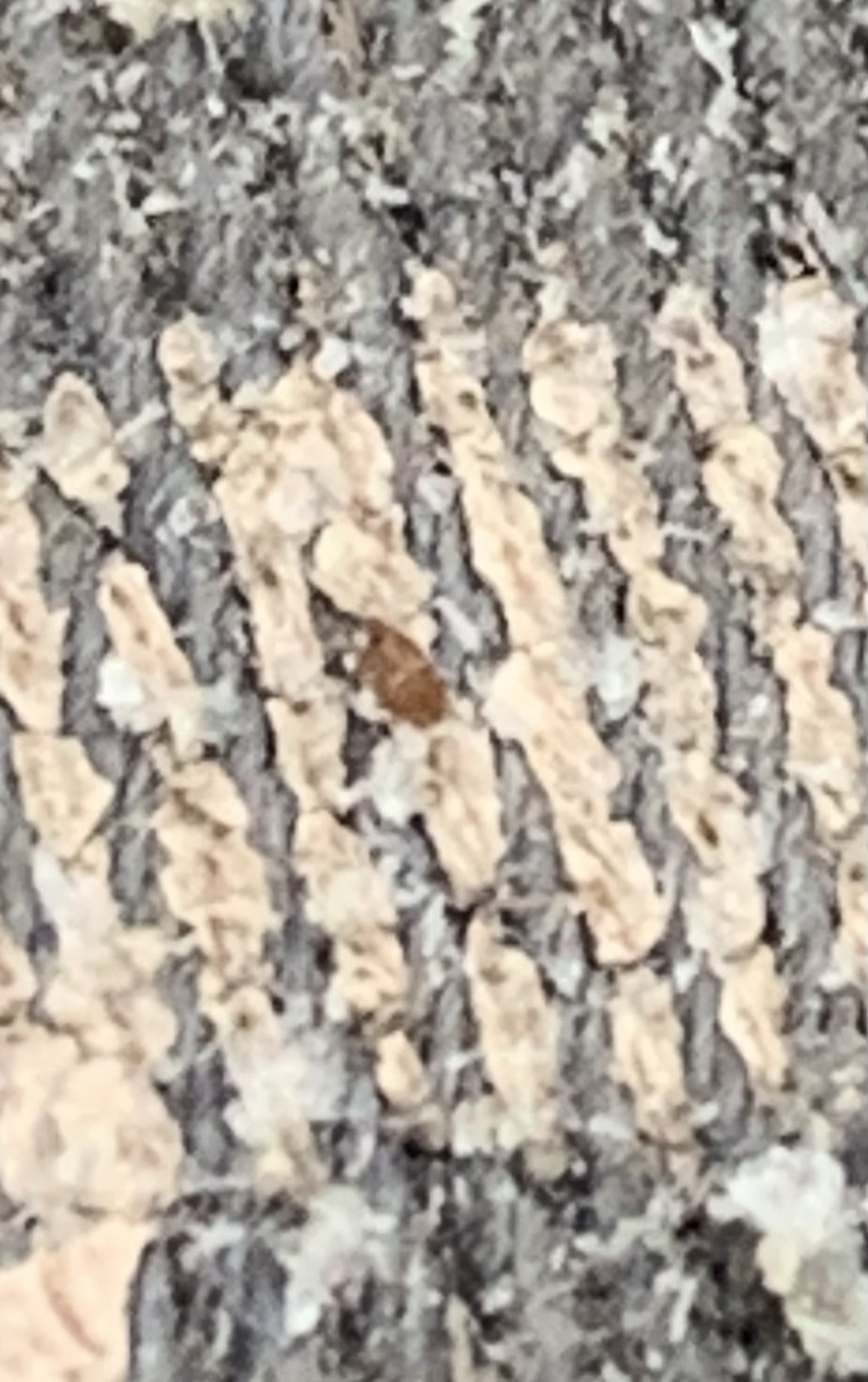
Community identification
Barklouse (booklouse), likely a bark-dwelling psocid
Psocoptera (order-level identification; species cannot be determined from this image)
- Order & Family
- Psocodea; family uncertain, possibly Psocidae or closely related barklice
- Size
- Usually 1–3 mm long; the pictured individual appears roughly 2 mm.
Natural Habitat
On tree bark, lichens, leaf litter, and sometimes damp indoor surfaces. They favor humid, shaded environments rich in fungal growth and organic debris.
Diet & Feeding
Feeds mainly on algae, lichens, fungal spores, pollen, and decaying organic matter scraped from surfaces. It does not bite or suck plant sap.
Behavior Patterns
Often occurs in clusters or colonies on bark and may move slowly across the surface. Populations increase in damp conditions, and many species reproduce without males.
Risks & Benefits
Harmless to people, pets, buildings, and healthy trees; it is not a termite. It helps recycle organic material and may graze on surface fungi and lichens.