
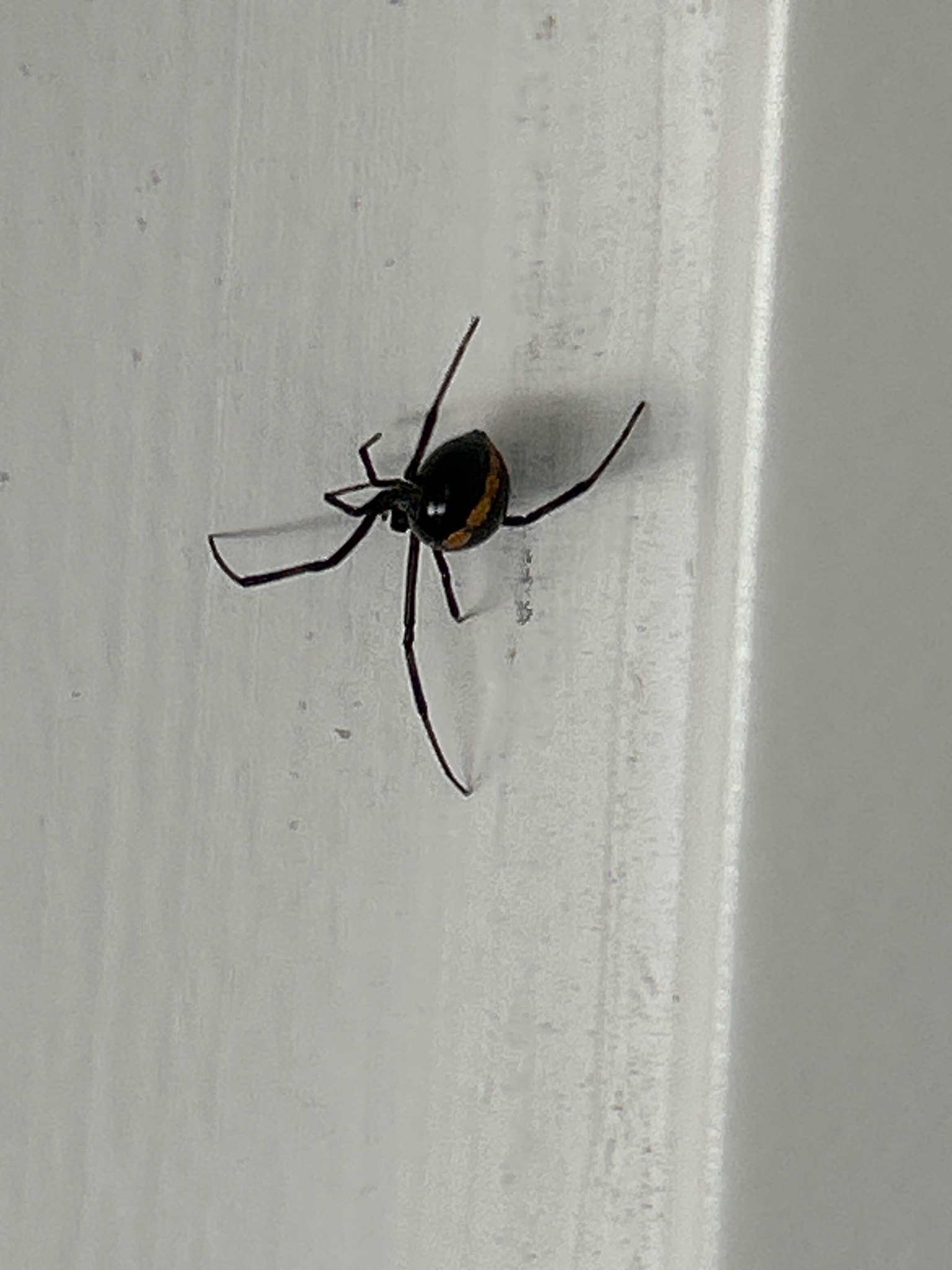
Black widow spider (likely northern black widow)
Latrodectus variolus
- Order & Family
- Araneae, Theridiidae (cobweb spiders)
- Size
- Adult females are typically 8–13 mm in body length; males are smaller, about 3–6 mm. Legs make the overall span substantially larger.
Natural Habitat
Dark, sheltered spaces such as sheds, garages, woodpiles, crawlspaces, and undisturbed corners. This individual’s appearance is consistent with a North American widow, but location is needed for confirmation.
Diet & Feeding
Carnivorous; captures flies, mosquitoes, beetles, and other arthropods in a sticky, irregular cobweb, then immobilizes prey with venom and silk.
Behavior Patterns
Mostly nocturnal and solitary, remaining near its web and retreating when disturbed. The pictured spider’s long legs and dark, rounded abdomen suggest a mature female, though markings are partly obscured.
Risks & Benefits
Its bite can cause severe muscle pain, cramping, sweating, and nausea, but serious outcomes are uncommon with medical care. It benefits ecosystems by controlling insect populations; avoid handling and seek medical advice after a suspected bite.