
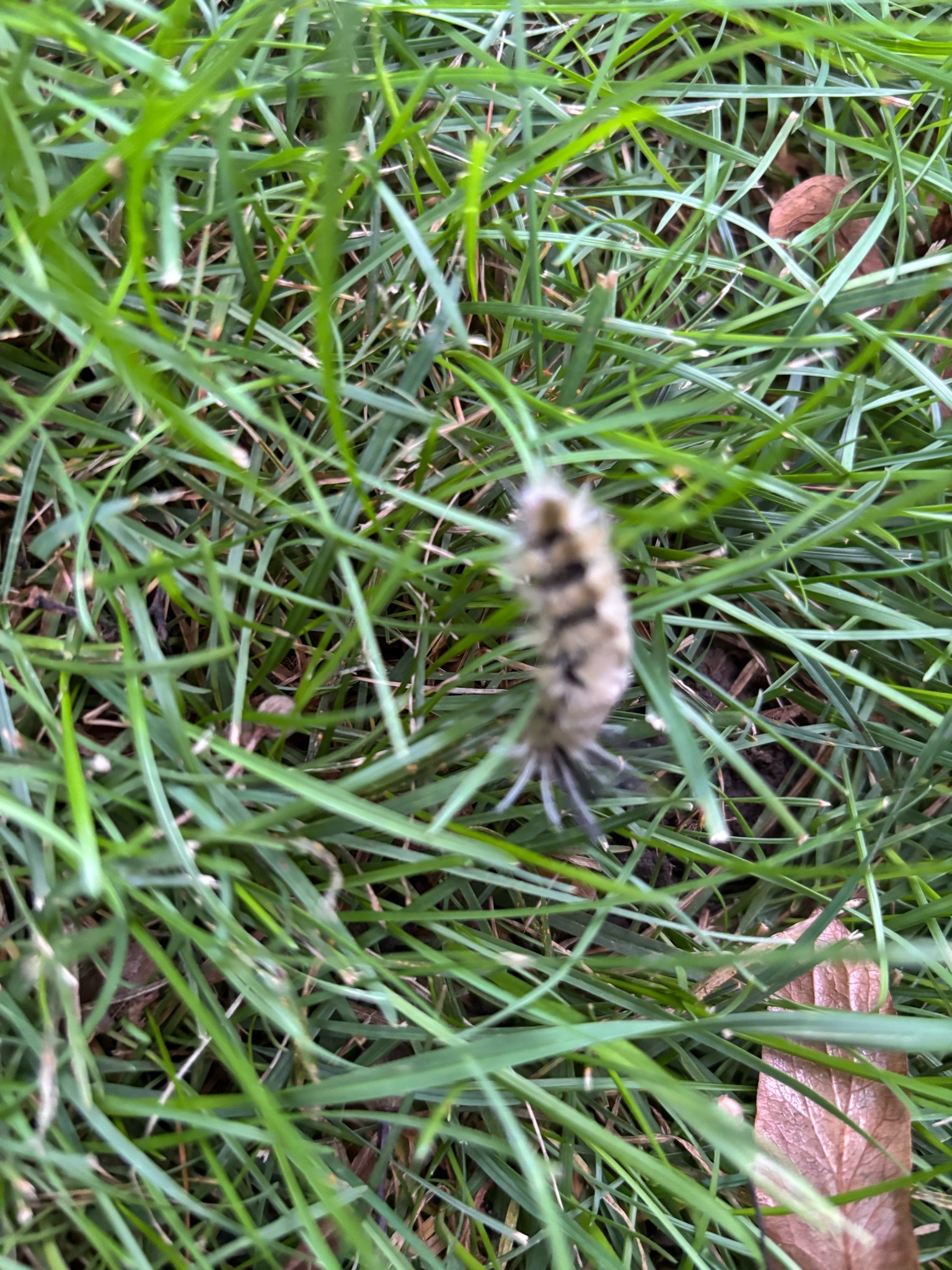
White-marked tussock moth caterpillar
Orgyia leucostigma
- Order & Family
- Lepidoptera; family Erebidae (subfamily Lymantriinae)
- Size
- Typically 25–35 mm (1–1.4 in.) long when mature.
Natural Habitat
Woodlands, gardens, parks, and landscaped areas across much of eastern and central North America. Larvae feed on trees and shrubs but may wander through grass before pupating.
Diet & Feeding
Larvae chew foliage from many deciduous trees, shrubs, and occasionally conifers. Adults generally do not feed; females are wingless and males consume little or no food.
Behavior Patterns
The hairy caterpillars are active mainly from late spring through summer and often wander when mature. They spin cocoons on vegetation or structures; adults emerge to mate, and females lay egg masses near or on the cocoon.
Risks & Benefits
Hairs and spines can cause itchy dermatitis or eye and respiratory irritation, especially when handled. They are native herbivores and provide food for birds, parasitoids, and other predators, though outbreaks can defoliate ornamental plants.