
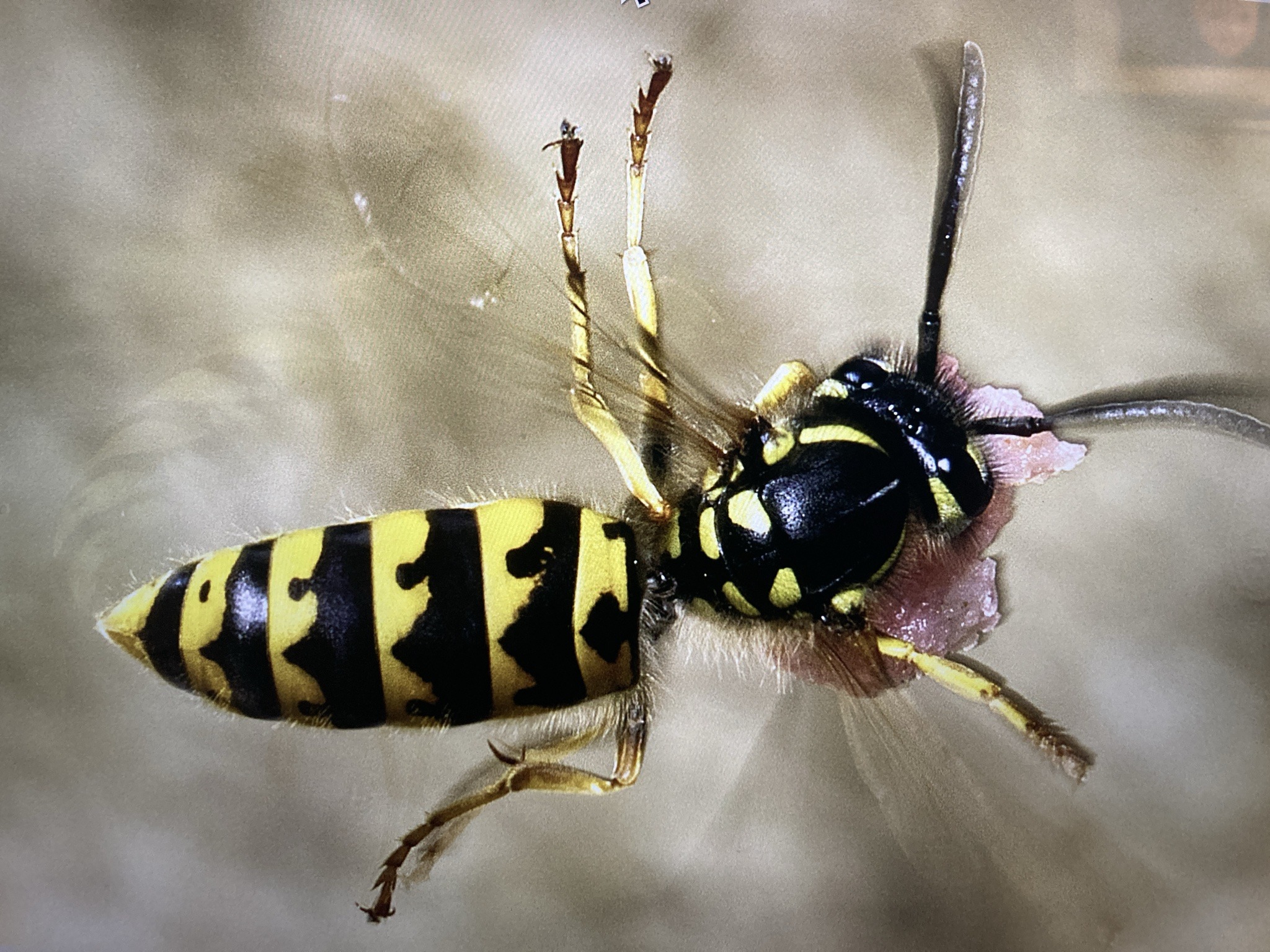
Community identification
Yellowjacket wasp (likely bald-faced hornet)
Dolichovespula maculata
- Order & Family
- Hymenoptera; Vespidae
- Size
- Workers are about 12–15 mm long; queens reach roughly 18–20 mm.
Natural Habitat
Forests, gardens, parks, and urban areas across much of North America; nests are commonly built in trees, shrubs, or under eaves.
Diet & Feeding
Adults consume nectar and other sugary liquids, while workers hunt insects and chew them into protein-rich food for larvae.
Behavior Patterns
Highly social, defensive wasps living in annual paper colonies; workers aggressively defend nests and can sting repeatedly. The image appears to show a wasp carrying or feeding on prey, possibly a larva or caterpillar.
Risks & Benefits
Stings are painful and can cause severe allergic reactions, especially near nests. They benefit ecosystems by controlling caterpillars and other insects and by pollinating flowers.