
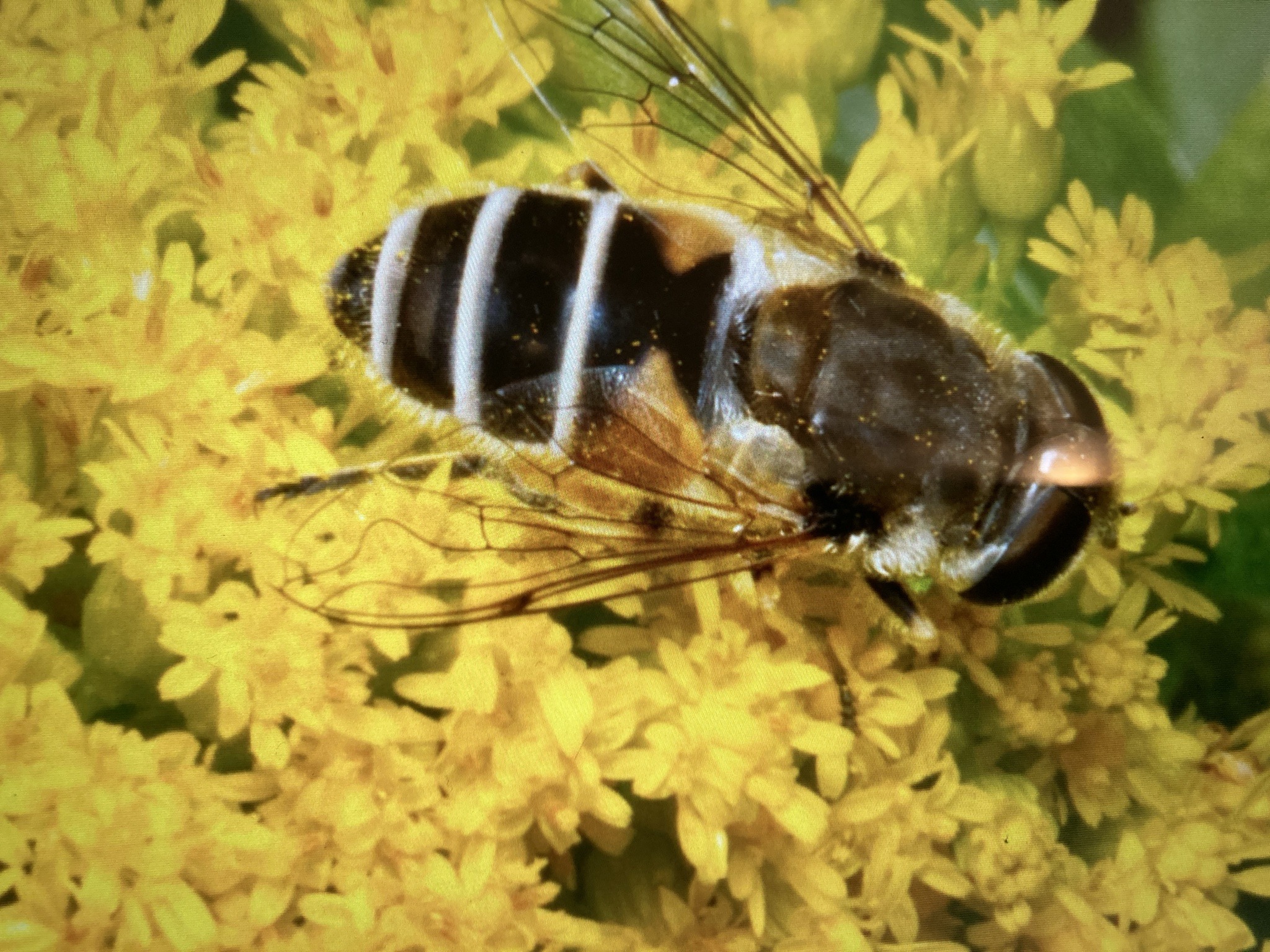
Community identification
Common drone fly
Eristalis tenax
- Order & Family
- Diptera; Syrphidae (hover flies)
- Size
- Typically 10–14 mm long.
Natural Habitat
Gardens, meadows, farmland, and other flower-rich habitats worldwide, especially near water or decaying organic matter.
Diet & Feeding
Adults feed on nectar and pollen, visiting flowers for energy and pollination. Larvae consume microorganisms and organic matter in stagnant, oxygen-poor water.
Behavior Patterns
A strong bee mimic with hovering flight; adults often bask and patrol sunny areas. Larvae, called rat-tailed maggots, develop in polluted water and breathe through a long posterior siphon.
Risks & Benefits
Harmless to people and incapable of stinging; occasional accidental contamination of food is possible. Adults are effective pollinators, while larvae help decompose organic waste.